
Nature’s Way Resources is proud to bring you this free weekly newsletter. While we don’t run ads, generous sponsors help support this project as a public service. Their names are listed below, please consider showing your appreciation by supporting their businesses!
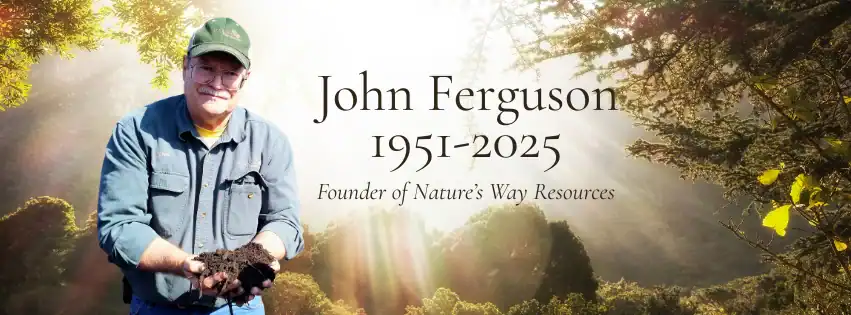
Nature’s Way Resources honors the contributions of our late owner, John Ferguson. “The Lazy Gardener” Brenda Beust Smith and Shelby Cassano welcome your feedback and remain grateful to the many horticulturists who share their expertise.
Published July 1, 2026
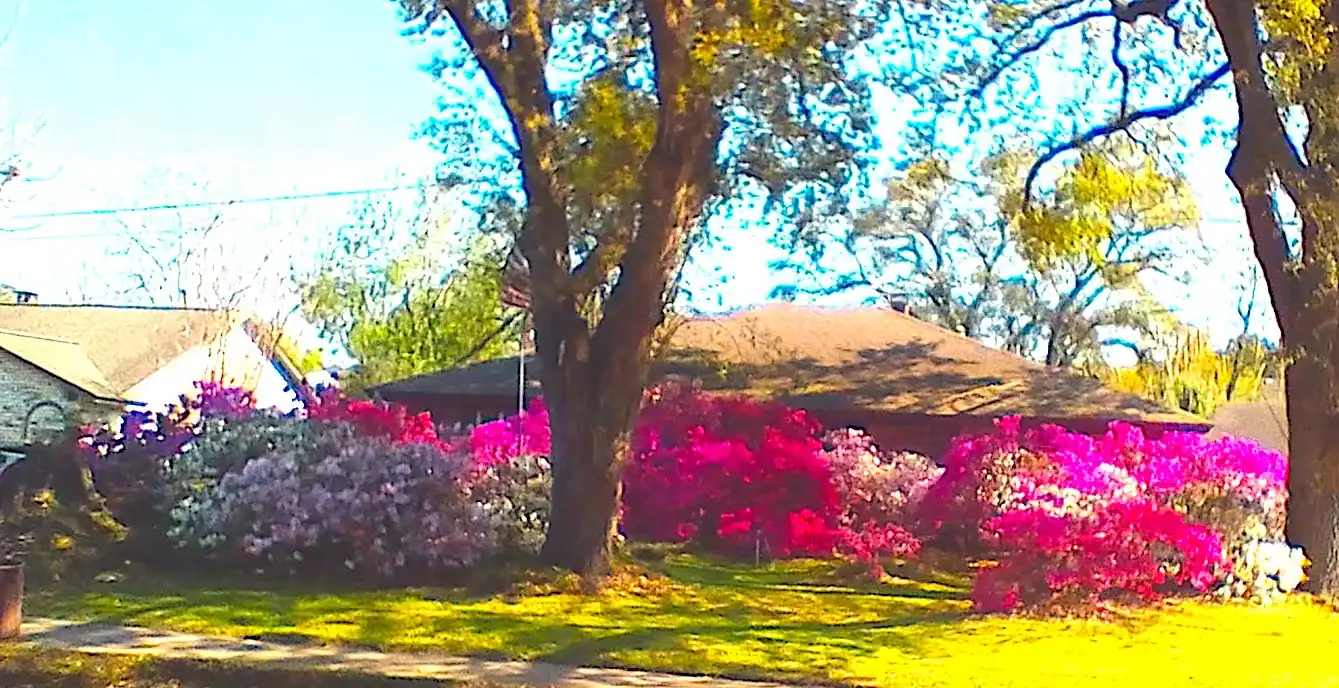
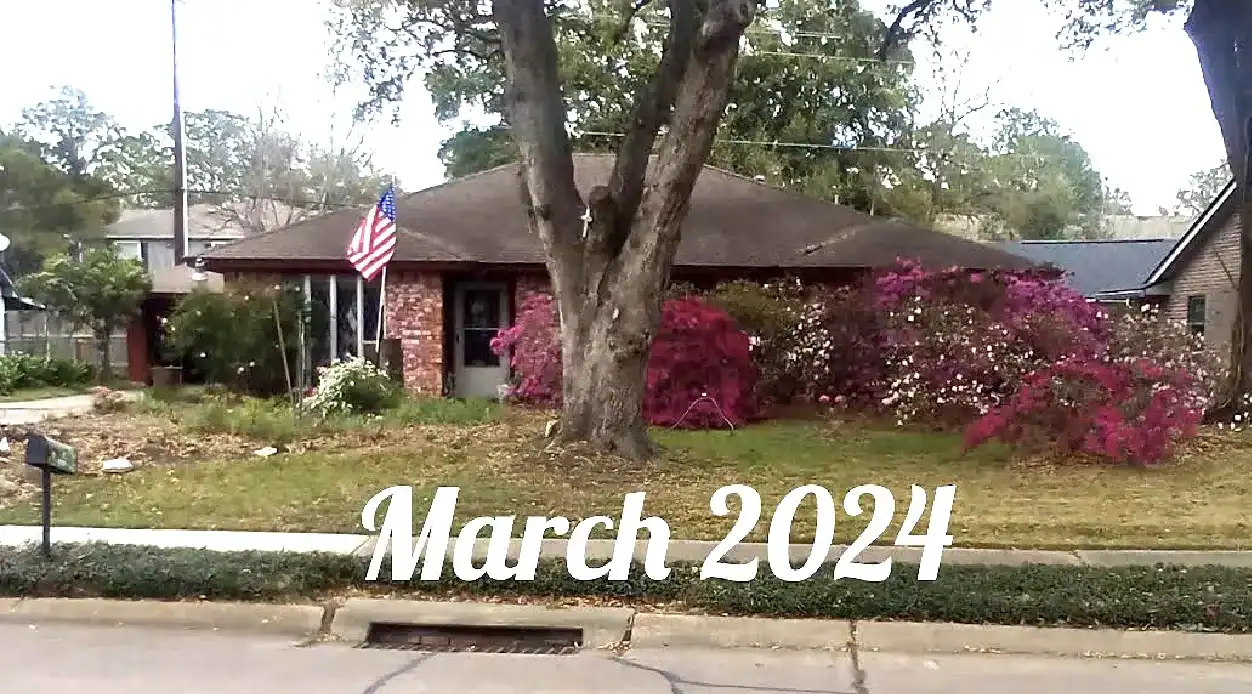
Pre-storm (L), Post-storm (R)
by Brenda Beust Smith | The Lazy Gardener
Remember that old saying: “When someone hands you lemons, make lemonade!”? Top photo: Dale Phillips’ azaleas, spread across the front of his home, were a wonderful sight to see, and an annual treat for friends and neighbors alike. When Mother Nature handed
a gardening blow (center above), he decided to do things HER way!
Dale and I have been communicating about flowers for decades, a real educational treat for me! I was delighted to receive pictures of his most recent gardening adventures, starting with the picture at top left of his once gorgeous, azalea-packed front yard. And then so sad when he sent the top pictures of the over half-dozen of his plantings (center) that were killed during a freeze. But if there’s one thing I’ve learned about Dale over the years, when Nature ‘does him wrong,’ he just bounces back with a new approach.
The photos above are a great example. L to r. Beautiful azaleas have adorned 90-year-old Dale’s 58-year-old Friendswood home and front yard for a very long time. (And fortunately, “grandfathered in” decades ago, since this display would not be allowed in his subdivision these days!) He recalls getting letters from previous HOAs saying his azalea bushes “need cutting back!” He just sent back pictures of past eye-popping azaleas with the note, “Oh, if I do that, no flowers next year!” Complaints withdrawn.
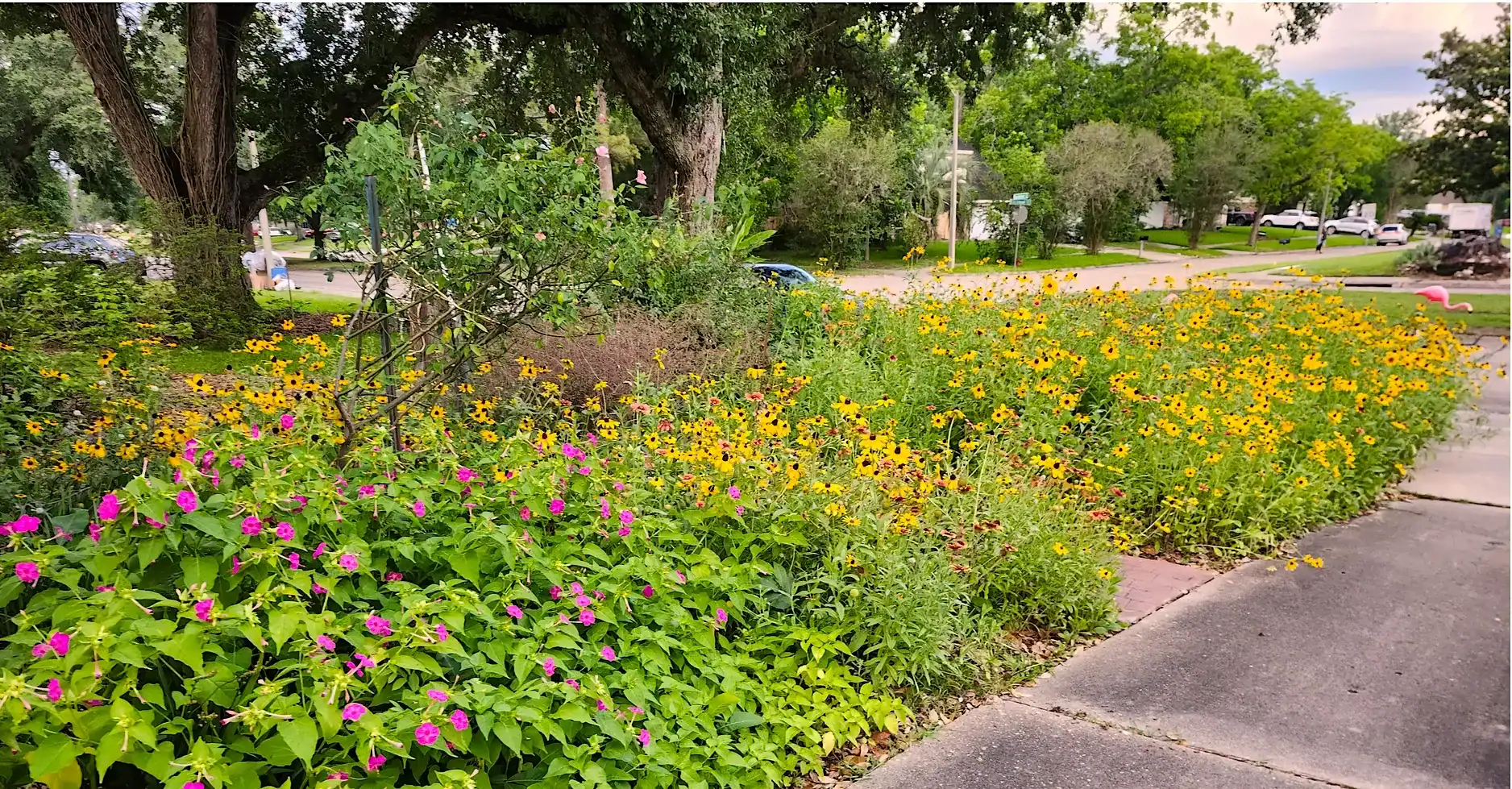
When one of our worst freezes took out a huge spread of those magnificent bloomers, it hurt! But even medical challenges didn’t stop Dale from responding with something hardier: wildflowers! And the larger photo above shows how perseverance pays off!
All this occurred over two years ago, and his retaliation is now spectacular. Immediate removal of damaged plants was with carefully replaced wildflower seed. For months it was — and continues to be — “spectacular!” And, true to his generous, “waste-not” nature, again he’s now often found in the gardens”…dead-heading and giving away … millions of seeds!”
Dale explains it’s best to give a lot of consideration before embarking on such a project, adding, “First, look at the space you want to put them. Then, when ordering, check how many different seeds are offered, depending on the area to cover, choose only 3 or 4.”
The reason, he explains, “…some wildflowers like Black-Eyed Susans and Coreopsis take over and all the other seeds get shaded out. Conversely, if you have a large area, they all would probably come up. Lastly, only order what you need!
Dale finally settled on the “Lady Bird’s Legacy” mix from Native American Seed. “I just cast out seeds in the fall (September). In the first year, (they) did not cover all the space, but now (are) wall-to-wall!”
(NOTE: MOST EXPERTS AGREE best time to plant most wildflowers, especially natives like bluebonnets, is Sept. 1-Nov. 30, when Nature does it! (More info on specific species, consult local Texas Native Plant Society of Texas chapter or Tex. Dept. of Transportation Wildflower.
* * *
DEADHEADING PLANTS: DALE deadheads plants (and gives away) many seeds, explaining one good technique is to use “an electric hedge trimmer, then pick-up all the seed heads. After that I can bring them in house and shuck the dried heads.”
NOTE: DEADHEADING? WHY DO THAT? Wilted flowers, often dismissed as useless and pinched off, usually have “pods” attached full of new, developing seeds. Smart gardeners don’t just pinch wilted ones off. They look at stems and make their pinch/cut not at that flower’s base, but (if needed) down the stem above newly-developing healthy leaves and/or flowers. Why? This nudges plant to continue producing beautiful flowers on that stalk instead of focusing on going to seed. )
IT’S HARD TO LET GO of a great resource like Dale. He added so many additional tips perfect for one of our “Local Plant Experts” Spotlight Article. See below!
* * *

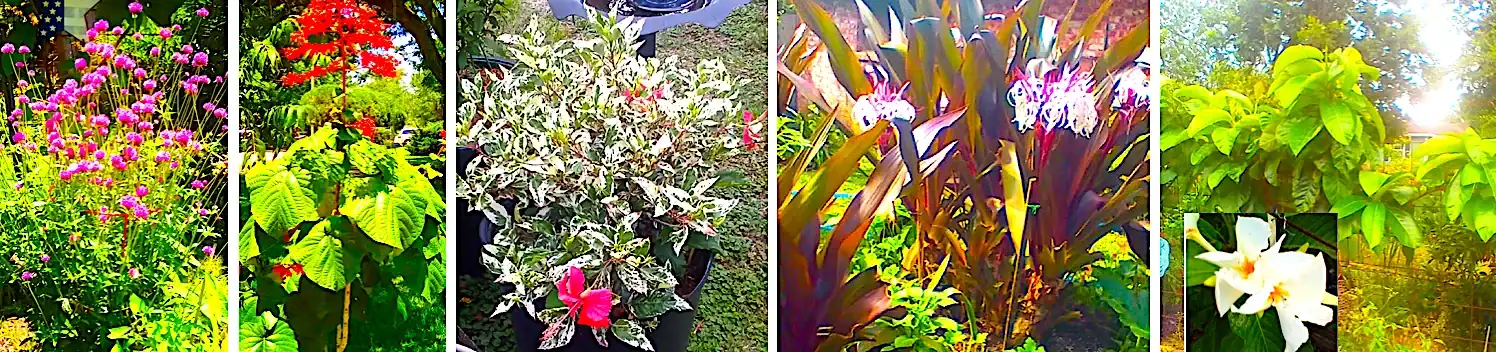
More treasures from Dale’s past & present gardens, l to r, Above: L TO R, Gomphena, Pagoda, Snow Queen hibiscus, Queen Emma crinum, and Frangipani vine
MORE TIPS FROM
DALE B. PHILLIPS!
(in his own words!)
After all those azaleas (above) finished blooming, it was a yearly ritual to rake all the leaves off into a gigantic pile (had 4 large oak trees, now 2), would go to Southwest Fertilizer and get several 25# bags of their azalea fertilizer, spread it out and then using my lawnmower with the bag mulched all those leaves and spread over fertilizer.
I am a big fan of fish emulation, so would spray the entire azalea bed with fish, my neighbor would complain about smell and I told her, the smell will be gone in several hours!!
I had some friends bring me fresh green seaweed from Galveston. I had heard that the old timers down there used it for fertilizer. I spread it out on driveway and hosed the salt off (now bear in mind, please, no idea what I was doing!)
Well, talk about nasty smelling and flies — yikes! I let it dry and raked it up and put on garden beds. Never did that again.
One of my co-workers was a big fisherman and asked if I wanted a cooler full of fish heads and guts. Oh, yeah, for sure! Like the Indians, I dug holes in the garden and put some in each hole, then planted my tomatoes.
About a day later, I went out and every tomato plant was dug up. Raccoons had come up from Clear Creek, via the drainage pipes and had a feast…!
From Brenda:
Thanks, Dale, for letting us know even the gardeners we totally envy have great stories of disappointments!!!
* * *

ATTN:
— Nature’s Way Resources offers free guided tours of NWR’s extensive nursery/soil/mulch facilities for garden clubs, plant societies and other plant-oriented, organized groups. As usual, NWR’s now-expanded meeting site is free to above groups. Reservations a must for both. Great time to visit.
- GOOD NEWS FOR BUSY/LAZY GARDENERS: Curbside pickup is now available in the Nature’s Way Resources nursery, and we’re offering plant preorders for special requests. Call in your order, pick it up when it works for you, or let us try to source the plants you’re looking for on upcoming shipments. Find inventory sheet here.
Want to receive The Lazy Gardener & Friends weekly newsletter?
John’s Corner
NEWS FROM THE WONDERFUL WORLD OF SOIL AND PLANTS
This article has been condensed for clarity and ease of reading, find the link to the original article below.
Bio-Remediation – Nature’s Way
by John Ferguson
One of nature’s greatest strengths is its ability to heal itself. Through healthy soils, compost, fungi, bacteria, worms, and even certain plants, many pollutants can be naturally broken down, immobilized, or removed from the environment. This process is known as bio-remediation.
Over the past several decades, researchers have documented the remarkable ability of compost and healthy soil biology to clean contaminated soils and water while improving plant health.
Compost: More Than a Soil Amendment
Research has shown that compost can:
- Reduce harmful compounds such as polynuclear aromatic hydrocarbons (PAHs) found in creosote.
- Encourage beneficial bacteria that naturally break down many pesticides and other contaminants.
- Bind toxic metals such as aluminum into stable compounds, reducing their harmful effects on plants.
- Reduce the toxicity of salts, heavy metals, and other plant poisons in soils rich in humus.
- Improve nutrient availability while increasing beneficial elements in crops and reducing uptake of certain toxic metals.
Compost has also become an important environmental tool for:
- Stormwater treatment
- Erosion control
- Watershed restoration
- Wetland reconstruction
- Mine reclamation
- Revegetation of degraded soils
- Green roof filtration systems
Compost Can Help Break Down Many Pollutants
Numerous studies have shown that composting can significantly reduce or degrade many contaminants, including:
- Creosote compounds (PAHs)
- Carbofuran and simazine pesticides
- Pentachlorophenol
- Dioxins
- Cyanides
- DDT
- TNT and other explosives
- PCB and TCB compounds
- Coal tar
- Diesel fuel
- Gasoline
- JP-4 jet fuel
- Petroleum hydrocarbons
- Mineral oils and grease
In many cases, reductions of 80-100% have been reported under properly managed composting conditions.
Nature’s Cleanup Crew
Healthy compost supports billions of microorganisms that naturally consume or transform pollutants.
Researchers have identified bacteria, fungi, and earthworms capable of breaking down pesticides, petroleum products, nitrates, explosives, chlorinated compounds, and many other contaminants.
One of the most remarkable organisms is White Rot Fungus, which naturally decomposes wood while also breaking down difficult pollutants including:
- Dioxins
- Creosote
- Coal tar
- Cyanides
- DDT
- Pentachlorophenol
- TNT
Some studies have reported destruction of more than 90% of certain contaminants within 60 days.
Scientists have also discovered that adding simple carbon sources, such as used vegetable oil or molasses, can stimulate naturally occurring soil microbes, allowing them to remove contaminants from groundwater and polluted soils even more efficiently.
Plants That Clean Soil
Many plants are capable of absorbing contaminants from soil and water, a process known as phytoremediation.
Research has identified several especially effective species:
- Indian Mustard – absorbs lead, cadmium, chromium, nickel, zinc, and copper.
- Alpine Pennycress – hyperaccumulates cadmium and zinc.
- Cottonwood (Populus deltoides) – removes groundwater contaminants such as trichloroethylene (TCE).
- Sunflowers – remove radioactive materials and heavy metals from water and soil.
- Lemon-Scented Geranium – accumulates lead, cadmium, nickel, copper, and hydrocarbon contaminants.
- Chinese Brake Fern (Pteris vittata) – one of the best-known plants for removing arsenic from contaminated soils.
These plants have become valuable tools for restoring contaminated industrial sites at a fraction of the cost of traditional excavation and disposal methods.
Biofilters
Researchers have also demonstrated that biofilters made from compost, pine bark, poultry litter, and beneficial microbes can effectively remove airborne pollutants and odors from:
- Stormwater systems
- Wastewater treatment plants
- Meat processing facilities
- Industrial operations
In many cases these biological systems perform as well as conventional treatment methods while costing significantly less.
The Bottom Line
Healthy compost is far more than an organic fertilizer.
It is a living biological system capable of improving soil health, reducing erosion, filtering water, supporting beneficial microbes, and helping break down a remarkable variety of environmental contaminants.
As our understanding of soil biology continues to grow, bio-remediation is becoming one of the most practical, economical, and environmentally friendly tools available for restoring damaged ecosystems.
Selected References
Research summarized above includes work published by the EPA, USDA, Department of Energy, Rutgers University, the University of Guelph, BioCycle, Compost Science & Utilization, Organic Gardening, American Nurseryman, Journal of Environmental Quality, and other scientific publications from the early 1990s through the early 2000s
Download the Original Newsletter Issue Below!
Sponsorship
If you are interested in becoming a sponsor, please contact us at 936-273-1200 or send an e-mail to: lazygardenerandfriends@gmail.com
About Us
BRENDA BEUST SMITH
WE KNOW HER BEST AS THE LAZY GARDENER . . .
but Brenda Beust Smith is also:
- a national award-winning writer & editor
- a nationally-published writer & photographer
- a national horticultural speaker
- a former Houston Chronicle reporter
When the Chronicle discontinued Brenda’s 45-year-old Lazy Gardener” print column — started in the early ’70s as a fun side-project to reporting, it then ranked as the longestrunning, continuously-published local newspaper column in the Greater Houston area. The name, she says, is not just fun, it’s true.
Brenda’s gradual sideways step from reporter into gardening writing led first to an 18-year series of when-to-do-what Lazy Gardener Calendars, then to her Lazy Gardener’s Guide book which morphed into her Lazy Gardener’s Guide on CD, which she now emails free upon request.
Brenda became a Harris County Master Gardener and, over the years, served on theboards of many Greater Houston area horticulture organizations. She hosted local radio and TV shows, most notably a 10+-year Lazy Gardener specialty shows on HoustonPBS (Ch. 8) and her call-in “EcoGardening” show on KPFT-FM.
For over three decades, Brenda served as Assistant Production Manager of the GARDEN CLUB OF AMERICA’S “BULLETIN” magazine. Although still an active broad-based freelance writer, Brenda’s main focus now is THE LAZY GARDENER & FRIENDS HOUSTON GARDEN NEWSLETTER with John Ferguson and Pablo Hernandez of Nature’s Way Resources.
A native of New Orleans and graduate of St. Agnes Academy and the University of Houston, Brenda lives in Humble, TX, and is married to the retired Aldine High School Coach Bill Smith. They have one son, Blake.
Regarding this newsletter, Brenda is the lead writer, originator of it and the daily inspiration for it. We so appreciate the way she has made gardening such a fun way to celebrate life together for such a long time.
About her column, Brenda says: “I don’t consider myself a ‘garden writer.” I started out 50+ years ago as a very lazy “gardening reporter.” I still feel that way today. I hope my columns inspire/help newcomers, but I do not write to them. I write to very experienced gardeners who want to expand their horizons.
JOHN FERGUSON (1951-2025)
John was a native Houstonian with more than 35 years of business experience. He founded Nature’s Way Resources, a composting company known for producing high-quality compost, mulch, and soil mixes. He held an MS in Physics and Geology and was a licensed Soil Scientist in Texas.
Throughout his career, John received numerous awards in horticulture and environmental work. He represented the composting industry for many years on the Houston-Galveston Area Council for solid waste. His personal garden was featured in several horticultural books and in Better Homes and Gardens. His business was recognized by The Wall Street Journal for the quality and value of its products. He was a member of the Physics Honor Society and several professional organizations, and he co-authored Organic Management for the Professional.
John contributed articles regularly to this newsletter and oversaw its publication. We continue to share his past articles each week alongside The Lazy Gardener column to keep his passion, knowledge, and spirit alive for our readers.
SHELBY CASSANO is the communications and marketing lead for Nature’s Way Resources and the editor of The Lazy Gardener and Friends newsletter. Through her business, Leaf and Ledger, she exclusively partners with NWR to direct all marketing efforts, from campaign strategy and content planning to technical production of the newsletter. Shelby holds a B.S. in Agriculture with a concentration in Horticulture from Stephen F. Austin State University and previously managed the company’s nursery.

NATURE’S WAY RESOURCES
101 Sherbrook Cir.
Conroe, TX 77385
Hours of Operation
Monday – Friday: 8AM to 5PM
Saturday: 8AM to 2PM
Copyright © 2024 Nature’s Way Resources | All rights reserved.