
Nature’s Way Resources is proud to bring you this free weekly newsletter. While we don’t run ads, generous sponsors help support this project as a public service. Their names are listed below, please consider showing your appreciation by supporting their businesses!
Nature’s Way Resources honors the contributions of our late owner, John Ferguson. “The Lazy Gardener” Brenda Beust Smith and Shelby Cassano welcome your feedback and remain grateful to the many horticulturists who share their expertise.
Published May 20, 2026
by Brenda Beust Smith | The Lazy Gardener
Heard about the very severe “El Niño” ahead? El Niño (Spanish for “little boy”) means — for us — warmer ocean waters, sometimes triggering flooding across the country. Unfortunately, broadcasters are now warning about a record-setting El Niño this coming fall or winter.
Don’t ignore this warning. Maybe we can’t stop it, but we can start preparing now to make garden plants as strong as possible by Fall. Experts say while Northerners can expect higher temperatures and no rain, in the South we’re more likely to see (predicted close to fall) heavy rains and lower temps, slowing plant development, especially edibles, and increased plant disease. What to do now?
Experts say we may not see effects until fall. Even so, can’t hurt to plant now with weather speculations in mind:
- El Niño events typically develop in summer or fall.
- Effects on Texas weather usually peak during winter months..
- Expect increased rainfall and possible severe weather during this period.
- Subscribe to Citizens’ Environmental Coalition (CEC) now if you don’t already. Good way to stay informed by experts! Then, plant with future threats in mind!
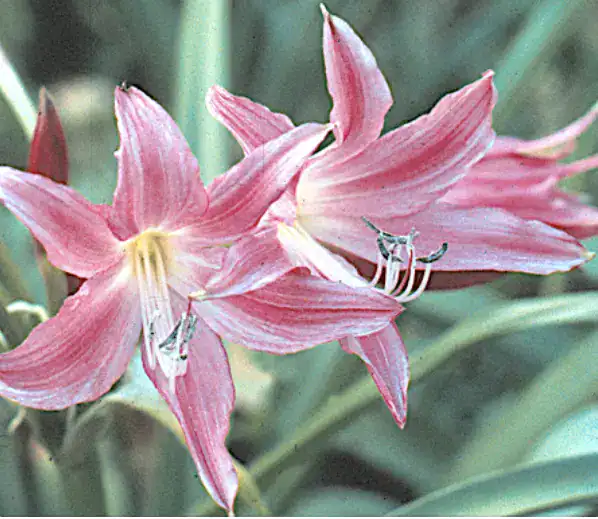
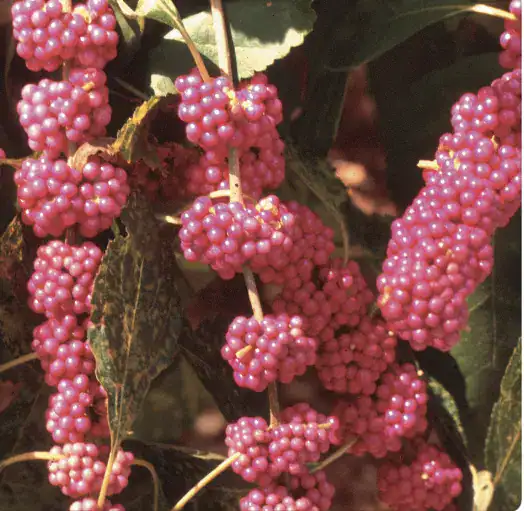
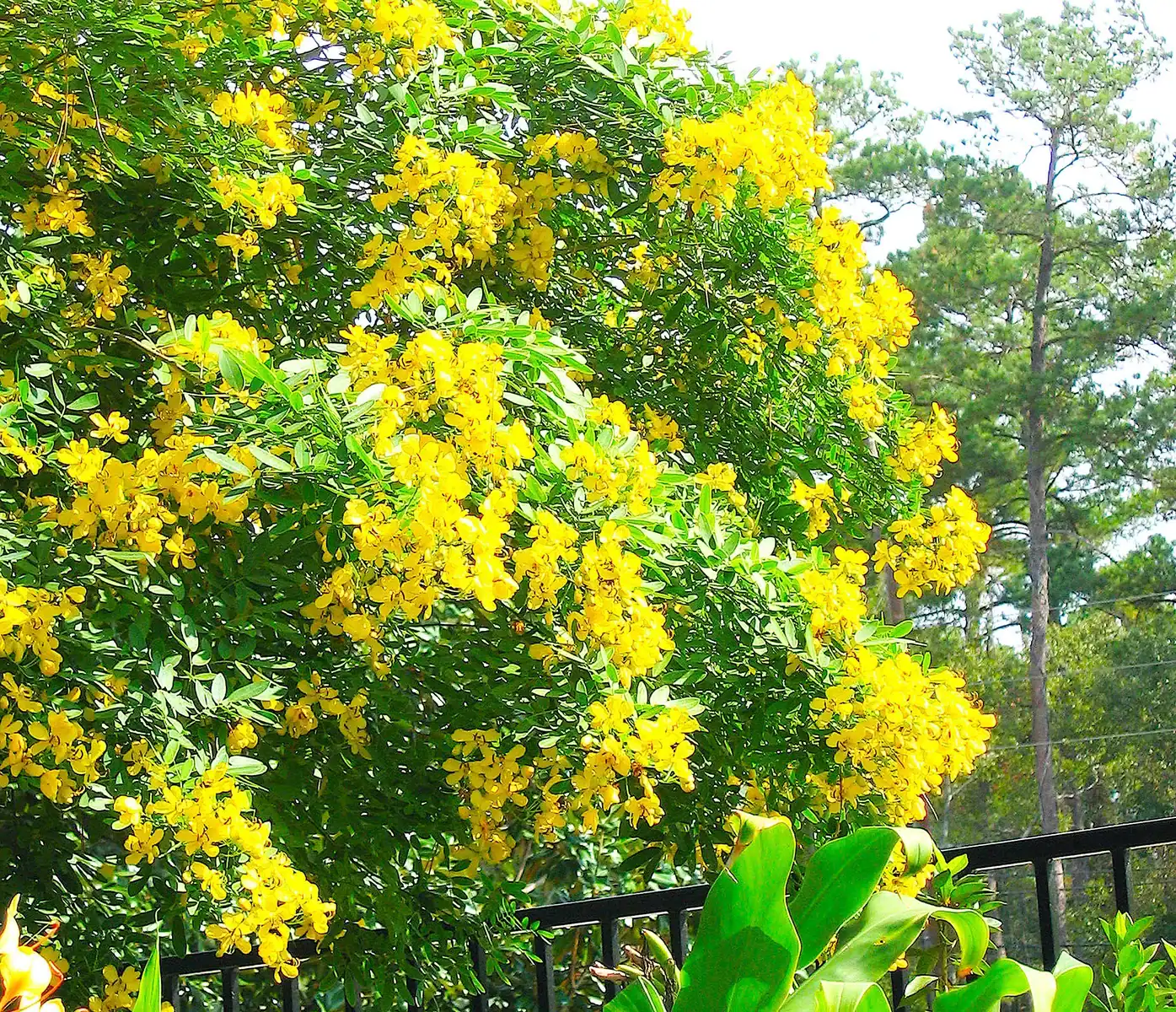
Have you tried, (l to r): crinums and American beautyberry, Esperanza — perfect for Greater Houston area!
EL NINO OR NO — HOPE YOUR GARDEN IS FILLED WITH COLOR AND/OR PRODUCE now and through summer. June is National Gardening Week! Hope you’ve gotten your 2026 Urban Harvest Planting Guide? And stopped by your local Master Gardener Garden to see what your local, well-trained peers are planting! You can be sure they’re already keeping El Niño in mind!
In the meantime, summer’s already on our doorstep and — even tho rest of the country is FAR behind us! — June marks the beginning of National Gardening Week! Still not too late for these reminders like these below from my “Lazy Gardener’s Guide”. . . )
This month, you really should . . .
• For larger leaves, remove flower buds from caladiums and coleus. (“Buds” on these plants are tightly rolled leaves at the soil line that will emerge into the decorative leaves or growth point at the soil line. For coleus, look where leaves meet the stem. For an emerging leaf, look for the bud at the base of the plant, near the soil line.
• Replace spring annuals with summer-hardy flowers such as gaura, Mexican zinnia, and scaevola
If the spirit moves . . .
• Feed amaryllis (after blooming), caladiums, and Louisiana iris. If squirrels are a problem, don’t use bonemeal!
• Feed crape myrtle, hummingbird bush, barleria, and other summer-blooming shrubs. (I never did and got great color. But it never hurts to feed!)
• Cage, rather than stake, tomatoes to keep fruit from bruising. Better yet, train up trellises (easier pickings)!
• Plant impatiens deeper than they were in pots for more drought-tolerance in summer.
• Plant new shrubs before it gets any hotter.
If you’re really feeling energetic . . .
• Mow, water often to encourage grass to spread into thin areas.
• In very hot, dry, sunny spots, try bulbine, Copper Canyon daisies, flame acanthus, rock rose, trailing lantana, scaevola, and yarrow.
• Removing early althaea buds and crape myrtle seeds makes flowers larger overall.
• Prune summer-blooming shrubs after flowers fade (only if they’re growing out of bounds).
• Pinch non-blooming perennial and shrub tips to force bushier growth. (More flowers/color later!)
• Consider moving non-blooming roses and daylilies into more sun.
• In shade, try beautyberry (pictured), barlaria, gingers, firespike, hosta, pigeonberry, Virginia sweetspire.
(all tips from my Lazy Gardener’s Guide (Tips from my (now-out-of-print) Lazy Gardeners Guide. Email lazygardenerbrenda@gmail.com for free online copy)
Do yourself and our Texas environment a favor! Check out the Invasive Plant List to be sure you’re not threatening our treasured native populations!
Hope you’re keeping a scrapbook (shows my age) or video files of your gardens. We all vaguely remember plants we loved in days past, we’d love to replant but whose names we can’t now remember!
REMEMBER ‘NO MOW MAY’? This national (mostly northeastern) slogan made the rounds years ago as the movement towards removing lawn grasses took hold. Never caught on down here, probably because, by May, our lawns would be grasslands, not lawns! But the movement seems to be popping up again online. What we need is “NO MOW MARCH!”
* * *
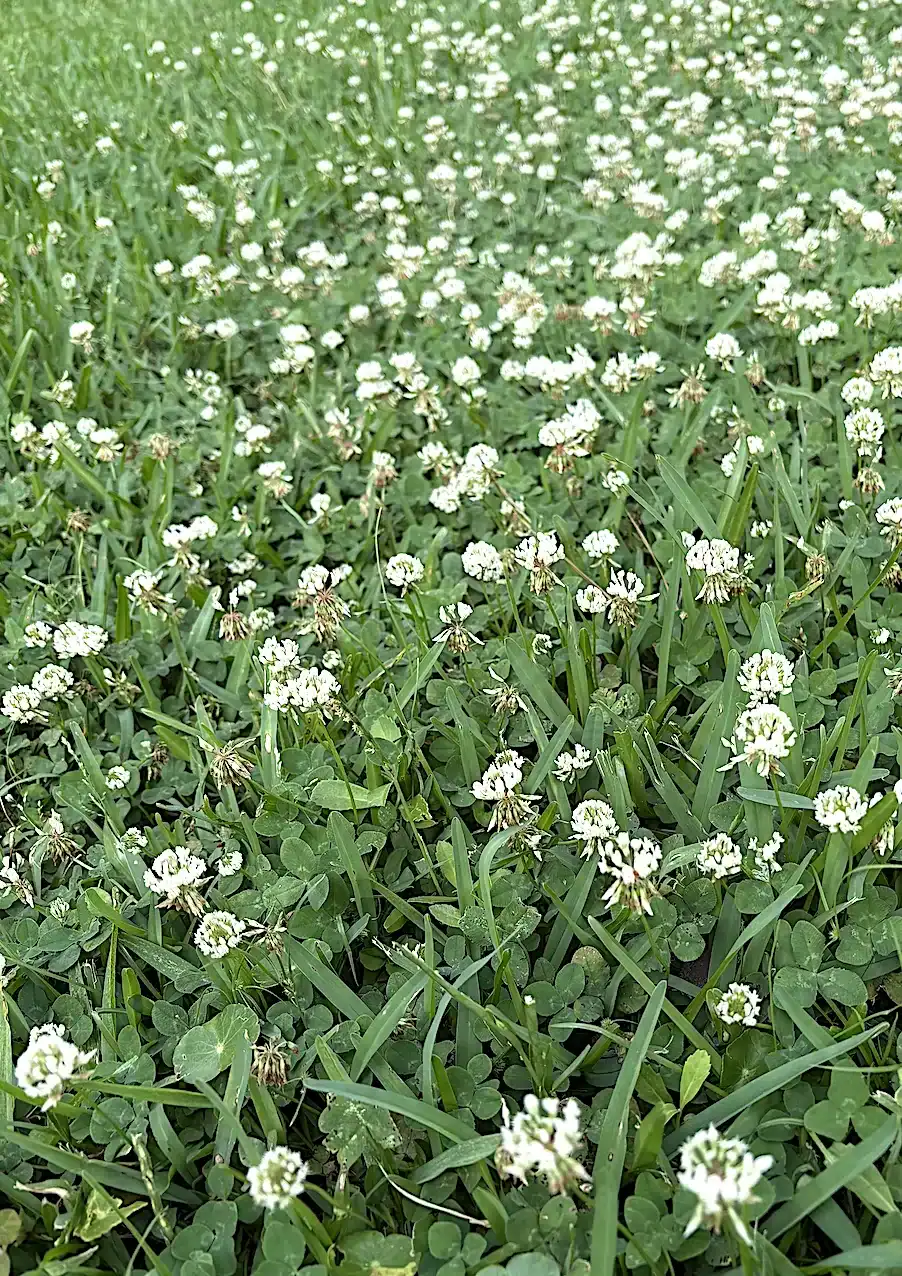
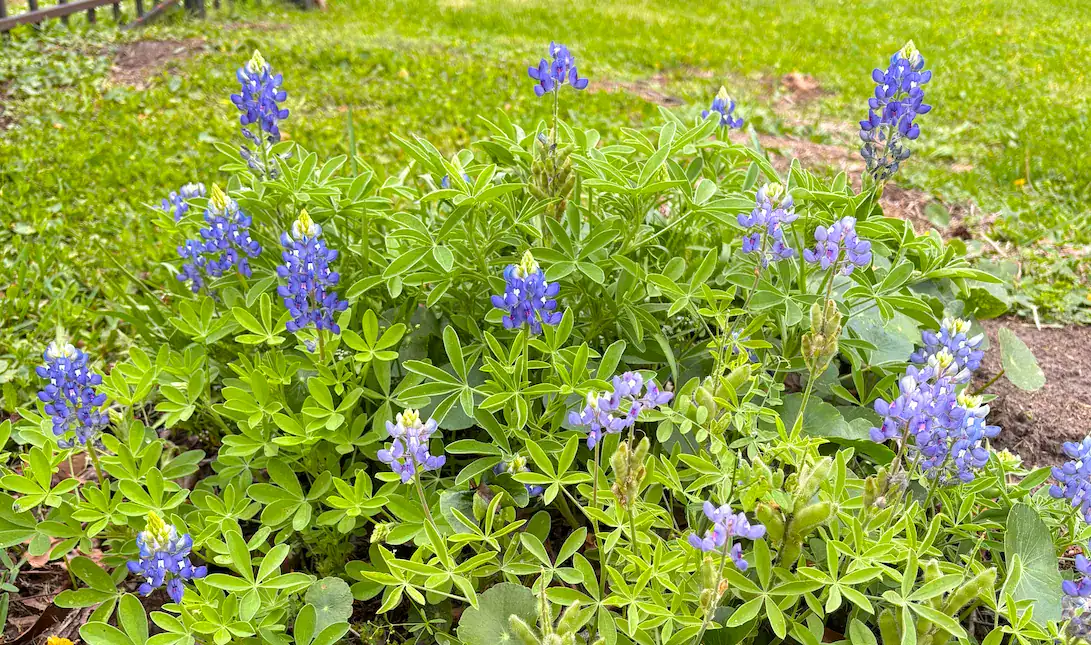
WILDFLOWERS IN FRONT YARDS? Yep, many folks are adding wildflower “sites” in front yards. I have a lovely-albeit-small stand of bluebonnets (sowed) in a hump of front yard soil left uncovered and, for some reason, unappealing to grass) by workmen. Threw a few bluebonnet seeds on top and presto!
So pretty, I had my usual stands of “flowering weeds” in the front yard protected by being mowed around until flowers disappeared. Thought mowers would object! But they kindly leave me with pockets of tiny white, yellow and pink-flowered “blooms” in the green lawn!
Bloom sites are growing thicker. Flowers don’t last very long before going to seed. Lawn returns to green, gradually all mowed as usual rest of the year. (And, as I hoped, dormant weedflower roots spread underground to provide even more clusters of flowers the next spring! Working so far!)
* * *
If you’re looking for incredibly beautiful but literally no-care plants, visit our many area public gardens. For maintenance and appearance, usually the most hardy of colorful plants are used, (included pictured: my pre-Harvey American beautyberry). Hard to beat this for eye-drawing color!
What are your favorite NO CARE plants? Do share with picture and your area of Greater Houston — very helpful for newcomers! (lazygardenerbrenda@gmail.com)
* * *

ATTN:
— Nature’s Way Resources offers free guided tours of NWR’s extensive nursery/soil/mulch facilities for garden clubs, plant societies and other plant-oriented, organized groups. As usual, NWR’s now-expanded meeting site is free to above groups. Reservations a must for both. Great time to visit.
- GOOD NEWS FOR BUSY/LAZY GARDENERS: Curbside pickup is now available in the Nature’s Way Resources nursery, and we’re offering plant preorders for special requests. Call in your order, pick it up when it works for you, or let us try to source the plants you’re looking for on upcoming shipments. Find inventory sheet here.
Want to receive The Lazy Gardener & Friends weekly newsletter?
John’s Corner
NEWS FROM THE WONDERFUL WORLD OF SOIL AND PLANTS
EDITORS’ NOTE:
Like many of his articles, this one hits a little harder since his passing.
We just know John is growing his strawberries and heirloom vegetables up in heaven!
Post Rain Hormones; Microplastics; Magnesium; Neonicotinoid Pesticide-Treated Seeds; Selective Breeding, Is It Making Our Food Less Nutrient-Dense?
by John Ferguson,
Founder of Nature’s Way Resources
We’ll start with a little trivia this morning. Most gardeners have noticed the rich, earthy aroma that wafts up after a good rain. This wonderful aroma is called petrichor and is often a sign of healthy soils, and comes from a family of chemicals we call terpenes.
A member of the terpene family, known as geosmin, is produced by the Streptomyces bacteria along with a few other microbes. Researchers have discovered that this is a signaling chemical that tells most predator microbes I am not good to eat.
However, the study found that this chemical attracts springtails that can eat the bacteria without harm, and then they spread the bacterial spores throughout the soil. Journal of Applied Microbial Microbiology (2022).
Other studies have found this chemical repels fruit flies at levels as low as one part per 100 million molecules. Lastly, humans can detect geosmin at levels of only 400 parts per trillion! For humans to be this sensitive to it, I suspect it is good for us, and why nature/forest bathing is so therapeutic.
The Alliance for Natural Health had an interesting report in their newsletter (11/01/22) on neonicotinoid pesticide-treated seeds. The treated seeds are often used to make alcohol used in gasoline, which creates a lot of toxic wastewater in the process that is stored in large lagoons. Farmers use these toxic seeds to grow our food, and 150 million acres are planted with these seeds every year. A lot of this toxic pesticide escapes into the environment, poisoning wells, streams, and lakes.
This process has led to some towns being declared a Superfund site.
From the article, “Let this sink in: the seeds used to grow our food have led to an entire town becoming a superfund site. The EPA is once again selling out consumers to protect special interests.”
The recycling magazine Biocycle (April 2023) had a good article on microplastics that are contaminating our environment and causing many health problems.
For gardeners, the microplastics (MP’s) can adhere to the surfaces of seeds and roots, and thus inhibit seed germination, root elongation, and absorption of water and nutrients, and ultimately inhibit plant growth. This can lead to insect and disease issues.
These MP’s, especially nano-plastics, can be absorbed by roots and then moved to stems, leaves, and fruits. When consumed, they lead to animal and human health problems.
We have talked about this issue in the past, and a major source is biosolids (sewage sludge), fertilizers made from biosolids, and some low-quality composts that use a lot of food waste residuals.
We have often talked about the importance of the element magnesium (Mg) to plants, animals, and humans. A new study from the National Center for Epidemiology and Population Health of the Australian National University has found a relation to dementia, which is the second leading cause of death in Australia and 7th worldwide.
They found that a 41% increase in magnesium intake was found to help prevent age-related brain shrinkage.
Many foods from greens like spinach and most nuts are rich in this element, which we discussed in detail during our study of the elements last year. However, if one eats conventionally grown food that was raised with glyphosate herbicides like Round-Up, it prevents the body from absorbing this essential nutrient.
Researchers at MIT University found that during the pandemic, the port cities that required ships to use biodiesel, which was made from genetically modified soy beans and had large amounts of glyphosate used on them, had greatly increased cases of COVID. Burning of the fuel aerosolized the glyphosate into the atmosphere, where it could easily be absorbed in our lungs, preventing the absorption of magnesium required by our immune systems to fight viruses.
My wife and I have quit buying strawberries at the grocery store as they lack flavor and often have the consistency of cardboard. A 2023 study has found that two fungicides, boscalid (BOS) and difenoconazole (DIF) are part of the reason.
When treated with these chemicals, the strawberries had a dramatic reduction in vitamin C, there was a reduction in sugar, and some of the remaining sugars were converted to acids. The oxidative damage to the berry also muted the scent, flavor, and aroma.
The other reason is that the selective breeding to develop larger and pest-resistant strawberries has resulted in strawberries with fewer nutrients, texture, and flavor.
I look forward to my retirement home being finished and having a large vegetable garden where I can grow organic heirloom varieties of strawberries again.
Download the Original Newsletter Issue Below!
Sponsorship
If you are interested in becoming a sponsor, please contact us at 936-273-1200 or send an e-mail to: lazygardenerandfriends@gmail.com
About Us
BRENDA BEUST SMITH
WE KNOW HER BEST AS THE LAZY GARDENER . . .
but Brenda Beust Smith is also:
- a national award-winning writer & editor
- a nationally-published writer & photographer
- a national horticultural speaker
- a former Houston Chronicle reporter
When the Chronicle discontinued Brenda’s 45-year-old Lazy Gardener” print column — started in the early ’70s as a fun side-project to reporting, it then ranked as the longestrunning, continuously-published local newspaper column in the Greater Houston area. The name, she says, is not just fun, it’s true.
Brenda’s gradual sideways step from reporter into gardening writing led first to an 18-year series of when-to-do-what Lazy Gardener Calendars, then to her Lazy Gardener’s Guide book which morphed into her Lazy Gardener’s Guide on CD, which she now emails free upon request.
Brenda became a Harris County Master Gardener and, over the years, served on theboards of many Greater Houston area horticulture organizations. She hosted local radio and TV shows, most notably a 10+-year Lazy Gardener specialty shows on HoustonPBS (Ch. 8) and her call-in “EcoGardening” show on KPFT-FM.
For over three decades, Brenda served as Assistant Production Manager of the GARDEN CLUB OF AMERICA’S “BULLETIN” magazine. Although still an active broad-based freelance writer, Brenda’s main focus now is THE LAZY GARDENER & FRIENDS HOUSTON GARDEN NEWSLETTER with John Ferguson and Pablo Hernandez of Nature’s Way Resources.
A native of New Orleans and graduate of St. Agnes Academy and the University of Houston, Brenda lives in Humble, TX, and is married to the retired Aldine High School Coach Bill Smith. They have one son, Blake.
Regarding this newsletter, Brenda is the lead writer, originator of it and the daily inspiration for it. We so appreciate the way she has made gardening such a fun way to celebrate life together for such a long time.
About her column, Brenda says: “I don’t consider myself a ‘garden writer.” I started out 50+ years ago as a very lazy “gardening reporter.” I still feel that way today. I hope my columns inspire/help newcomers, but I do not write to them. I write to very experienced gardeners who want to expand their horizons.
JOHN FERGUSON (1951-2025)
John was a native Houstonian with more than 35 years of business experience. He founded Nature’s Way Resources, a composting company known for producing high-quality compost, mulch, and soil mixes. He held an MS in Physics and Geology and was a licensed Soil Scientist in Texas.
Throughout his career, John received numerous awards in horticulture and environmental work. He represented the composting industry for many years on the Houston-Galveston Area Council for solid waste. His personal garden was featured in several horticultural books and in Better Homes and Gardens. His business was recognized by The Wall Street Journal for the quality and value of its products. He was a member of the Physics Honor Society and several professional organizations, and he co-authored Organic Management for the Professional.
John contributed articles regularly to this newsletter and oversaw its publication. We continue to share his past articles each week alongside The Lazy Gardener column to keep his passion, knowledge, and spirit alive for our readers.
SHELBY CASSANO is the communications and marketing lead for Nature’s Way Resources and the editor of The Lazy Gardener and Friends newsletter. Through her business, Leaf and Ledger, she exclusively partners with NWR to direct all marketing efforts, from campaign strategy and content planning to technical production of the newsletter. Shelby holds a B.S. in Agriculture with a concentration in Horticulture from Stephen F. Austin State University and previously managed the company’s nursery.

NATURE’S WAY RESOURCES
101 Sherbrook Cir.
Conroe, TX 77385
Hours of Operation
Monday – Friday: 8AM to 5PM
Saturday: 8AM to 2PM
Copyright © 2024 Nature’s Way Resources | All rights reserved.