
Nature’s Way Resources is proud to bring you this free weekly newsletter. While we don’t run ads, generous sponsors help support this project as a public service. Their names are listed below, please consider showing your appreciation by supporting their businesses!
Nature’s Way Resources honors the contributions of our late owner, John Ferguson. “The Lazy Gardener” Brenda Beust Smith and Shelby Cassano welcome your feedback and remain grateful to the many horticulturists who share their expertise.
Published July 15, 2026

by Brenda Beust Smith | The Lazy Gardener
It’s easy to understand how plants outside these days might be suffering a bit. But does outside heat really affect indoor plants? Even if you have air conditioning? If so, how? And what can we do about it, besides making sure they’re not in direct sunlight?
Even if they’re away from sunny windows (which many plants don’t like in summer anyway!), ambient humidity is still a threat. This is the term for how much water vapor is present in surrounding air. For indoor environments, the ideal level is between 30% and 50% relative humidity, but that’s often hard to judge. So what to do?
Ironically, many experts recommend moving indoor plants outside in a spot that doesn’t get any direct sunlight, but also isn’t in deep shade. Ideal would be under a wide tree canopy, always in shade.
Don’t fertilize until temperatures drop. Do group potted plants close together to help keep the humidity high.
Best time to water: early morning or late evening. Water well daily since a lot will evaporate. Be sure plants are protected from hot winds. Avoid doing any pruning, repotting, or anything that will disturb existing roots until the heat passes. One source highly recommends setting pots atop (not in) water-filled trays filled with pebbles.
Heat protection is important, but keep an eye out for hummingbirds! They’ll be starting their migrations northward, and we’re on the direct highway for many. They’ll be delighted to see filled hummingbird feeders!
Even though this upcoming extreme heat is not best time to plant, it is a good time to visit nurseries. Many will have plants on sale, as they clear out the shelves for coming Fall plantings! On the other hand, if you haven’t already, it is a good time to remove deadwood from trees.
DON’T EVER UNDERESTIMATE THE POWER OF HURRICANES! We lost our beloved home in Aldine to Hurricane Harvey. While a below-average hurricane year is predicted, it only takes one to do immense damage. Be prepared. Once in the Gulf, they can move really fast.
But let’s be optimistic! Visit your local County Extension Service to see what your area’s Master Gardeners are planting in their Demonstration Gardens. Not all plants do well everywhere in our massive Greater Houston area. But too often advice doesn’t get specific enough to get the best results for your efforts!
Since it’s too hot right now to work in the garden, from my Lazy Gardener’s Guide, here are some tips to make you smile, but don’t do anything until this heat passes!!!!
* * *
“Great Don’t-do Tips for Really Lazy Gardeners”
• Don’t cry over plants that die in the heat of August. They don’t belong in Lazy Gardens!
• Don’t assume dead plants are really dead. Some, like maidenhair and other ferns, oxalis, some roses, phlox and German primroses, may just be dormant and will return in fall.
• Pinching faded flowers prolongs bloom periods and is a good way to relieve stress (yours).
• Stop feeding and watering potted amaryllis. Lay pots on sides out of the way (to remind you not to water). When foliage dies, cut it off.
• Don’t fertilize a heat-stressed lawn. (Okay to apply seaweed extract or fish emulsion.)
STAY COOL!
* * *


NEED SOMETHING FUN to take your mind off this blasted heat? Plan to take kiddos to see “working” goats return to Houston Arboretum & Nature Center Tues., Aug. 4-11. 300+ goats (from GoatScaping LLC) will begin clearing understory brush and vegetation at HANC’s 155-acre nature sanctuary (thanks to Radoff Family Foundation), replacing mowing or chemical use! More info.
ATTN:
— Nature’s Way Resources offers free guided tours of NWR’s extensive nursery/soil/mulch facilities for garden clubs, plant societies and other plant-oriented, organized groups. As usual, NWR’s now-expanded meeting site is free to above groups. Reservations a must for both. Great time to visit.
- GOOD NEWS FOR BUSY/LAZY GARDENERS: Curbside pickup is now available in the Nature’s Way Resources nursery, and we’re offering plant preorders for special requests. Call in your order, pick it up when it works for you, or let us try to source the plants you’re looking for on upcoming shipments. Find inventory sheet here.
Want to receive The Lazy Gardener & Friends weekly newsletter?
John’s Corner
NEWS FROM THE WONDERFUL WORLD OF SOIL AND PLANTS
This article has been condensed for clarity and ease of reading. You can find the link to the original article below.
Rubber Mulch: Does It Live Up to the Claims?
Rubber mulch, typically made from recycled tires, has become a popular landscaping product. Manufacturers often advertise it as long-lasting, maintenance-free, safe, and environmentally friendly.
However, after reviewing decades of independent research, I have reached a very different conclusion.
There seem to be two schools of thought. Studies funded by tire manufacturers generally report positive results, while many independent university and government studies raise concerns about its safety and performance.
Let’s examine some of the common claims.
“It Doesn’t Float or Blow Away”
Rubber mulch is heavier than water, so it generally stays in place better than lightweight bark products.
However, research at Texas A&M found that quality native wood mulch actually resists erosion extremely well. As it decomposes, beneficial fungi and bacteria produce natural compounds that bind mulch particles together, helping them stay in place even during severe weather.
“It Lasts for Years”
Rubber does last longer than organic mulch, but that is not necessarily an advantage.
Like all materials, rubber eventually breaks down. As it does, microbes and fungi slowly degrade the rubber, releasing many of the chemicals originally added during tire manufacturing.
Organic mulches also decompose, but in doing so they build healthy soil, feed beneficial microbes, improve water retention, and recycle nutrients back into the landscape.
“It Doesn’t Attract Insects”
This is generally true.
Unfortunately, rubber mulch also provides no food source for the beneficial fungi, bacteria, and earthworms that healthy soils depend on. Some research also suggests that chemicals leaching from tire rubber can reduce populations of beneficial organisms that naturally suppress insect pests and diseases.
“It Doesn’t Smell, Mold, or Mat”
Many people notice that rubber mulch develops a strong odor during hot weather.
As temperatures rise, rubber mulch can release volatile organic compounds (VOCs) and polycyclic aromatic hydrocarbons (PAHs), both of which have been associated with air quality and health concerns.
Unlike organic mulches, rubber mulch contributes nothing to improving soil structure or biology.
“It Controls Weeds”
Research has shown mixed results.
Several studies found rubber mulch to be less effective than wood chips, straw, or other organic mulches at suppressing weeds.
Some of its apparent weed control may actually result from toxicity to certain plant species rather than superior weed suppression.
“Water and Nutrients Reach the Soil”
Water passes easily through rubber mulch.
The problem occurs beneath it.
Healthy soils depend on organic matter to feed earthworms and beneficial microbes that create soil structure. Without those organisms, soil gradually becomes compacted, reducing water infiltration, oxygen movement, and root health.
Organic mulch continuously feeds this living soil system.
“Safe for Plants and Pets”
This is where the greatest concerns arise.
Independent studies have shown that tire rubber can release metals including zinc, cadmium, chromium, copper, and other compounds into the environment.
Researchers have documented harmful effects on aquatic organisms, fish, algae, snails, and other wildlife from tire leachates.
The USDA Agricultural Research Service has also cautioned against using ground tire products in gardens, potting soils, compost, or agricultural production because of elevated zinc concentrations.
Research has also found that toxicity can increase as the rubber ages and continues to break down.
“Improves Landscaping”
Beauty is subjective.
Personally, I don’t find faded black or colored rubber particularly attractive.
More importantly, any material that contributes little to soil health while potentially stressing plants is difficult for me to consider an improvement.
“Saves Time and Money”
Rubber mulch is often marketed as cost-effective.
Consumer Reports found rubber mulch selling for well over $400 per cubic yard, while high-quality composted native mulch can often be purchased for under $35 per cubic yard.
Unlike rubber, organic mulch:
- improves soil health
- reduces watering needs
- feeds beneficial organisms
- supplies nutrients
- reduces disease and insect problems
- helps plants establish faster
Over time, those benefits usually translate into significant savings.
“Safe for Playgrounds”
This claim deserves careful consideration.
Consumer Reports found small pieces of steel and nylon in some rubber mulch products.
Other studies found rubber mulch can reach surface temperatures exceeding 170°F on hot summer days, hotter than black asphalt. At those temperatures, burns become a legitimate concern.
Research has also shown rubber mulch burns readily once ignited and is difficult to extinguish. Several studies have identified it as a significant fire hazard compared to properly composted organic mulches.
The Bottom Line
Rubber mulch may last longer than organic mulch, but longevity alone does not make it a better landscape material.
Organic mulches improve soil, feed beneficial organisms, conserve moisture, suppress weeds, moderate soil temperatures, and naturally recycle nutrients.
Rubber mulch does none of these things and introduces additional concerns related to heat, fire, chemical leaching, and soil health.
For those reasons, I believe rubber mulch is a poor choice for gardens and landscapes. High-quality composted native mulch remains one of the safest, healthiest, and most effective options available.
References
The information summarized above draws from research by Texas A&M University, USDA Agricultural Research Service, Bucknell University, Ohio State University Agricultural Technical Institute, Consumer Reports, BioCycle, and numerous university and scientific publications on soil science, mulch performance, and environmental toxicology.
Download the Original Newsletter Issue Below!
Sponsorship
If you are interested in becoming a sponsor, please contact us at 936-273-1200 or send an e-mail to: lazygardenerandfriends@gmail.com
About Us
BRENDA BEUST SMITH
WE KNOW HER BEST AS THE LAZY GARDENER . . .
but Brenda Beust Smith is also:
- a national award-winning writer & editor
- a nationally-published writer & photographer
- a national horticultural speaker
- a former Houston Chronicle reporter
When the Chronicle discontinued Brenda’s 45-year-old Lazy Gardener” print column — started in the early ’70s as a fun side-project to reporting, it then ranked as the longestrunning, continuously-published local newspaper column in the Greater Houston area. The name, she says, is not just fun, it’s true.
Brenda’s gradual sideways step from reporter into gardening writing led first to an 18-year series of when-to-do-what Lazy Gardener Calendars, then to her Lazy Gardener’s Guide book which morphed into her Lazy Gardener’s Guide on CD, which she now emails free upon request.
Brenda became a Harris County Master Gardener and, over the years, served on theboards of many Greater Houston area horticulture organizations. She hosted local radio and TV shows, most notably a 10+-year Lazy Gardener specialty shows on HoustonPBS (Ch. 8) and her call-in “EcoGardening” show on KPFT-FM.
For over three decades, Brenda served as Assistant Production Manager of the GARDEN CLUB OF AMERICA’S “BULLETIN” magazine. Although still an active broad-based freelance writer, Brenda’s main focus now is THE LAZY GARDENER & FRIENDS HOUSTON GARDEN NEWSLETTER with John Ferguson and Pablo Hernandez of Nature’s Way Resources.
A native of New Orleans and graduate of St. Agnes Academy and the University of Houston, Brenda lives in Humble, TX, and is married to the retired Aldine High School Coach Bill Smith. They have one son, Blake.
Regarding this newsletter, Brenda is the lead writer, originator of it and the daily inspiration for it. We so appreciate the way she has made gardening such a fun way to celebrate life together for such a long time.
About her column, Brenda says: “I don’t consider myself a ‘garden writer.” I started out 50+ years ago as a very lazy “gardening reporter.” I still feel that way today. I hope my columns inspire/help newcomers, but I do not write to them. I write to very experienced gardeners who want to expand their horizons.
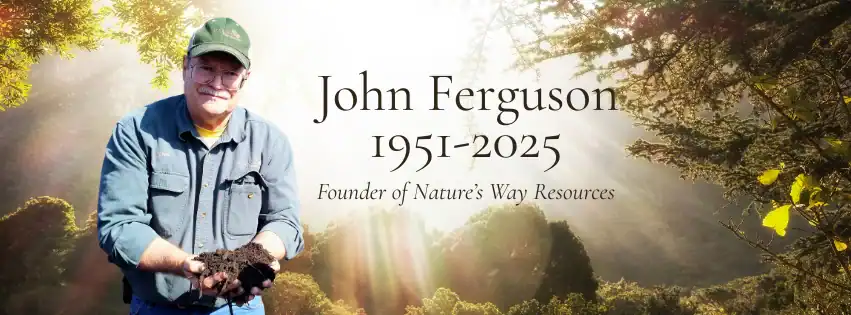
JOHN FERGUSON (1951-2025)
John was a native Houstonian with more than 35 years of business experience. He founded Nature’s Way Resources, a composting company known for producing high-quality compost, mulch, and soil mixes. He held an MS in Physics and Geology and was a licensed Soil Scientist in Texas.
Throughout his career, John received numerous awards in horticulture and environmental work. He represented the composting industry for many years on the Houston-Galveston Area Council for solid waste. His personal garden was featured in several horticultural books and in Better Homes and Gardens. His business was recognized by The Wall Street Journal for the quality and value of its products. He was a member of the Physics Honor Society and several professional organizations, and he co-authored Organic Management for the Professional.
John contributed articles regularly to this newsletter and oversaw its publication. We continue to share his past articles each week alongside The Lazy Gardener column to keep his passion, knowledge, and spirit alive for our readers.
SHELBY CASSANO is the communications and marketing lead for Nature’s Way Resources and the editor of The Lazy Gardener and Friends newsletter. Through her business, Leaf and Ledger, she exclusively partners with NWR to direct all marketing efforts, from campaign strategy and content planning to technical production of the newsletter. Shelby holds a B.S. in Agriculture with a concentration in Horticulture from Stephen F. Austin State University and previously managed the company’s nursery.

NATURE’S WAY RESOURCES
101 Sherbrook Cir.
Conroe, TX 77385
Hours of Operation
Monday – Friday: 8AM to 5PM
Saturday: 8AM to 2PM
Copyright © 2024 Nature’s Way Resources | All rights reserved.