
Nature’s Way Resources is proud to bring you this free weekly newsletter. While we don’t run ads, generous sponsors help support this project as a public service. Their names are listed below, please consider showing your appreciation by supporting their businesses!
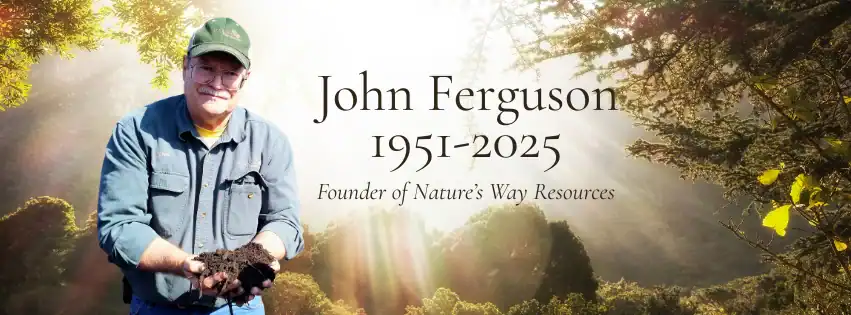
Nature’s Way Resources honors the contributions of our late owner, John Ferguson. “The Lazy Gardener” Brenda Beust Smith and Shelby Cassano welcome your feedback and remain grateful to the many horticulturists who share their expertise.
Published June 3, 2026
by Brenda Beust Smith | The Lazy Gardener
Remember after Hurricane Katrina (2005)? The toll was horrendous, especially in my birthplace, New Orleans. But out of the multiple tragedies it triggered, one little miracle did occur. So many Southern gardens (public/private) were totally destroyed or badly damaged, area gardening groups began searching for ways to revitalize (or rebuild) botanic gardens throughout the traumatized South.
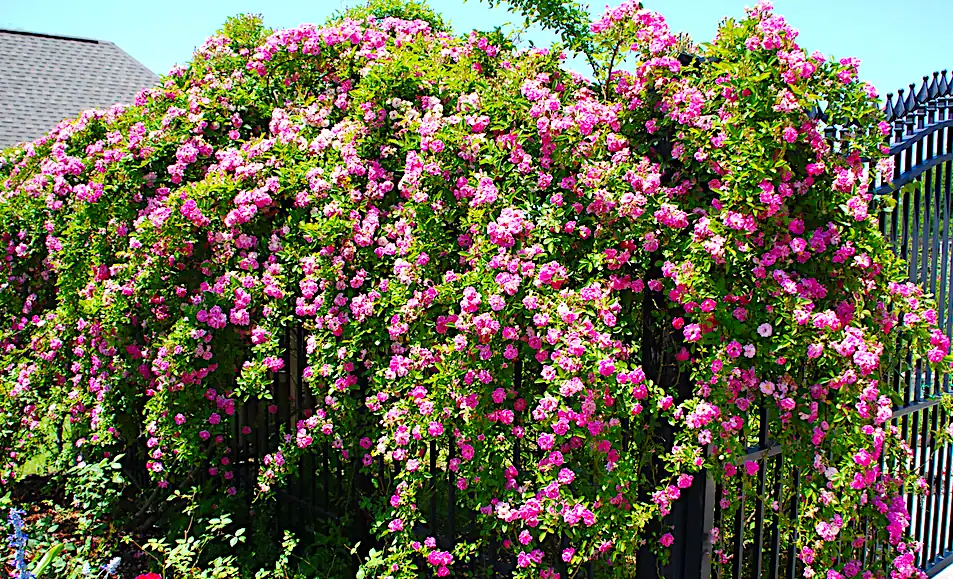
One rising star became a rose that reappeared completely on its own amid the Louisiana devastation and bloomed despite the muck and destruction. No one knows rose’s name or origin. We do have native roses, but it was more likely brought to this country eons ago.
Energetic, dedicated gardeners combined efforts, and Peggy Martin roses (named after property owner) were eventually sold nationwide to help restore devastated horticulture sites. Needless to say, it quickly became a best seller! (Fun read, especially for children: The Rose Without a Name” by Nancy Rust & Carol Stubbs with delightful illustrations by Melissa Vandiver.)
Only one caution: Gardeners who ooh’d and awe’d at first quickly learned ‘Peggy Martin’ was maybe TOO happy. Gorgeous as ever, but spreading too far too fast!
The good news: she’s easy to trim and grows from cuttings (great for plant sales, hiding unwanted vistas and even as hedges, easily whacked back after flowers wowed neighbors long enough! Garden clubs root cuttings (easy!!!) to sell to raise funds for community projects.
I love mine. She can have the whole fence as far as I’m concerned. (Maybe she’ll overpower and kill the Chinese tallow tree!)
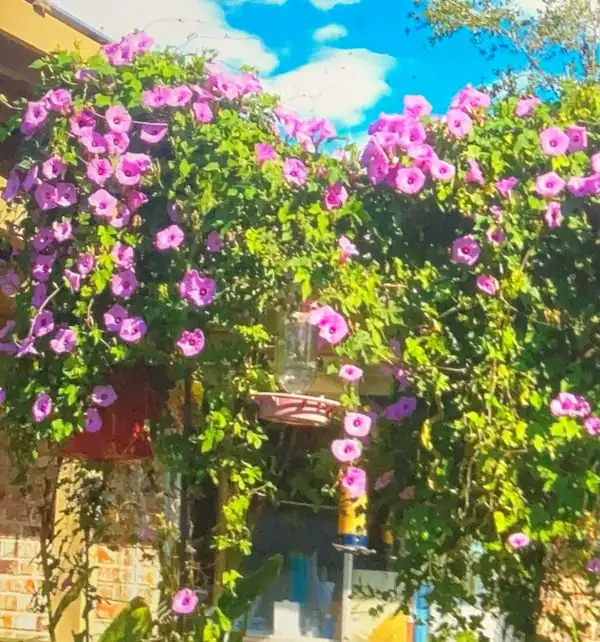
I did have to cut back my wild morning glory vine tho. Husband balked when she grew into the attic. (Not mine pictured here, but this is what she looked like until Hurricane Beryl. Huge pine tree fell on porch roof, smushing her. Guess she decided to move on. Left and never returned. Sigh . . .
Of course, spring blooms don’t last long, so might be good idea to sow seeds of later vining bloomers. Want to share your combinations?
Gardening gurus seem to be becoming more “lazy gardeners” with their predictions. Does that mean WE WIN? Love one such guy who predicts our gardens will become “more chaos and natives” (instead of formality and grass). As if some of us haven’t been promoting this for decades!
BIGGEST GARDENING MISTAKE IN JUNE? Watering in dry periods with a hand-held hose for only a few minutes. All you’re going to do is encourage roots to grow into the upper, moist soil levels. These, of course, are going to dry out quickly.
It’s only going to get increasingly hotter from this point on! So much better to water less often (if necessary) but more deeply, preferably in morning (when our monsoons aren’t predicted!) so roots will grow downward, not along the upper soil levels. The hotter it gets, the more water will be lost to evaporation with sprinklers. Best idea: soaker hoses with nozzles facing downward, left on long enough for water to reach deep into the soil. As the weather gets hotter, it’s better to water deeply less often than to hand-hold a hose for a few seconds each day. This only encourages roots to grow upward into hottest soil levels.
(Note: advice below from previous column repeated at reader’s request .)
SUSAN M. in Southwest Houston loves flower arranging, wants a cutting garden. A new resident, she’d like to know which flowers she should plant here. In a previous column, readers recommended their favorites for cutting. Reprinting here (with apology to contributors; couldn’t contact you for reprint permission, so just using first names — thanks for earlier contribution and will be glad to add any updated notes you’d like to submit! )
First: One note that came in afterwards is worth repeating: Why would you need a separate “cutting” garden? Why not just use your regular gardens?
Many folks do. But a “Cutting Garden” does have a certain panaché. They’ve long been de rigueur in landscapes of the rich and famous, almost from time immemorial, actually. But others (perhaps more picky) prefer separate because . . .
- Flowers for arrangements tend to be sown very close together, which usually results in taller stems.
- Bare spots abound when a particular bloom is “just what you want to use a lot.”
- Having your own year-round bloom supply for arrangements and/or gifts is less expensive than purchased flowers.
- Retail blooming-plant supplies are often limited and seasonal. With seed, you can be assured of varieties you like best. (The only caveat: ALWAYS check planting advice against local sources. Sometimes our subtropical pocket’s planting times differ from what you’ll see on the seed packet!)
- Cutting gardens are generally easier to maintain than landscape gardens, a side benefit. After all, you’re planting for flower production, not an overall lovely vista.
* * *
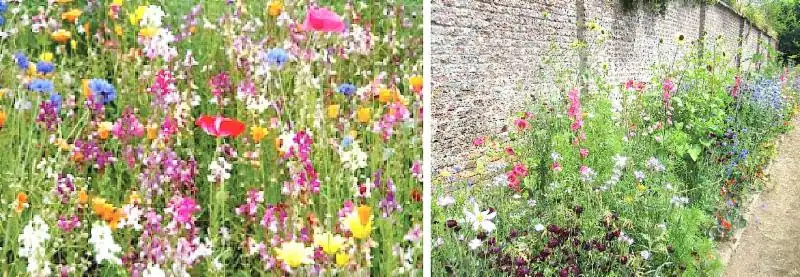
Left, Oh-so-difficult soil strips between walls/driveways and back fences are ideal for fun random seed plantings
So, what flowers did readers recommend for Susan’s cutting garden?
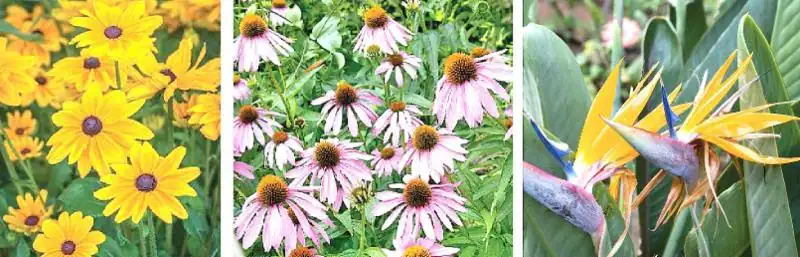
- BECKY: Indian Summer Rudbeckia (annual), purple coneflower, crape myrtle. Warning: She divided her bird-of-paradise plants, and they stopped blooming! (This plant likes to be rootbound; the stronger and tighter the root system is, the thicker the upper growth, the more it happily blooms.)
L to r, ‘Indian Summer’ rudbeckia, purple coneflowers and bird of paradise
- NANCY saves seeds every year for more larkspur, poppies (Pom Pom variety), and snapdragons for cutting. Hers are in regular gardens and return successfully; they (and her roses) earned her Yard of the Month honors.
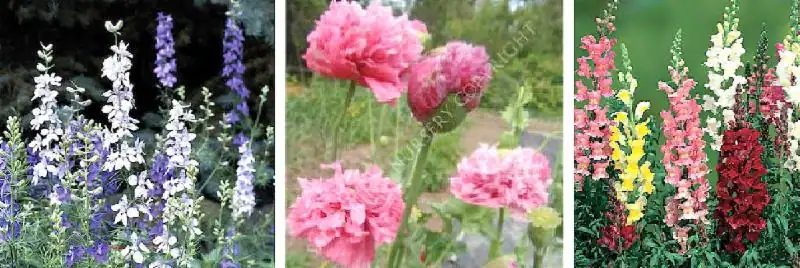
L to r, larkspur, pom pom poppies and snapdragons (all spring bloomers for us)
- MARILYN reminds us not to overlook flowers produced by edibles. Her favorite gifts are “edible bouquets” delivered in glass Coke bottles. “So fun and it makes people smile!” she notes. Great for salads too.
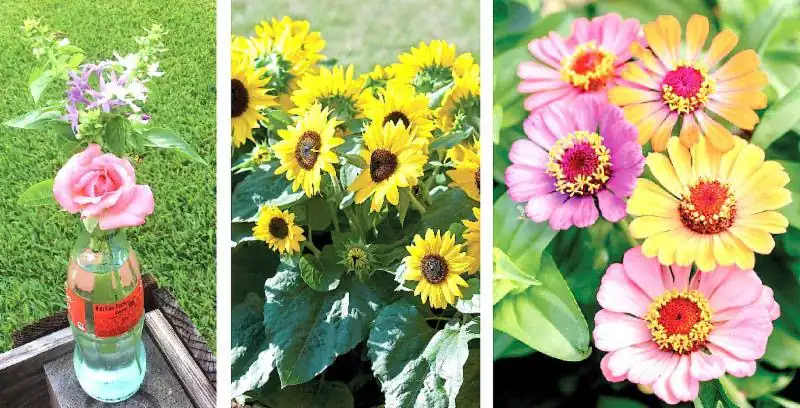
- ANN J. loves cut sunflowers. She buys packets of as many varieties as she can find. Oddly enough, she says every year brings different results. In her neat full sun spot (between garage and back fence) tall stalks can do their own thing and no one cares when they get pretty ragged looking.
- DONNA Y’s favorite cutting flowers are zinnias. She saves faded flowers in paper sacks to let them dry completely. At end of summer, she pulls off petals and saves seeds to plant around March. They do come up pretty crowded. She lets them fight it out. Those she has tried to transplant do best when dug seedlings are set in the shade for a few days.
* * *

ATTN:
— Nature’s Way Resources offers free guided tours of NWR’s extensive nursery/soil/mulch facilities for garden clubs, plant societies and other plant-oriented, organized groups. As usual, NWR’s now-expanded meeting site is free to above groups. Reservations a must for both. Great time to visit.
- GOOD NEWS FOR BUSY/LAZY GARDENERS: Curbside pickup is now available in the Nature’s Way Resources nursery, and we’re offering plant preorders for special requests. Call in your order, pick it up when it works for you, or let us try to source the plants you’re looking for on upcoming shipments. Find inventory sheet here.
Want to receive The Lazy Gardener & Friends weekly newsletter?
John’s Corner
NEWS FROM THE WONDERFUL WORLD OF SOIL AND PLANTS
Announced on June 2, 2026, Attorney General Ken Paxton and the State of Texas are investigating corporate giants, including Bayer, for poisoning Texas residents through glyphosate contamination.
It has long been known and accepted that Glyphosate is a “probable” cancer-causing chemical, among other major health effects (including but not limited to endocrine system disruption, I’m sure we all know someone who is affected by some form of endochrine/hormonal affliction), and that its potential leaching into our food supply (including livestock food crops), could pose a serious threat to our health. It is high time that companies and the state show some accountability for the levels of these chemicals in our food supply. Noting that we allow foods, namely oats, to be imported from companies that still allow the use of glyphosate applications. The statement linked here states that studies have shown children, babies, ages 1-2, are at the highest risk of dietary contamination.
Glyphosate use and contamination are issues that many, especially John Ferguson, were and still are highly passionate about. You can find his writings on the subject throughout our newsletter archive; however, we have attached one here for your reading.
Shelby Cassano
Technical Editor
Glyphosate, Europium, Chinese cinnamon, Growing Media, Sulforaphane, Microbes Against Weeds
by John Ferguson,
Founder of Nature’s Way Resources
Many times we have talked about the dangers of glyphosate (RoundUp) and GMO’s; it is one of many reasons that we need to garden organically and produce our own nutritious food that tastes good and is nutrient-dense. Monsanto has been voted the most evil corporation in the world many times, and the link below is to a video that explains why. Warning… the video is chilling.
In our study of the elements last year, the element europium was thought to have no known biological role. However, laboratory animals fed diets with Europium increase their lifespan by 100%. Research from Ludwig-Maximilians-University published in the journal ChemBioChem in 2018 has found the bacterium Methylacidiphilum fumariolicum uses europium to make an enzyme that converts methanol into formaldehyde. Its active site consists of the cofactor PQQ (pyrroloquinoline quinone), which is critical for many biological functions from microbes to humans.
I know many of us love the spice cinnamon. The Chinese cinnamon (Cinnamonium cassia) has been found to have anti-cancer effects. Cinnamon is made by cutting the stems of the Cinnamonium tree, in which the inner bark is extracted and dried. As it dries, it curls up into the rolls we call cinnamon sticks. Cinnamon is rich in antioxidants, fights inflammation, some studies have shown it lowers one’s risk of heart attacks, and it improves insulin sensitivity. Animal studies have shown it helps improve Alzheimer’s disease and Parkinson’s disease.
Natural News 2018: In the June 2018 issue of Greenhouse Management, there was a very nice article on Growing Media. Their survey found that more nurseries are using shredded wood as part of their potting mixes or growing media. I have been using composted native mulch for over 20 years as a growing media or as a component of growing media. One thing I have learned is that putting a couple of inches of composted native mulch into the bottom of a pot before I add the soil or potting mix has proven very beneficial.
First, it keeps soil from falling out the drainage holes.
Secondly, it attracts earthworms, which keep the soil media well aerated and loose with good soil structure. The earthworms also produce plant growth hormones like auxins, hence the plants tend to grow faster and establish roots faster.
Third, since I have started doing this, I cannot remember ever losing a plant to soil diseases. The composted native mulch is extremely high in beneficial microbes that protect a plant’s roots from soil diseases.
Fourth, I often use composted native mulch to root cuttings in, as it holds moisture and does not dry out as quickly as other media (I have been known to place some cuttings into a pot and forget to water them for a week at a time).
Fifth, roots love it! On many occasions, I will be growing out some plant in a 5-gallon pot. After sitting in one place for several months, I will try and lift it and find it has become anchored to the ground. Tree roots have come out of the ground and grown into the container. Somehow the tree knew there was a rich, fertile soil waiting for it.
A chemical called sulforaphane has been found to fight Alzheimer’s disease. In addition to helping with memory, it has also been found to protect cells from oxidative damage, as it is an antioxidant. Cruciferous vegetables like broccoli, cabbage, and cauliflower are prized for their cancer-fighting powers, which in part come from this compound. Fresh vegetables are best, as cooking or freezing destroys this beneficial compound. It also degrades over time; hence, raising one’s own vegetables is best, or at least buy from a local organic farmers’ market.
A new study from the University of Illinois published in the journal Microbial Biology has found several groups of microbes that fight the plants we call weeds. They have identified soil microbes that negatively affect ragweed. This finding will allow a new field of weed control by allowing researchers to identify plants that attract the weed-inhibiting microbes.
Download the Original Newsletter Issue Below!
Sponsorship
If you are interested in becoming a sponsor, please contact us at 936-273-1200 or send an e-mail to: lazygardenerandfriends@gmail.com
About Us
BRENDA BEUST SMITH
WE KNOW HER BEST AS THE LAZY GARDENER . . .
but Brenda Beust Smith is also:
- a national award-winning writer & editor
- a nationally-published writer & photographer
- a national horticultural speaker
- a former Houston Chronicle reporter
When the Chronicle discontinued Brenda’s 45-year-old Lazy Gardener” print column — started in the early ’70s as a fun side-project to reporting, it then ranked as the longestrunning, continuously-published local newspaper column in the Greater Houston area. The name, she says, is not just fun, it’s true.
Brenda’s gradual sideways step from reporter into gardening writing led first to an 18-year series of when-to-do-what Lazy Gardener Calendars, then to her Lazy Gardener’s Guide book which morphed into her Lazy Gardener’s Guide on CD, which she now emails free upon request.
Brenda became a Harris County Master Gardener and, over the years, served on theboards of many Greater Houston area horticulture organizations. She hosted local radio and TV shows, most notably a 10+-year Lazy Gardener specialty shows on HoustonPBS (Ch. 8) and her call-in “EcoGardening” show on KPFT-FM.
For over three decades, Brenda served as Assistant Production Manager of the GARDEN CLUB OF AMERICA’S “BULLETIN” magazine. Although still an active broad-based freelance writer, Brenda’s main focus now is THE LAZY GARDENER & FRIENDS HOUSTON GARDEN NEWSLETTER with John Ferguson and Pablo Hernandez of Nature’s Way Resources.
A native of New Orleans and graduate of St. Agnes Academy and the University of Houston, Brenda lives in Humble, TX, and is married to the retired Aldine High School Coach Bill Smith. They have one son, Blake.
Regarding this newsletter, Brenda is the lead writer, originator of it and the daily inspiration for it. We so appreciate the way she has made gardening such a fun way to celebrate life together for such a long time.
About her column, Brenda says: “I don’t consider myself a ‘garden writer.” I started out 50+ years ago as a very lazy “gardening reporter.” I still feel that way today. I hope my columns inspire/help newcomers, but I do not write to them. I write to very experienced gardeners who want to expand their horizons.
JOHN FERGUSON (1951-2025)
John was a native Houstonian with more than 35 years of business experience. He founded Nature’s Way Resources, a composting company known for producing high-quality compost, mulch, and soil mixes. He held an MS in Physics and Geology and was a licensed Soil Scientist in Texas.
Throughout his career, John received numerous awards in horticulture and environmental work. He represented the composting industry for many years on the Houston-Galveston Area Council for solid waste. His personal garden was featured in several horticultural books and in Better Homes and Gardens. His business was recognized by The Wall Street Journal for the quality and value of its products. He was a member of the Physics Honor Society and several professional organizations, and he co-authored Organic Management for the Professional.
John contributed articles regularly to this newsletter and oversaw its publication. We continue to share his past articles each week alongside The Lazy Gardener column to keep his passion, knowledge, and spirit alive for our readers.
SHELBY CASSANO is the communications and marketing lead for Nature’s Way Resources and the editor of The Lazy Gardener and Friends newsletter. Through her business, Leaf and Ledger, she exclusively partners with NWR to direct all marketing efforts, from campaign strategy and content planning to technical production of the newsletter. Shelby holds a B.S. in Agriculture with a concentration in Horticulture from Stephen F. Austin State University and previously managed the company’s nursery.

NATURE’S WAY RESOURCES
101 Sherbrook Cir.
Conroe, TX 77385
Hours of Operation
Monday – Friday: 8AM to 5PM
Saturday: 8AM to 2PM
Copyright © 2024 Nature’s Way Resources | All rights reserved.