
Nature’s Way Resources is proud to bring you this free weekly newsletter. While we don’t run ads, generous sponsors help support this project as a public service. Their names are listed below, please consider showing your appreciation by supporting their businesses!
Nature’s Way Resources honors the contributions of our late owner, John Ferguson. “The Lazy Gardener” Brenda Beust Smith and Shelby Cassano welcome your feedback and remain grateful to the many horticulturists who share their expertise.
Published June 17, 2026
by Brenda Beust Smith | The Lazy Gardener
From what I saw on weather reports and in my yard, all our gardens are getting a good soaking! What do we do now? First, don’t worry about watering for a while! The conventional rule is to wait at least 2-3 days after a heavy rain to step onto garden soil. You’ll just pack the soil down more, squeezing out more oxygen. Don’t want to do that!. And, if you’re new to the area, know that this is not unusual. Best to prepare for more.
Instead, it’s a good time to take a good long look at your gardens as close as you can without further packing down the soil. Let’s start with more “Don’t,” in case you’re itching to get out there and see . . .
DON’T . . .
- … be in a hurry to walk around close to plants during clear moments. Soaked soil packs tight very easily, squeezing out vital oxygen that soaked roots need even more now than usual.
- Ditto for grass areas, if you’re trying to improve your lawn.
DO . . .
- If you have standing water, try to remove as much as possible and look for ways to prevent future flooding.
- Remove debris blown or floated into garden areas.
- Consider rain barrels if don’t already have one. Collect rain for future use, and help reduce oversaturation of garden soils. Unfortunately, the City of Houston has already held its spring Rain Barrel sale. Get on list now for fall one. https://www.houstonpublicworks.org/rain-barrel-program. Check your local city/county agricultural agent/Master Gardener group to see if they have any upcoming sales. Almost all do.
- Consider a rain garden to help collection. There’s a plan for one in my free Lazy Gardener’s Guide. (Emailed free on request)
- Check plants carefully every few days. But wait for soil to dry slightly before working to avoid compaction
- Check for standing water and improve drainage if necessary.
- Remove debris or fallen branches.
- Avoid overwatering; rely on natural moisture for a few days.
- Consider adding mulch to retain soil moisture and prevent erosion
- Keep eye out for signs of mold or any damaged plants and replace dead ones.
- Postpone planting additional plants until things dry out. Digging in soaked soil pushes valuable oxygen out.
FUTURE SIGNS OF DANGEROUSLY FLOODED PLANTS …
If a plant looks ‘different’ or like it’s pouting, given our current weather, might be a good idea to review signs of overwatering! By the time you see yellowing leaves, especially on older plants, the stress might be fatal.
Of course, leaf wilt or dropped leaves is an instant clue. Keep an eye out. Root rot might smell (or might not). But mold or algae on your soil is a key clue. If root rot is setting in, you might be able to smell it. Watch closely for leaves starting to wilt. Keep an eye out for mold or algae, even vaguely yellowing leaves, wilting (root rot smells!), mold on soil surfaces, leaf drop, particularly in lower leaves, as a stress response.
What to do? In almost all cases, if you’re seriously losing plants, they need higher ground. Don’t just pour on more soil. Different plants have different needs. Research how to proceed before you do anything. Great resources are our many specialty plant groups. We have so many here.
LET THIS BE THE YEAR you take advantage of all free official advice available from our specialty plant societies. If links don’t work, please let me know! (lazygardenerbrenda@gmail.com) (Websites are not linked to web!)
- AZALEA – River Oaks Garden Club Azalea Trail will be in 2026. riveroaksgc.org.
- BEGONIA – Astros Branch, Houston Begonia Society/ begoniahouston.org
- BONSAI – Houston Bonsai Society houstonbonsaisociety.org
- BROMELIAD – Bromeliad Society/Houston bromeliadsocietyhouston.org/
- BULBS – Garden Club of Houston Bulb & Plant Mart. October 2025 gchouston.org/
- CACTUS & SUCCULENTS – Houston Cactus & Succulent Society. hcsstex.org/
- CAMELLIAS – Coushatta Camellia Society. americancamellias.com/clubs-societies
- DAYLILIES – Houston Hemerocallis Society. ofts.com/hhs/
- FERNS – Gulf Coast Fern Society tgcfernsoc.org
- GARDENING – Urban Harvest urbanharvest.org
- HIBISCUS – Lone Star Chapter. lonestarahs.org; Space City Hibiscus Facebook Group Space City Hibiscus Facebook group
- MASTER GARDENERS / AGRICULTURAL AGENTS txmg.org/contacts/by-county
- NATIVE PLANTS – Native Plant Society/Houston. npsot.org/houston
- OLEANDERS – International Oleander Society. oleander.org (based in Galveston!)
- ORCHIDS – Houston Orchid Society. houstonorchidsociety.org
- PALMS Palm Society of South Texas facebook.com/PalmSocietyOfSouthTexasPsst
- PLUMERIA – The Plumeria Society of America (based in Houston!) theplumeriasociety.org
- ROSES:
- HOUSTON ROSE SOCIETY houstonrose.org
- TEXAS ROSE RUSTLERS texasroserustlers.com
- TREES – Trees for Houston treesforhouston.org
These are all groups that have contributed to this column over the decades. Some groups prefer to stay small. Many, but not all, of these also have open Facebook pages. Just do a “__(plant name)__GARDEN CLUB” search. If I’m missing any, please let me know!
- IF YOU KNOW I’ve missed any new or revived groups or others, or no longer active, PLEASE let me know! lazygardenerbrenda@gmail.com
- LOOKING FOR A “NEIGHBORHOOD GARDEN CLUB”? Many, but not all, may be members of the HOUSTON FEDERATION OF GARDEN CLUBS
- LOCAL ADVICE IS ALWAYS THE BEST AND MOST RELIABLE!
- Other great sources: Facebook Page: HOUSTON GARDENING
- And most of all (know your growing area best and have fabulous demonstration gardens) – your local Master Gardeners
* * *
Speaking of the “Texas Rose Rustlers“, a great time/place to join — and see wonderful spring treasures of Mercer Botanic Garden:
SAT., JUL 11: TEXAS ROSE RUSTLERS SUMMER MEETING, 10am-1pm, Mercer Botanic Gardens, Humble. Free with presentation by Deborah Birge, Ft Bend Master Gardeners. www.texasroserustlers.com
- Plants that dry out quickly will appreciate a wick (old stocking?) poked far down into soil. Drop other end into water (should reach to bottom of tub since some water will evaporate.
- Helpful: a lamp with electronic on/off timer to turn on light all nite. Extra security tip: hook radio up to timer too and turn to talk show. (to scare off potential burglars — not for the plants!).
- Have any other plant, etc., safety tips for readers, especially new-to-this-area? Things you wish someone had warned you about … so you didn’t have to learn the hard way? Do share!
* * *

SAD TIME FOR GARDENERS: LONGTIME HORTICULTURE ICON WILLIAM C. (BILL) WELCH has passed away. Obituary. Huge loss to lovers of antique roses (one of first to bring these to public attention). Back in the late 1960s, I was “assigned” by editors (despite never having gardened in my entire life) to “temporarily” also write the Houston Chronicle’s gardening column. (Editor moving out of town). Bill Welch quickly became one of my primary go-to horticulturists. His already famous local, national, and international gardening activities were as amazing to this clueless reporter as his willingness to take time to answer all my questions, even inviting me to join an informal keeping track of blooming antique roses in and around Navasota.
Bill was (always has been and still is) universally loved as much for his generosity, humor, and patience as his profound contributions to gardening in general, both locally and worldwide. He will be missed so much by so many! Details in Obituary link above.
* * *

ATTN:
— Nature’s Way Resources offers free guided tours of NWR’s extensive nursery/soil/mulch facilities for garden clubs, plant societies and other plant-oriented, organized groups. As usual, NWR’s now-expanded meeting site is free to above groups. Reservations a must for both. Great time to visit.
- GOOD NEWS FOR BUSY/LAZY GARDENERS: Curbside pickup is now available in the Nature’s Way Resources nursery, and we’re offering plant preorders for special requests. Call in your order, pick it up when it works for you, or let us try to source the plants you’re looking for on upcoming shipments. Find inventory sheet here.
Want to receive The Lazy Gardener & Friends weekly newsletter?
John’s Corner
NEWS FROM THE WONDERFUL WORLD OF SOIL AND PLANTS
This article has been condensed for clarity and ease of reading, find the link to the original article below.
Microplastics, Beneficial Fungi, and Better Gardening
by John Ferguson
Microplastics are becoming a growing problem in agriculture and gardening as plastic products slowly degrade. The world produces roughly 400 million tons of plastic waste each year, and much of it eventually finds its way into our soils. Sources include plastic mulches, sewage sludge (biosolids), fertilizers made from biosolids, personal care products, chicken manure, and landfill waste.
Research has found that as these plastics accumulate, they can reduce crop yields, decrease plant growth, increase water evaporation, reduce water infiltration, and limit nutrient availability. Even smaller nano-sized plastic particles have been shown to attach to root tips, interfering with beneficial biological and microbial processes that support healthy plant growth.
Scientists are also finding plastic fibers from clothing and textiles in agricultural soils. While the full impact on human health remains unknown, the outlook is concerning. Biodegradable plastic mulches are being developed, but studies suggest many still take well over a year to decompose. As one researcher noted: “Let the farmer and gardener beware!”
Another reason many gardeners choose to grow organically is to reduce exposure to synthetic chemicals. Recent research continues to examine the effects of herbicides such as glyphosate and their potential impacts on human and environmental health.
Many gardeners enjoy growing herbs, and cinnamon is receiving renewed attention from researchers. Long valued for its anti-inflammatory, antioxidant, and immune-supporting properties, new studies suggest cinnamon’s bioactive compounds may also improve memory, learning, and overall brain function.
When most people think of fungi, they think of plant diseases. In reality, the overwhelming majority of fungal species are beneficial. Some break down organic matter and create humus, while mycorrhizal fungi colonize roots and help plants access water and nutrients.
Researchers at the University of Maryland recently found that the fungus Metarhizium robertsii can remove mercury from the soil surrounding plant roots, helping prevent plants from absorbing the contaminant. Previously, this same fungus was found to protect roots from insect pests. Clearly, it is a remarkable multitasker.
This is one reason broad-spectrum fungicides can create unintended problems. While they may suppress a targeted disease, they also eliminate many beneficial fungi that support healthy soil function.
A good example is Brown Patch (Rhizoctonia solani) in lawns. Top dressing with a quality fine-screened leaf mold compost introduces beneficial organisms that help suppress the disease naturally, often providing better long-term results than repeated fungicide applications.
For a healthier lawn with lower water requirements:
• Top dress with a quality fine-screened leaf mold compost.
• Use a quality organic fertilizer program.
• Apply remineralizer every 3–5 years.
• Mow St. Augustine grass high (4 inches or more) with a sharp blade.
• Water only when the grass begins to wilt.
Healthy soils create healthy plants, and nature often provides the best solutions when we learn to work with it rather than against it.
Download the Original Newsletter Issue Below!
Sponsorship
If you are interested in becoming a sponsor, please contact us at 936-273-1200 or send an e-mail to: lazygardenerandfriends@gmail.com
About Us
BRENDA BEUST SMITH
WE KNOW HER BEST AS THE LAZY GARDENER . . .
but Brenda Beust Smith is also:
- a national award-winning writer & editor
- a nationally-published writer & photographer
- a national horticultural speaker
- a former Houston Chronicle reporter
When the Chronicle discontinued Brenda’s 45-year-old Lazy Gardener” print column — started in the early ’70s as a fun side-project to reporting, it then ranked as the longestrunning, continuously-published local newspaper column in the Greater Houston area. The name, she says, is not just fun, it’s true.
Brenda’s gradual sideways step from reporter into gardening writing led first to an 18-year series of when-to-do-what Lazy Gardener Calendars, then to her Lazy Gardener’s Guide book which morphed into her Lazy Gardener’s Guide on CD, which she now emails free upon request.
Brenda became a Harris County Master Gardener and, over the years, served on theboards of many Greater Houston area horticulture organizations. She hosted local radio and TV shows, most notably a 10+-year Lazy Gardener specialty shows on HoustonPBS (Ch. 8) and her call-in “EcoGardening” show on KPFT-FM.
For over three decades, Brenda served as Assistant Production Manager of the GARDEN CLUB OF AMERICA’S “BULLETIN” magazine. Although still an active broad-based freelance writer, Brenda’s main focus now is THE LAZY GARDENER & FRIENDS HOUSTON GARDEN NEWSLETTER with John Ferguson and Pablo Hernandez of Nature’s Way Resources.
A native of New Orleans and graduate of St. Agnes Academy and the University of Houston, Brenda lives in Humble, TX, and is married to the retired Aldine High School Coach Bill Smith. They have one son, Blake.
Regarding this newsletter, Brenda is the lead writer, originator of it and the daily inspiration for it. We so appreciate the way she has made gardening such a fun way to celebrate life together for such a long time.
About her column, Brenda says: “I don’t consider myself a ‘garden writer.” I started out 50+ years ago as a very lazy “gardening reporter.” I still feel that way today. I hope my columns inspire/help newcomers, but I do not write to them. I write to very experienced gardeners who want to expand their horizons.
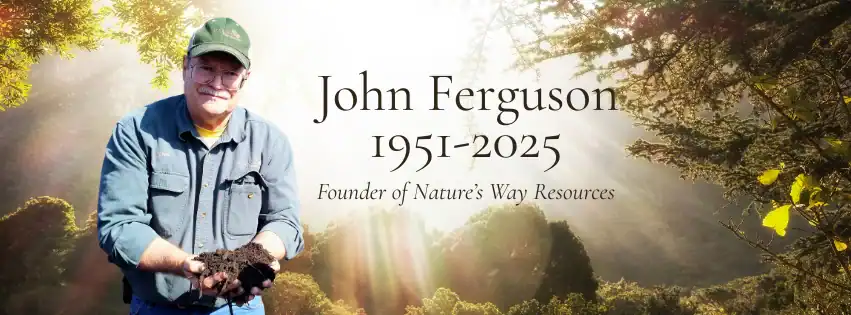
JOHN FERGUSON (1951-2025)
John was a native Houstonian with more than 35 years of business experience. He founded Nature’s Way Resources, a composting company known for producing high-quality compost, mulch, and soil mixes. He held an MS in Physics and Geology and was a licensed Soil Scientist in Texas.
Throughout his career, John received numerous awards in horticulture and environmental work. He represented the composting industry for many years on the Houston-Galveston Area Council for solid waste. His personal garden was featured in several horticultural books and in Better Homes and Gardens. His business was recognized by The Wall Street Journal for the quality and value of its products. He was a member of the Physics Honor Society and several professional organizations, and he co-authored Organic Management for the Professional.
John contributed articles regularly to this newsletter and oversaw its publication. We continue to share his past articles each week alongside The Lazy Gardener column to keep his passion, knowledge, and spirit alive for our readers.
SHELBY CASSANO is the communications and marketing lead for Nature’s Way Resources and the editor of The Lazy Gardener and Friends newsletter. Through her business, Leaf and Ledger, she exclusively partners with NWR to direct all marketing efforts, from campaign strategy and content planning to technical production of the newsletter. Shelby holds a B.S. in Agriculture with a concentration in Horticulture from Stephen F. Austin State University and previously managed the company’s nursery.

NATURE’S WAY RESOURCES
101 Sherbrook Cir.
Conroe, TX 77385
Hours of Operation
Monday – Friday: 8AM to 5PM
Saturday: 8AM to 2PM
Copyright © 2024 Nature’s Way Resources | All rights reserved.