
Nature’s Way Resources is proud to bring you this free weekly newsletter. While we don’t run ads, generous sponsors help support this project as a public service. Their names are listed below, please consider showing your appreciation by supporting their businesses!
Nature’s Way Resources honors the contributions of our late owner, John Ferguson. “The Lazy Gardener” Brenda Beust Smith and Shelby Cassano welcome your feedback and remain grateful to the many horticulturists who share their expertise.
Published June 10, 2026
by Brenda Beust Smith | The Lazy Gardener
Had to shake my head when I saw this weather comment online:
“The National Oceanic and Atmospheric Administration’s hurricane season outlook is predicting below-normal tropical cyclone activity . . . eight to 14 tropical cyclones strong enough to be named storms.”
First they scare us to death with reports of a HORRIBLE season ahead in the South because of a bad El Niño year. Now they’re saying it’s going to be “not that bad”?
It doesn’t really matter, does it? Predicted hurricanes need to make us “get prepared” while we’re praying for them NOT to come here. That’s life in the Houston area!
“Cyclones” (hurricanes to us) don’t exactly trigger relaxation, do they? Still, life goes on and, with “vacation time” here, chances are you’ll be away from your plants at least some of the time!
Best garden protection: Exchange watering chores with a trustworthy neighbor. Not an option? Other suggestions.
- Don’t fertilize before leaving town unless very short trip. Fertilizing stimulates new growth that needs regular watering at first.
- Move hanging baskets and container plants into deeply shaded areas surrounded by leaves or other mulch. (Normally dry out faster than inground plants).
- Mulch in-ground plants well. Keeps roots cooler, slows evaporation.
- Pick off blooming flowers and buds. (Take to elderly neighbors or nearby nursing home!) Takes a lot of energy for plants to produce flowers and seed. Better this energy helps produce deeper roots while you’re gone.
* * *

Bathroom tubs make great greenhouses for indoor plants for short periods. With a plastic bench or low waterproof table in bathtub, fill tub to just below top of bench/table. Set plants on table.
- Plants that dry out quickly will appreciate a wick (old stocking?) poked far down into soil. Drop other end into water (should reach to bottom of tub since some water will evaporate.
- Helpful: a lamp with electronic on/off timer to turn on light all nite. Extra security tip: hook radio up to timer too and turn to talk show. (to scare off potential burglars — not for the plants!).
- Have any other plant, etc., safety tips for readers, especially new-to-this-area? Things you wish someone had warned you about … so you didn’t have to learn the hard way? Do share!
* * *
NICOLE IN SUGARLAND wrote she doesn’t quite understand deadheading. Can’t say I do either, Nicole. My approach is to do what Mother Nature does. If my plants are deadheaded after a bloom is spent, it’s done by wind or natural drop triggered by the plant itself. But that’s Lazy-speak! Truth is, some plants will bloom more prolifically if spent blooms are allowed to shrivel up and drop naturally. Others bloom less. (Independent buggers.) Research helps!
“DEADHEADING” is one of those broad gardening terms that need specific guidelines. Plants bloom — not for our pleasure — but to produce seed to continue lineage. This does not mean they all follow the same paths. They don’t. Get specific directions by researching your specific plants.
GROWERS SPEND lots of time growing plants with the longest-lasting flowers. (And you thought it was your green thumb that accomplished this?) Sterile plants (can’t produce seed) still keep trying to by producing more and more (sterile-by-design) flowers. Frustrating for plants, but nice for gardeners. No one rule applies to all plants. Research specific plants. Do it quickly (before it gets REALLY hot)!
NOTE: ALL YOU WANT ARE CUT FLOWERS TO ENJOY? Ever heard the old saying, cut away old flowers just above the first leaf below the flower? “Passé mode!” (Old way!) Even roses are now said to bloom more prolifically when old flowers are removed just above the first set of 5 leaves (standard method promoted these days).
WHEN TO DEADHEAD FLOWERS?
Deadheading (removing spent blooms) should be done now (spring to early summer). Waiting until late summer or fall to begin deadheading plants is usually too late and the shortening days of fall and cooler temperatures will work against the growth of new flowers.
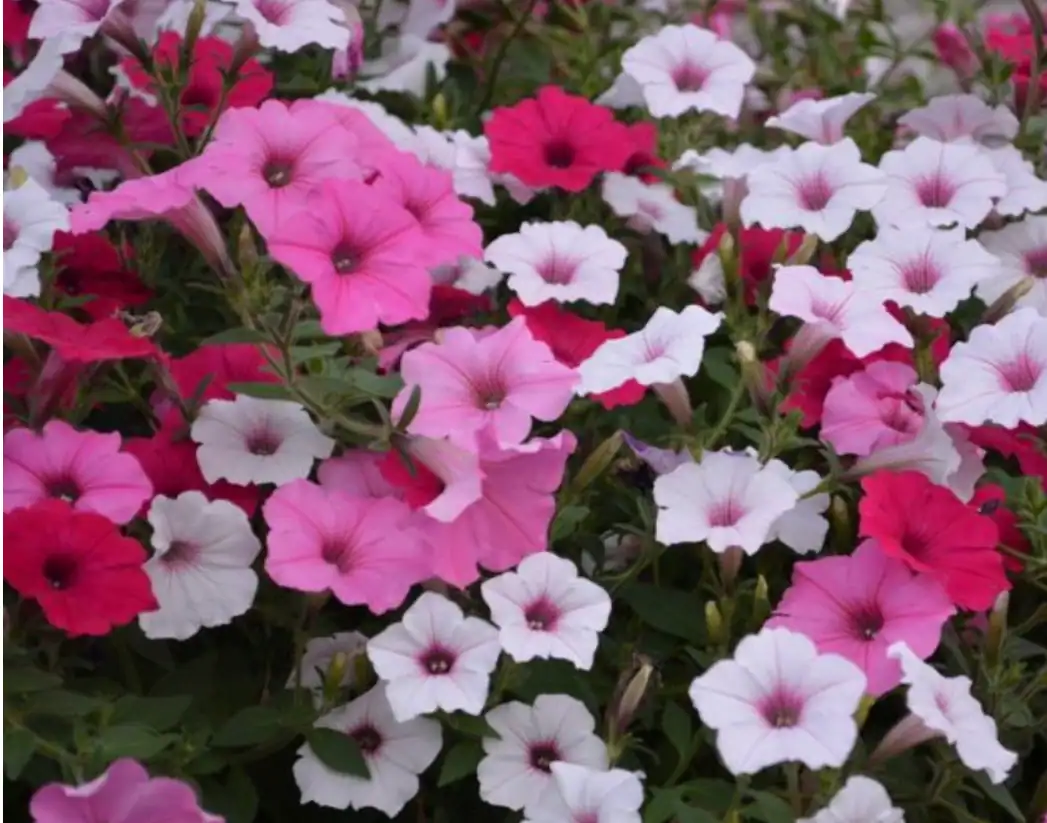
Fortunately for us lazy gardeners, deadheading isn’t the necessity it used to be to keep plants blooming longer. Take petunias. Folks used to deadhead these faithfully. Then Supertunia® petunias came on the market! Deadhead, if you want to. But you don’t HAVE to anymore. Trick is, it helps to know which varieties are “don’t need” and which still “do need.” Some older varieties need it; newer ones may not. If the label doesn’t say, research online.
Although Proven Winners (a plant breeders/growers’ marketing cooperative) is not part of TEXAS A&M, the latter often collaborates with PW and includes specific PW winners in their recommendations.)
Some industry-speak you might find useful:
Self-cleaning plants –– often newer introductions of old favorites — naturally drop their spent blooms, so no deadheading is needed. Frustrating, but a little research might save time and effort.
Plants that “bury their dead” —This simply means the new flowers will quickly cover the old ones, so no deadheading is necessary.
Plants that don’t need deadheading, but you can to improve appearance
* * *

HELP CONTAINER PLANTS
SURVIVE SUMMER
WHETHER YOU’RE HOME OR NOT!
By KAROLYN GEPHART
GALVESTON COUNTY MASTER GARDENERS
Summers in Houston can have temperatures that are detrimental to container plants due to their captive environment. Here are some tips to help them survive.
- Watering times are important. Water deeply at the roots before 9 am and after 5 pm. Evaporation is reduced if not watered during highest heat. Slow steady stream of water helps to get it to the roots.
- Pot sizes and materials matter. Plastic or glazed pots hold moisture longer, and light-colored containers reflect the sun to keep roots cooler.
- Don’t overcrowd pots with too many plants so that there won’t be competition for water.
- Plant placement can help. Move plants to light shade areas in the afternoon to reduce evaporation. Do not move full sun plants into full shade to avoid stunting growth.
- Improve moisture retention with compost in the soil and mulch generously applied on the top.
- Increase watering if windy or very dry conditions persist.
- Water when the top 1-2 inches of soil feels dry (using finger test or moisture meter).
- Move hanging baskets to shaded areas with less airflow to limit evaporation.
- Check drainage on all container plants so that when watering, the roots do not stay in water, which causes root rot.
- Consider installing drip irrigation for consistent amounts of moisture.
NOTE: These ideas are NOT for succulents! Succulents should remain in partial shade to avoid sunburn. Avoid dehydration, but overwatering can be fatal. Summer is a temporary condition. Let’s help our container plants survive the season.
* * *
EDITOR’S NOTE: Karolyn Gephart, member of both Galveston County Master Gardeners and Heritage Gardeners in Friendswood, will share even more tips during her free July 11 GCMG “Container Gardening” lecture, 9-11am, 4102-B Main St. (FM 519), LaMarque. Free but must register: txmg.org/galveston/events
* * *
Best place to start if you’re not sure what you want to plant this year. Don’t feel alone, we’re all overcome by the options! Best first step, visit your local County Master Gardener’s gardens. They’re all thriving now, and will contain the best varieties for your area! https://txmg.org/contacts/by-county
* * *

- Have any easy starter plants we can share with readers new to our areas? Let us know! Perennials only, unless re-seeding annuals! Be area-specific, please!
ATTN:
— Nature’s Way Resources offers free guided tours of NWR’s extensive nursery/soil/mulch facilities for garden clubs, plant societies and other plant-oriented, organized groups. As usual, NWR’s now-expanded meeting site is free to above groups. Reservations a must for both. Great time to visit.
- GOOD NEWS FOR BUSY/LAZY GARDENERS: Curbside pickup is now available in the Nature’s Way Resources nursery, and we’re offering plant preorders for special requests. Call in your order, pick it up when it works for you, or let us try to source the plants you’re looking for on upcoming shipments. Find inventory sheet here.
Want to receive The Lazy Gardener & Friends weekly newsletter?
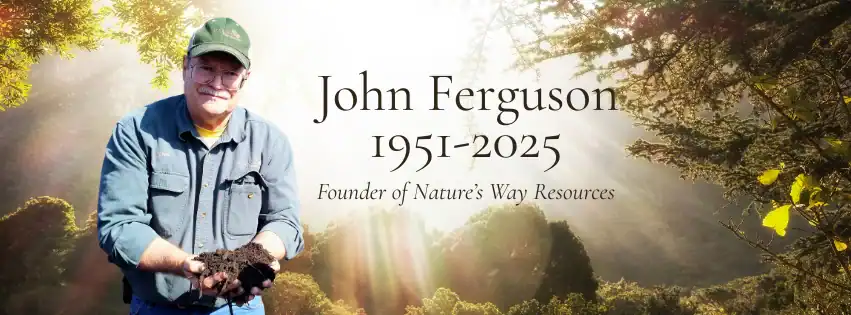
John’s Corner
NEWS FROM THE WONDERFUL WORLD OF SOIL AND PLANTS
Basic Lawn Care
3 Simple Steps to Save Money
by John Ferguson,
Founder of Nature’s Way Resources
1) Use only ORGANIC FERTILIZERS
2) Apply COMPOST
3) Apply TRACE MINERALS
Organic Fertilizers do not leach and pollute our streams; hence, they are only used 2 times per year instead of 4-5 times as with synthetic fertilizers. Synthetic fertilizers kill off beneficial microorganisms in the soil, so we get more insect, disease, and weed problems. This is why they are called synthetic or artificial fertilizers, as they are not good for people, pets, or plants. Organic fertilizers help the good microorganisms grow stronger so one gets less disease and fewer insect problems. MicrolifeTM is an excellent locally made organic fertilizer.
Compost is often called “Black Gold” by experienced gardeners as it does so many good things for the soil. Good compost is loaded with microorganisms that prevent disease, cycle nutrients, and create soil structure. It is also full of carbon, which is needed by earthworms and other soil life forms. Humus in compost helps increase the water-holding capacity of all soils, hence reducing plant stress. The microorganisms in compost help release the nutrients in the organic fertilizer and trace minerals and make them available to plants without polluting the environment. Earthworms and microbes eat the compost and create good soil structure in the process, allowing proper aeration, which helps prevent diseases. Leaf Mold Compost has the proper blend of bacteria and fungal species that are required by turf grasses.
Trace Minerals are to plants as vitamins are to humans and animals. Plants do not need a lot of trace minerals, but with out them they easily get sick and may eventually die. Most weeds grow better in soils without trace minerals. Trace minerals allow microbes to absorb nitrogen from the air and give it to the plant. Trace minerals allow plants to have stronger immune systems so they can withstand disease and drought stress better. Texas greensand, granite sand products like Re-mineralizer and seaweed extracts or fish emulsions are good sources of trace minerals.
When these 3 simple steps are followed, lawns use far less water, have less weed and insect problems, the lawns are a rich beautiful green color, they are safe for children and pets to play on and one saves a lot of time and money.
Download the Original Newsletter Issue Below!
Sponsorship
If you are interested in becoming a sponsor, please contact us at 936-273-1200 or send an e-mail to: lazygardenerandfriends@gmail.com
About Us
BRENDA BEUST SMITH
WE KNOW HER BEST AS THE LAZY GARDENER . . .
but Brenda Beust Smith is also:
- a national award-winning writer & editor
- a nationally-published writer & photographer
- a national horticultural speaker
- a former Houston Chronicle reporter
When the Chronicle discontinued Brenda’s 45-year-old Lazy Gardener” print column — started in the early ’70s as a fun side-project to reporting, it then ranked as the longestrunning, continuously-published local newspaper column in the Greater Houston area. The name, she says, is not just fun, it’s true.
Brenda’s gradual sideways step from reporter into gardening writing led first to an 18-year series of when-to-do-what Lazy Gardener Calendars, then to her Lazy Gardener’s Guide book which morphed into her Lazy Gardener’s Guide on CD, which she now emails free upon request.
Brenda became a Harris County Master Gardener and, over the years, served on theboards of many Greater Houston area horticulture organizations. She hosted local radio and TV shows, most notably a 10+-year Lazy Gardener specialty shows on HoustonPBS (Ch. 8) and her call-in “EcoGardening” show on KPFT-FM.
For over three decades, Brenda served as Assistant Production Manager of the GARDEN CLUB OF AMERICA’S “BULLETIN” magazine. Although still an active broad-based freelance writer, Brenda’s main focus now is THE LAZY GARDENER & FRIENDS HOUSTON GARDEN NEWSLETTER with John Ferguson and Pablo Hernandez of Nature’s Way Resources.
A native of New Orleans and graduate of St. Agnes Academy and the University of Houston, Brenda lives in Humble, TX, and is married to the retired Aldine High School Coach Bill Smith. They have one son, Blake.
Regarding this newsletter, Brenda is the lead writer, originator of it and the daily inspiration for it. We so appreciate the way she has made gardening such a fun way to celebrate life together for such a long time.
About her column, Brenda says: “I don’t consider myself a ‘garden writer.” I started out 50+ years ago as a very lazy “gardening reporter.” I still feel that way today. I hope my columns inspire/help newcomers, but I do not write to them. I write to very experienced gardeners who want to expand their horizons.
JOHN FERGUSON (1951-2025)
John was a native Houstonian with more than 35 years of business experience. He founded Nature’s Way Resources, a composting company known for producing high-quality compost, mulch, and soil mixes. He held an MS in Physics and Geology and was a licensed Soil Scientist in Texas.
Throughout his career, John received numerous awards in horticulture and environmental work. He represented the composting industry for many years on the Houston-Galveston Area Council for solid waste. His personal garden was featured in several horticultural books and in Better Homes and Gardens. His business was recognized by The Wall Street Journal for the quality and value of its products. He was a member of the Physics Honor Society and several professional organizations, and he co-authored Organic Management for the Professional.
John contributed articles regularly to this newsletter and oversaw its publication. We continue to share his past articles each week alongside The Lazy Gardener column to keep his passion, knowledge, and spirit alive for our readers.
SHELBY CASSANO is the communications and marketing lead for Nature’s Way Resources and the editor of The Lazy Gardener and Friends newsletter. Through her business, Leaf and Ledger, she exclusively partners with NWR to direct all marketing efforts, from campaign strategy and content planning to technical production of the newsletter. Shelby holds a B.S. in Agriculture with a concentration in Horticulture from Stephen F. Austin State University and previously managed the company’s nursery.

NATURE’S WAY RESOURCES
101 Sherbrook Cir.
Conroe, TX 77385
Hours of Operation
Monday – Friday: 8AM to 5PM
Saturday: 8AM to 2PM
Copyright © 2024 Nature’s Way Resources | All rights reserved.