
Nature’s Way Resources is proud to bring you this free weekly newsletter. While we don’t run ads, generous sponsors help support this project as a public service. Their names are listed below, please consider showing your appreciation by supporting their businesses!
Nature’s Way Resources honors the contributions of our late owner, John Ferguson. “The Lazy Gardener” Brenda Beust Smith and Shelby Cassano welcome your feedback and remain grateful to the many horticulturists who share their expertise.
Published July 29, 2026
by Brenda Beust Smith | The Lazy Gardener
INTERESTING HOW NOW — when we gardeners really want “exact” weather predictions — weather reports give us two different ones: the official one and what it actually feels like on our skin. Which one applies to plants? Not that it usually makes any difference to us, but it might to our plants!
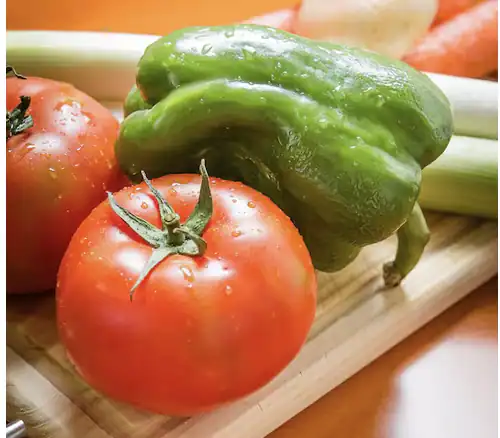
Given the discomfort of intense heat, it might take a while to notice which plants have stopped growing, flowers/leaves that are drooping, growing distorted, falling off, showing insect damage or no longer appear at all. Peppers, tomatoes, squash and other edibles may wilt and/or stop producing long before we actually notice.
That’s not to say all (or any) of your plants will be affected this way . . . just to let you know to keep an eye out! If you do notice changes, postpone pruning and fertilizing! Both encourage new growth plants may not be able to handle.
Don’t remove wilting, damaged leaves yet. They actually help shade the rest of the plant. However, DO water deeply and regularily if it doesn’t rain.
Best time: early morning — at the base of plants so water goes directly down.
Quick, shallow watering will do more harm than good by encouraging roots to grow upward for water. The closer to the surface, the more likely the plant will damaged. Shallow daily watering only encourages roots to grow upward into hotter areas. Also . . .
- Be patient and watchful!
- Unfortunately, weeks or longer after a heat wave ends, plants may suddenly start dropping very healthy-looking leaves. Don’t be surprised, just be patient and give them a little extra TLC. Hopefully it will pass as the plant copes internally. (Or not, see below)
- Check mulch regularly. It does decompose, good for the soil but not for helping soil stay moist and cooler. Brown is better than black in this kind of weather.
- Hold off on Pruning: Leave scorched/yellowed leaves in place for now; they still shade stems and lower healthy foliage. Watch splitting bark closely. Maybe the plant can repair itself (or may not). Immediately-produced fruit may be distorted. Be patient. Give the tree/plant a little leeway to get its systems going again.
- Skip Fertilizer: Stressed plants cannot process nutrients well; feeding them now causes more damage. Let them recover naturally.
- Any other tips you’d like to share with newcomers to our area (and heat!)? Love to know which of your plants that just laughed at the heat, and are still blooming beautifully? Chances are, folks, what we’ve just seen is further evidence of our hotter days to come.
* * *
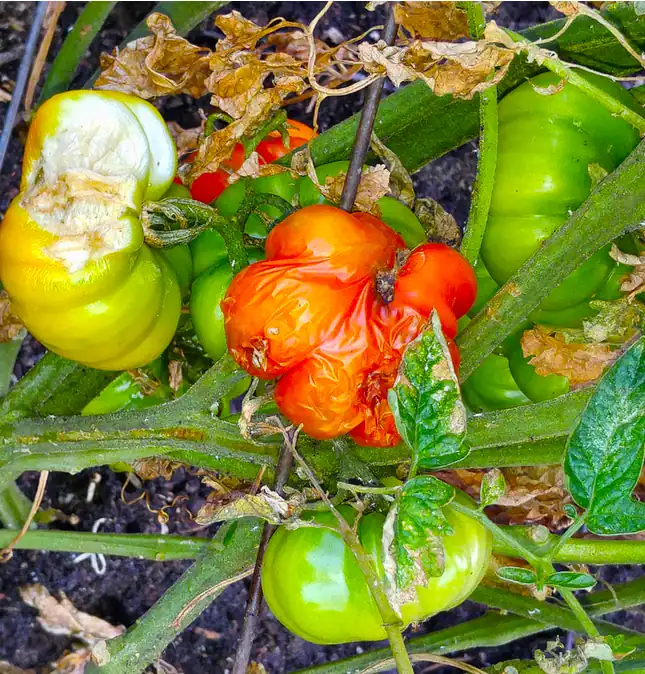
SO, WHAT MIGHT HAPPEN with more 100º days? The heat could cook the pollen, stopping fruit development of potentially healthy-looking tomatoes & peppers. One sign: blossom drop.
If energy reserves are depleted by high temps, plants’ ability to intake both nutrients and water might be blocked, even in well-fertilized soil, especially in container-grown plants.
If (hope not!) you do lose plants to this unusually (for us) intense heat, might want to consider plants our fellow gardeners find are laughing at the heat?
Readers, do share! Which of your plants are (so far) showing at our recent heat? Which (if any) are definitely showing immediate damage? (Be sure to tell me correct general type and, if have, specific names.
Of course, we have had some helpful rains but, remember, heat damage may not show up for months. My advice as always: get to know your local independent nursery owner. He/she knows your area well, wants (NEEDS!) your patronage and will be the nursery most likely to gear selections to those which do best in your specific region. This becomes even more important the longer this intense heat affects each plant.
One good place to learn who and where these plants can locally be found is at your County Master Gardeners’ Demonstration Garden (or one close enough to you to have the same growing conditions). Easy to find: https://txmg.org/contacts/by-county!
Good luck! If you have any other protect tips, do share! Love this one from
* * *
(Photo from Michelle Detwiler | Penn Valley, PA)
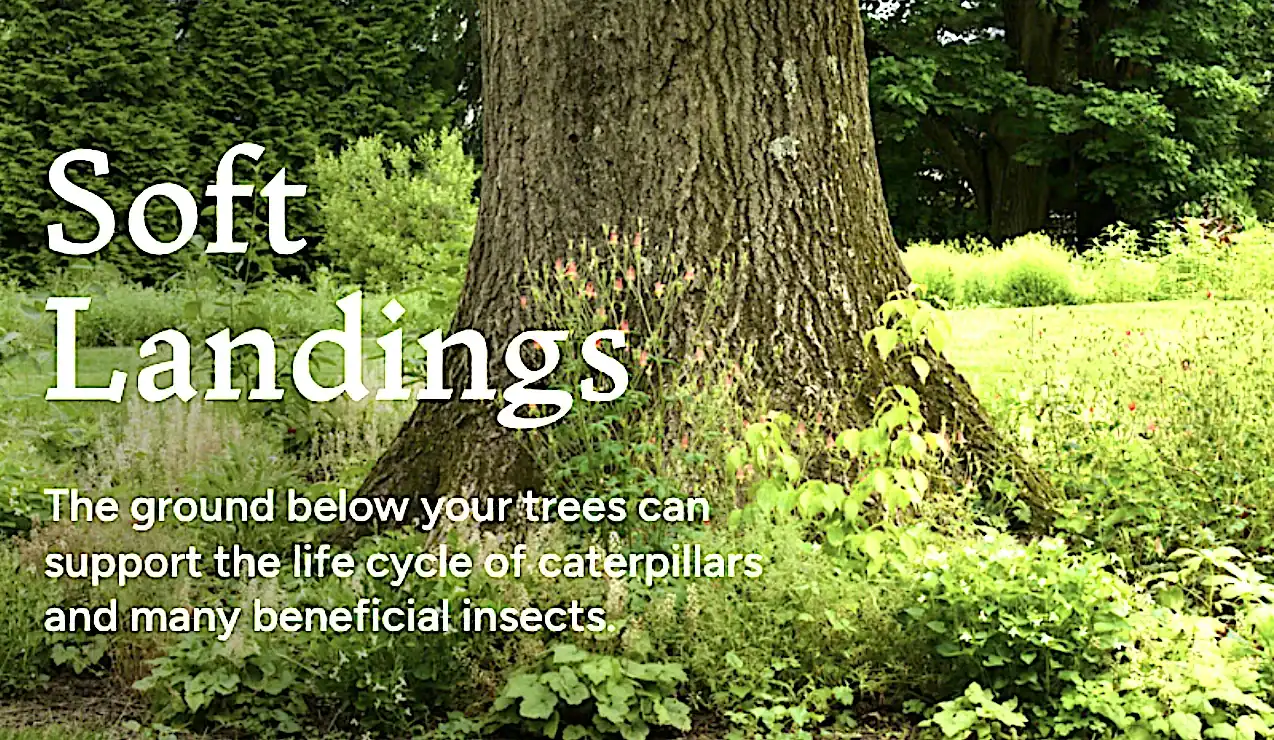
I normally don’t like sharing national gardening news (we Houstonians are TOO unique!). But given the beating our trees have taken with recent hurricanes, droughts, heat, etc., thought might be nice to give them some upbeat attention by sharing this from Under your tree . . . — a whole world of Nature’s life we gardeners tend to overlook in our landscaping.
Homegrown National Park is a phenomenal concept that has spread unbelievably fast across all states. HNP Back story.
If anyone decides to try this, please let me know how it’s going and what you learned about doing this in the Greater Houston area! Pictures of specific successful (as well as unsuccessful) plants welcome!
* * *


NEED SOMETHING FUN to take your mind off this blasted heat? Plan to take kiddos to see “working” goats return to Houston Arboretum & Nature Center Tues., Aug. 4-11. 300+ goats (from GoatScaping LLC) will begin clearing understory brush and vegetation at HANC’s 155-acre nature sanctuary (thanks to Radoff Family Foundation), replacing mowing or chemical use! More info.
ATTN:
— Nature’s Way Resources offers free guided tours of NWR’s extensive nursery/soil/mulch facilities for garden clubs, plant societies and other plant-oriented, organized groups. As usual, NWR’s now-expanded meeting site is free to above groups. Reservations a must for both. Great time to visit.
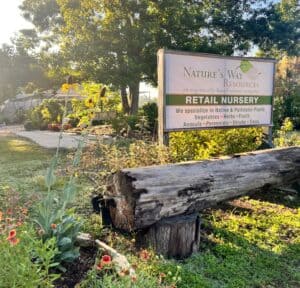
- GOOD NEWS FOR BUSY/LAZY GARDENERS: Curbside pickup is now available in the Nature’s Way Resources nursery, and we’re offering plant preorders for special requests. Call in your order, pick it up when it works for you, or let us try to source the plants you’re looking for on upcoming shipments. Find inventory sheet here.
Want to receive The Lazy Gardener & Friends weekly newsletter?

John’s Corner
NEWS FROM THE WONDERFUL WORLD OF SOIL AND PLANTS
We are pleased to have a guest article from Connie Eaton, owner and Head Designer at Rooted In Sunshine. Connie was kind enough to share her knowledge and insights from the field with our readers this week.
Recently chosen for the Texan by Nature’s semi-annual Certificate for their work with the Bayou City Bee program’s Gardens Schools initiative (right image), we are happy to put a spotlight on such an impactful company and individual.
According to the Bayou City Bee webpage, “Bayou City Bee benefits more than 600 high schoolers annually at Lamar Consolidated High School. Life skills students volunteer regularly and gain hands-on experience in native plant care, habitat restoration, and basic commerce, while observing the pollinators and wildlife the garden attracts“.
Shelby Cassano

PUT DOWN THE PESTICIDES:
LET THE GARDEN DO THE WORK
As owner and head designer of Rooted In Sunshine, a small Houston landscape design company focused on creating living, ecologically balanced gardens, one of the questions I’m asked most often is: What do you spray for pests?
Usually, my answer is: nothing.
A healthy garden already contains an extraordinary pest-management system. Before reaching for a pesticide—even an organic one—we look for ways to help that system rebalance itself. It’s one of my favorite “lazy gardener” principles: work with the ecosystem instead of constantly working
against it.
Start With the Hose
Aphids are a perfect example. Instead of spraying:
- Use a medium-pressure stream of water to dislodge aphids from stems and leaf undersides.
- Repeat for 2–3 days, inspecting plants each day.
- You’ll spend virtually nothing, leave no pesticide residue, and avoid unnecessarily exposing the reptiles, mammals, pollinators, and other beneficial organisms sharing your garden.
For many aphid outbreaks, this remarkably simple approach dramatically reduces populations while giving natural predators an opportunity to catch up.
Pests Can Be Symptoms, Too
Yellowing or curling tomato leaves shouldn’t automatically trigger pest treatment. Look at the entire plant: irrigation, roots, soil fertility, disease symptoms and overall vigor.
Some regenerative growers also monitor Brix, a measurement of soluble solids in plant sap using a refractometer. Brix isn’t a simple plant-health score, but tracking readings can provide another window into how crops respond to nutrition and growing conditions.
Our approach is to feed the soil rather than continually treat symptoms.
- We love Nature’s Way Resources compost for adding organic matter and slowly cycling nutrients.
- MicroLife Ocean Harvest is another favorite for supporting plant nutrition.
- Replenish established vegetable beds with compost in fall and spring, particularly for heavy feeders such as tomatoes.
- When older soil has substantially declined, consider more extensive rejuvenation with fresh, nutrient-rich soil and compost.
Give Tomatoes Something to Climb
Proper support reduces tangled foliage, improves airflow, and keeps leaves and fruit off the ground. Indeterminate tomatoes such as ‘Big Beef,’ ‘Sungold,’ ‘Cherokee Purple’ and vigorous cherry varieties appreciate substantial cages or trellises. Even determinate tomatoes, including many ‘Roma’ types, benefit from sturdy cages when heavily loaded with fruit.
Think Beyond the Spray Bottle
Neem oil is frequently kept on hand as an “organic” pest-control solution. But natural doesn’t mean something should be applied indiscriminately. Neem products are pesticides; formulations vary, and applications to edible crops should always follow the product label.
Our preference is physical and ecological controls first.
One of the best caterpillar-control systems is already flying around your neighborhood: birds.
Create bird habitat near—not directly over—your vegetable garden:
- Provide quality seed, preferably in a feeder designed to discourage squirrels.
- Add a birdbath, fountain, pond or other water source; moving water is particularly attractive.
- Maintain nearby canopy trees and shrubs for nesting, shelter and foraging.
- Most importantly, leave them something to eat. Eliminating every caterpillar eliminates an important food source for the birds we’re trying to attract.
The numbers are remarkable. Entomologist and ecologist Dr. Doug Tallamy has popularized the estimate that a pair of chickadees needs roughly 6,000–9,000 caterpillars to raise one clutch of young to fledging. That’s thousands of caterpillars transformed from a perceived “pest problem” into food supporting the next generation of natural garden predators.
The goal isn’t an insect-free garden. It’s balance.
By maintaining the natural relationship between predator and prey, we enhance the garden’s life cycle while creating a sustainable, beautiful habitat to enjoy with friends and family.
These are just a few of our natural Lazy Gardener suggestions for keeping gardens balanced through Houston’s summer heat—and all the seasons to come.
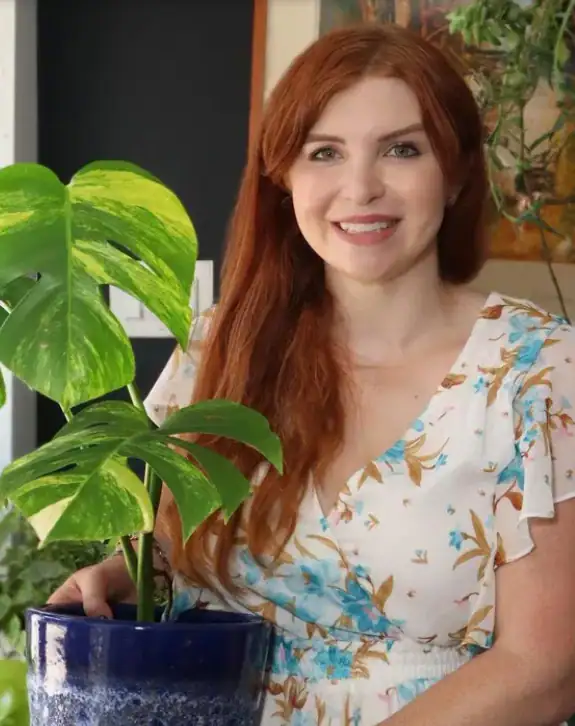
Connie Eaton, Owner and Head Designer at Rooted In Sunshine
Download the Original Newsletter Issue Below!
Sponsorship
If you are interested in becoming a sponsor, please contact us at 936-273-1200 or send an e-mail to: lazygardenerandfriends@gmail.com
About Us
BRENDA BEUST SMITH
WE KNOW HER BEST AS THE LAZY GARDENER . . .
but Brenda Beust Smith is also:
- a national award-winning writer & editor
- a nationally-published writer & photographer
- a national horticultural speaker
- a former Houston Chronicle reporter
When the Chronicle discontinued Brenda’s 45-year-old Lazy Gardener” print column — started in the early ’70s as a fun side-project to reporting, it then ranked as the longestrunning, continuously-published local newspaper column in the Greater Houston area. The name, she says, is not just fun, it’s true.
Brenda’s gradual sideways step from reporter into gardening writing led first to an 18-year series of when-to-do-what Lazy Gardener Calendars, then to her Lazy Gardener’s Guide book which morphed into her Lazy Gardener’s Guide on CD, which she now emails free upon request.
Brenda became a Harris County Master Gardener and, over the years, served on theboards of many Greater Houston area horticulture organizations. She hosted local radio and TV shows, most notably a 10+-year Lazy Gardener specialty shows on HoustonPBS (Ch. 8) and her call-in “EcoGardening” show on KPFT-FM.
For over three decades, Brenda served as Assistant Production Manager of the GARDEN CLUB OF AMERICA’S “BULLETIN” magazine. Although still an active broad-based freelance writer, Brenda’s main focus now is THE LAZY GARDENER & FRIENDS HOUSTON GARDEN NEWSLETTER with John Ferguson and Pablo Hernandez of Nature’s Way Resources.
A native of New Orleans and graduate of St. Agnes Academy and the University of Houston, Brenda lives in Humble, TX, and is married to the retired Aldine High School Coach Bill Smith. They have one son, Blake.
Regarding this newsletter, Brenda is the lead writer, originator of it and the daily inspiration for it. We so appreciate the way she has made gardening such a fun way to celebrate life together for such a long time.
About her column, Brenda says: “I don’t consider myself a ‘garden writer.” I started out 50+ years ago as a very lazy “gardening reporter.” I still feel that way today. I hope my columns inspire/help newcomers, but I do not write to them. I write to very experienced gardeners who want to expand their horizons.
JOHN FERGUSON (1951-2025)
John was a native Houstonian with more than 35 years of business experience. He founded Nature’s Way Resources, a composting company known for producing high-quality compost, mulch, and soil mixes. He held an MS in Physics and Geology and was a licensed Soil Scientist in Texas.
Throughout his career, John received numerous awards in horticulture and environmental work. He represented the composting industry for many years on the Houston-Galveston Area Council for solid waste. His personal garden was featured in several horticultural books and in Better Homes and Gardens. His business was recognized by The Wall Street Journal for the quality and value of its products. He was a member of the Physics Honor Society and several professional organizations, and he co-authored Organic Management for the Professional.
John contributed articles regularly to this newsletter and oversaw its publication. We continue to share his past articles each week alongside The Lazy Gardener column to keep his passion, knowledge, and spirit alive for our readers.
SHELBY CASSANO is the communications and marketing lead for Nature’s Way Resources and the editor of The Lazy Gardener and Friends newsletter. Through her business, Leaf and Ledger, she exclusively partners with NWR to direct all marketing efforts, from campaign strategy and content planning to technical production of the newsletter. Shelby holds a B.S. in Agriculture with a concentration in Horticulture from Stephen F. Austin State University and previously managed the company’s nursery.

NATURE’S WAY RESOURCES
101 Sherbrook Cir.
Conroe, TX 77385
Hours of Operation
Monday – Friday: 8AM to 5PM
Saturday: 8AM to 2PM
Copyright © 2024 Nature’s Way Resources | All rights reserved.