Nature’s Way Resources is proud to bring you this free weekly newsletter. While we don’t run ads, generous sponsors help support this project as a public service. Their names are listed below, please consider showing your appreciation by supporting their businesses!
Nature’s Way Resources honors the contributions of our late owner, John Ferguson. “The Lazy Gardener” Brenda Beust Smith and Shelby Cassano welcome your feedback and remain grateful to the many horticulturists who share their expertise.
Published August 19, 2026
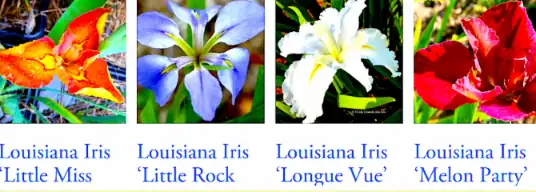
Wish I had come up with this great headline (above). But kudos to Garden Club of Houston (from whom I “stole” the one above) for this one, their great theme for this year’s Oct. 8-10th GCA Bulb and Plant Mart!
Let’s face reality. Many, if not most, gardeners — either knowingly or innocently — have Texas-identified invasives in our yards. Probably not deliberately. Good example: Chinese tallows, often planted for bright fall color. What folks don’t realize is that these nasty Chinese tallow imports can spread poisons that kill plants growing nearby (including our native trees) to protect their developing Chinese tallow seeds.
How do you avoid these dangers? Shop local nurseries you trust, and our many local plant sales such as GCH’s Bulb Mart (celebrating its 103rd year of existence)! Why? According to the Garden Club of Houston, tropical milkweed may remain green through mild Gulf Coast winters, allowing spores of the monarch butterfly parasite OE (Ophryocystis elektroscirrha) to accumulate on plants.” Native milkweed goes dormant in winter.
Do you know, this is the very first time I’ve ever read anything publicly written about WHY our local milkweed is ok when (what I now see called) “tropical” milkweed isn’t — with names to actually note the distinction! As GCA’s materials explain:
“Native species such as green milkweed and aquatic milkweed occur in Southeast Texas and better reflect the region’s natural plant communities.”
Need a treat for your brain? Check GCA website for advance info and Photos (!) of the plants that will be for sale during the Online Ordering Dates: June 15 – September 28. In the meantime, get a head start by logging onto GCA’s website gchouston.org/bulb-plant-mart/. Click on Bulb Mart for more info and gorgeous pictures! (Don’t forget to scroll down; that’s where the plants-to-buy (or order online) when the time comes.)
* * *

ATTN:
— Nature’s Way Resources offers free guided tours of NWR’s extensive nursery/soil/mulch facilities for garden clubs, plant societies and other plant-oriented, organized groups. As usual, NWR’s now-expanded meeting site is free to above groups. Reservations a must for both. Great time to visit.
- GOOD NEWS FOR BUSY/LAZY GARDENERS: Curbside pickup is now available in the Nature’s Way Resources nursery, and we’re offering plant preorders for special requests. Call in your order, pick it up when it works for you, or let us try to source the plants you’re looking for on upcoming shipments. Find inventory sheet here.
Want to receive The Lazy Gardener & Friends weekly newsletter?
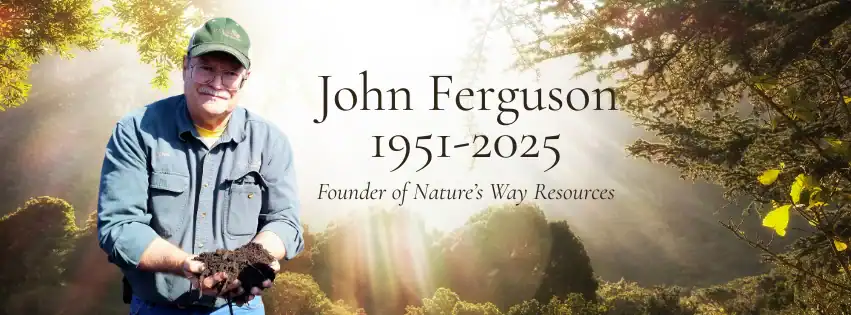
John’s Corner
NEWS FROM THE WONDERFUL WORLD OF SOIL AND PLANTS
This article has been condensed for clarity and ease of reading
Wilding or Regenerative Landscaping
By John Ferguson
Founder of Nature’s Way Resources
Posthumous article
We hear a lot about regenerative agriculture, habitat restoration, butterfly and bird gardening, and related ideas. At their core, these approaches are about restoring our connection with nature and understanding how that connection improves our lives.
I recently finished a very inspiring book about a farm in England and the remarkable process of restoring it to a more natural state.
Wilding – Returning Nature to Our Farm
by Isabella Tree, New York Review of Books, 2018
ISBN: 978-1-68137-371-3
The book tells the story of Knepp Castle Estate, a 3,500-acre farm that had been cultivated for generations. After years of struggling to make the farm profitable, Charlie Burrell and Isabella Tree decided to take a completely different approach. In 2000, they began allowing the land to return to a more natural state, using free-roaming animals to mimic the actions of the large herbivores that once shaped the landscape.
The results were remarkable. Wildlife returned, including rare and threatened species such as turtle doves, peregrine falcons, and purple emperor butterflies. Nightingales returned as well.
The story was especially inspiring to me because I have been doing something similar, although on a much smaller scale, at my retirement property near La Grange.
Much of the property had been clear-cut for agriculture and farmed in cotton for decades. Eventually, the soil became so poor that even weeds had difficulty growing. Water wells and springs had gone dry, and most of the indigenous wildlife had disappeared.
Over the past eight years, I have watched the land slowly begin to heal.
Native grasses and wildflowers are returning. Wildlife has followed, from quail and doves to foxes and bobcats. I have even found evidence of a porcupine.
I only have a fraction of the land Isabella Tree had to work with, but her story reminded me of a lecture by Dr. Doug Tallamy. He explained that if we work together, restoring one lot or parcel of land at a time, those individual pieces can eventually become an enormous restoration effort.
Doug Tallamy explains how we can make this happen in our own yards in his book:
Nature’s Best Hope – A New Approach to Conservation That Starts in Your Yard
by Douglas W. Tallamy, Timber Press, 2019
ISBN-13: 978-1-60469-900-5
This book picks up where Tallamy’s earlier book, Bringing Nature Home, leaves off. I consider both books must-reads for serious gardeners and nature lovers.
Nature’s Best Hope is more of a “how-to” book, explaining how our yards can become part of a larger ecological solution. By planting native species and creating habitat, even small properties can support bees, butterflies, birds, and other wildlife while reducing the need for water and other resources.
Tallamy calls this concept the “Homegrown National Park.” The idea is simple: instead of thinking of conservation as something that only happens in large parks and preserves, we can make our own properties part of the solution.
Another book that explains why this connection with nature is so important is:
Your Brain on Nature – The Science of Nature’s Influence on Your Health, Happiness, and Vitality
by Eva M. Selhub, M.D., and Alan C. Logan, N.D.
Collins Publishing, 2012
ISBN: 978-1-44342-808-8
This book is for anyone who loves gardening or nature. Numerous scientific studies have shown that exposure to natural environments can benefit both physical and mental health. Natural settings tend to promote positive emotions, and simply viewing or walking in nature has been associated with increased physical and mental energy.
Research has also found benefits for children, including those dealing with attention and behavioral difficulties.
The authors explore how spending time in nature may reduce the risk of numerous health problems and improve mental well-being. They also examine the effects of our increasingly technology-filled lives and offer nature-based approaches for improving cognitive function, mental health, and physical health.
One statement from the book particularly caught my attention:
“Soil must no longer be confused with dirt. It is a living, breathing form of nature.”
That is something every gardener should remember.
When we restore soil, plant native species, provide habitat, and allow nature to do more of the work, we are not simply making our yards prettier. We are rebuilding a living system. And we don’t need 3,500 acres to do it. One yard, one garden, and one piece of land at a time, we can begin bringing
nature home.
If you are interested in getting started, Doug Tallamy’s first book is an excellent place to begin:
Bringing Nature Home – How You Can Sustain Wildlife with Native Plants
by Douglas W. Tallamy, Timber Press, 2014
ISBN-13: 978-0-88192-992-8
Download the Original Newsletter Issue Below!
Sponsorship
If you are interested in becoming a sponsor, please contact us at 936-273-1200 or send an e-mail to: lazygardenerandfriends@gmail.com
About Us
BRENDA BEUST SMITH
WE KNOW HER BEST AS THE LAZY GARDENER . . .
but Brenda Beust Smith is also:
- a national award-winning writer & editor
- a nationally-published writer & photographer
- a national horticultural speaker
- a former Houston Chronicle reporter
When the Chronicle discontinued Brenda’s 45-year-old Lazy Gardener” print column — started in the early ’70s as a fun side-project to reporting, it then ranked as the longestrunning, continuously-published local newspaper column in the Greater Houston area. The name, she says, is not just fun, it’s true.
Brenda’s gradual sideways step from reporter into gardening writing led first to an 18-year series of when-to-do-what Lazy Gardener Calendars, then to her Lazy Gardener’s Guide book, which morphed into her Lazy Gardener’s Guide on CD, which she now emails free upon request.
Brenda became a Harris County Master Gardener and, over the years, served on the boards of many Greater Houston area horticulture organizations. She hosted local radio and TV shows, most notably Lazy Gardener specialty fundraisers on HoustonPBS (Ch. 8) and her call-in “EcoGardening” show on KPFT-FM.
For over three decades, Brenda served as Assistant Production Manager of the GARDEN CLUB OF AMERICA’S “BULLETIN” magazine. Although still an active broad-based freelance writer, Brenda’s main focus now is THE LAZY GARDENER & FRIENDS HOUSTON GARDEN NEWSLETTER with Shelby Cassano of Nature’s Way Resources.
A native of New Orleans and graduate of St. Agnes Academy and the University of Houston, Brenda lives in Humble, TX, and is married to the retired Aldine High School Coach Bill Smith. They had one son, Blake.
Regarding this newsletter, Brenda is the lead writer, originator of it, and the daily inspiration for it. We so appreciate the way she has made gardening such a fun way to celebrate life together for such a long time.
About her column, Brenda says: “I don’t consider myself a ‘garden writer.’ I started out 50+ years ago as a very lazy ‘gardening reporter’.” I still feel that way today. I hope my columns inspire/help newcomers, but I do not write to them. I write to very experienced gardeners who want to expand their horizons.
JOHN FERGUSON (1951-2025)
John was a native Houstonian with more than 35 years of business experience. He founded Nature’s Way Resources, a composting company known for producing high-quality compost, mulch, and soil mixes. He held an MS in Physics and Geology and was a licensed Soil Scientist in Texas.
Throughout his career, John received numerous awards in horticulture and environmental work. He represented the composting industry for many years on the Houston-Galveston Area Council for solid waste. His personal garden was featured in several horticultural books and in Better Homes and Gardens. His business was recognized by The Wall Street Journal for the quality and value of its products. He was a member of the Physics Honor Society and several professional organizations, and he co-authored Organic Management for the Professional.
John contributed articles regularly to this newsletter and oversaw its publication. We continue to share his past articles each week alongside The Lazy Gardener column to keep his passion, knowledge, and spirit alive for our readers.
SHELBY CASSANO is the communications and marketing lead for Nature’s Way Resources and the editor of The Lazy Gardener and Friends newsletter. Through her business, Leaf and Ledger, she exclusively partners with NWR to direct all marketing efforts, from campaign strategy and content planning to technical production of the newsletter. Shelby holds a B.S. in Agriculture with a concentration in Horticulture from Stephen F. Austin State University and previously managed the company’s nursery.

NATURE’S WAY RESOURCES
101 Sherbrook Cir.
Conroe, TX 77385
Hours of Operation
Monday – Friday: 8AM to 5PM
Saturday: 8AM to 2PM
Copyright © 2024 Nature’s Way Resources | All rights reserved.