

Nature’s Way Resources is proud to bring you this free weekly newsletter. While we don’t run ads, generous sponsors help support this project as a public service. Their names are listed below, please consider showing your appreciation by supporting their businesses!
Nature’s Way Resources honors the contributions of our late owner, John Ferguson. “The Lazy Gardener” Brenda Beust Smith and Shelby Cassano welcome your feedback and remain grateful to the many horticulturists who share their expertise.
Published September 3, 2026
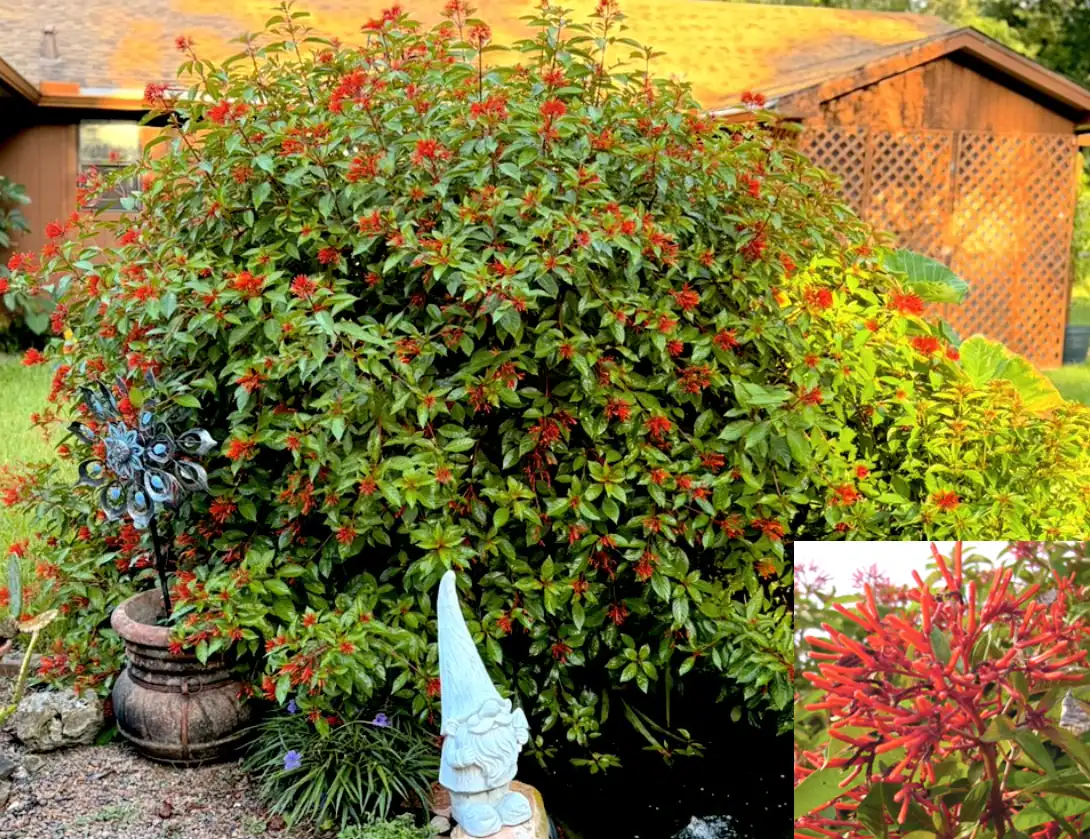
This sun-loving shrub pictured is now in full color in Margaret Byron’s garden, laughing at our heat, delighting visiting hummers and butterflies, both attracted by vivid blooms with their easy-to-access shapes, delicious and healthy nectar, and convenient, protective sheltering branches. Margaret does admit to watering during very hot periods, although the plant is located near her small pond.
When leaves fall in “winter” (here), Margaret cuts it back as close down to bottom, since it will both produce new growth and leaves on old growth. That’s not usually necessary, she adds, but this plant has gotten so big, it hides her view of her pond!
Don’t forget to try and root those cuttings! Always take cuttings right below a node, since that’s the growing point for new roots. Experts recommend potting soil, since garden soil can become too compacted.
What a whirlwind gardening life this year’s turning out to be. Hope your plants survive the heat, but keep an eye on them. Damage often does not show up right away! Watch leaves for wilting, curling, leaf discoloration. Some experts think leaving these on the plant may slow its inclination to produce new leaves important for recovery. Others advise leaving wilting leaves on through fall’s heat help to shade healthy leaves. Your choice, but DO leave falling damaged leaves below to help create a healthy soil.
Also be on the lookout for “leaf scorch,” another stress-triggered threat when leaves don’t receive sufficient water. Leaf edges turn yellowish-brown, wilt, curl, shrink in size. Heat is one trigger, but there are many other factors. Google “leaf scorch.”
If you haven’t mulched well or yours has decomposed, now’s a good time to add some more. Lots of hot weather ahead and, if nothing else, it will help keep rain/watering moisture from evaporating.
Having Fall flowers burst into bloom is comforting after stresses like our truly intense summer heat. Reminder to newcomers: usually our winters start in January and end February or March. (I can just hear longtimers laughing at the nerve of my predicting Houston weather?) Mid-September to December is one of our best growing seasons. Check out Urban Harvest’s Planting Guides. Don’t worry about UH’s year-labels. No major changes here. This is a good time — if you haven’t already — to locate your area’s Master Gardener’s garden. They’re now planting many best varieties of edibles and ornamentals for your area and often have informal plant sales of plants they recommend, as well as members on hand to answer your specific questions.
Best advice of all: Check the calendar below for upcoming plant sales by local groups! These folks know your area and will be selling the best varieties for YOU!
* * *

ATTN:
— Nature’s Way Resources offers free guided tours of NWR’s extensive nursery/soil/mulch facilities for garden clubs, plant societies and other plant-oriented, organized groups. As usual, NWR’s now-expanded meeting site is free to above groups. Reservations a must for both. Great time to visit.
- GOOD NEWS FOR BUSY/LAZY GARDENERS: Curbside pickup is now available in the Nature’s Way Resources nursery, and we’re offering plant preorders for special requests. Call in your order, pick it up when it works for you, or let us try to source the plants you’re looking for on upcoming shipments. Find inventory sheet here.
Want to receive The Lazy Gardener & Friends weekly newsletter?
John’s Corner
NEWS FROM THE WONDERFUL WORLD OF SOIL AND PLANTS
This article has been condensed for clarity and ease of reading
Greensand: A Natural Source of Minerals for the Soil
By John Ferguson
Founder of Nature’s Way Resources
Posthumous article
Greensand has been used for more than 100 years as a natural source of slow-release nutrients and as a soil conditioner. Its potassium and phosphorus are released gradually, making it unlikely to burn plants, while its mineral content can improve the moisture-holding properties of soil.
For years, gardening books and horticultural publications discussed the value of New Jersey greensand. Unfortunately, shipping it into the Houston area was extremely expensive because greensand is very heavy; it can weigh 2,500–3,000 pounds per cubic yard.
About 15 years ago, several deposits of greensand were discovered in Texas. This made greensand much more economical and gave gardeners in our area access to a broad source of minerals at a very low cost.
Where Does Greensand Come From?
Greensand formed in ancient marine environments that were low in oxygen and rich in organic material. The geological material is known as glauconite, a mineral that is usually found in sedimentary rock formations of marine origin.
It is called greensand because of its grainy, crumbly appearance, although its mineral structure is actually more closely related to clay minerals than ordinary sand.
Texas greensand is typically dark greenish-gray when dry and can appear almost black when wet. It is also extremely heavy, with a density of approximately 90–120 pounds per cubic foot.
After greensand is mined and exposed to air, its mineral structure gradually weathers and releases nutrients into the soil.
This release normally occurs slowly, but it can happen more rapidly in soils rich in organic matter and beneficial microbes. As microbes break down organic matter, they produce organic acids that help weather the minerals and make nutrients more available to plants.
Some greensands can contain significant amounts of iron, up to approximately 12% in some deposits. As that iron oxidizes, it combines with oxygen and produces the familiar rusty-red color seen in many iron-rich soils throughout East Texas.
Why Minerals Matter in Houston-Area Soils
Many soils around Houston and along the Gulf Coast are naturally low in minerals.
Our region receives substantial rainfall, and the slight acidity of rainwater can gradually dissolve and leach minerals from the soil. Because of this, many of our soils are deficient in minor and trace elements.
This is one reason organic matter is so important.
Healthy soil microbes absorb nutrients into their bodies, helping keep those nutrients from simply washing away. As microbes feed, reproduce, and are consumed by other organisms, those nutrients are gradually returned to the soil and made available to plant roots.
Fungi play an important role as well. For example, some fungi can store calcium in the soil in the form of calcium oxalate crystals until it is needed.
The more we learn about soil biology, the more apparent it becomes that healthy soil is much more than a list of chemical nutrients. It is a living system in which minerals, organic matter, microbes, fungi, plant roots, and water are constantly interacting.
Beyond the Traditional 16 Nutrients
For many years, gardeners were taught that plants required 16 essential elements for growth.
While those elements remain fundamental to plant nutrition, research continues to show that plants interact with a much wider range of elements and compounds. Minor and trace elements can act as cofactors in important biological processes, including enzyme reactions.
At a soil science workshop I attended, several speakers discussed how these micro- and trace nutrients can influence biological processes in plants and animals.
This is an area of soil science that continues to develop, and it is another reason I believe maintaining a broad mineral base in our soils is important.
A useful reference on this subject is:
Plant Analysis Handbook III – A Guide to Sampling, Preparation, Analysis, and Interpretation for Agronomic and Horticultural Crops
Multiple Authors, Micro-Macro Publishing, Inc., 2014
ISBN: 978-1-878148-01-8
Using Greensand
Greensand has the consistency of sand but can hold considerably more moisture than ordinary sand. This makes it useful as a soil amendment for many types of soils.
It can help loosen heavy soils, improve the structure of loose soils, and provide a slow-release source of minerals. It is also generally gentle enough that it does not burn plants.
General Application Rates
- Garden beds: 2–4 pounds per 100 square feet
- Larger areas: approximately 40 pounds per 1,000 square feet
- Agricultural applications: approximately 1 ton per acre
- Potting soils: 5–20 pounds per cubic yard
Applications can be repeated every few years to replace nutrients that have been used by plants or lost through leaching.
Many gardeners also add greensand to their compost piles to increase the mineral content. I like to add a small amount to my worm bin as well. The mineral material provides some roughage that helps worms process their food and can increase the mineral content of the finished castings.
A field test conducted by Rutgers University found that greensand applied in the planting row increased potato yields by approximately 16%.
Numerous greenhouse and field studies have also reported improvements in plant growth and soil health. Some growers have observed improvements in plant color, flavor, and overall vigor, although not all of these benefits are easily explained by a standard laboratory soil analysis.
Greensand Rock
The crushing of glauconite ore produces both greensand and larger pieces of rock.
The rock can be screened into different sizes and used as a landscape material. It has a very different appearance from common gravel, crushed granite, or basalt.
The rock is greenish-gray when dry and nearly black when wet. Used on pathways, it packs well and can create an interesting contrast with yellow-flowered plants such as daylilies and other bright landscape plants.
Summary
Greensand is an economical way to add a broad range of minor and trace minerals to the soil.
When purchasing greensand, I recommend looking for screened material, where the larger rock has been removed.
Pros
- Good source of iron, phosphorus, potassium, and calcium
- Provides a broad range of minerals
- Slow-release nutrient source
- Helps condition soil
- Inexpensive
- Widely available
- Available in bags or bulk
- Easy to apply
- Useful in compost piles and worm bins
- Suitable for many types of plants
Cons
- Can be dusty when dry, so wear a mask when handling it
- Not a complete fertilizer
- Some inexpensive products are not screened and contain a significant amount of rock
Greensand is not a replacement for compost or a complete fertilizer. Rather, it is one tool we can use to build a more mineral-rich, biologically active soil.
Book Review: Toxin to Toxout
One of the benefits of winter and the holiday season, from Thanksgiving through January, is that gardening slows down. It gives me time to catch up on reading books, research articles, and other materials.
Another book I read was:
Toxin Toxout: Getting Harmful Chemicals Out of Our Bodies and Our World
by Bruce Lourie and Rick Smith, 2013
Knopf Publications
ISBN: 978-1-250-05133-2
This was the second book by these authors. Their first book, Slow Death by Rubber Duck: How the Toxic Chemistry of Everyday Life Affects Our Health, became an international bestseller.
Toxin Toxout examines many of the chemicals we encounter in everyday life and discusses their potential effects on human health. It also explores ways of reducing exposure and removing some of these chemicals from our environment.
For gardeners, the book reinforces an idea we have understood for a long time:
Healthy soil produces healthy plants, and healthy plants provide the foundation for healthy food.
The book is an easy-to-read overview of the chemicals surrounding us, the potential consequences of exposure, and some of the ways we can reduce our exposure.
For gardeners interested in soil, nutrition, and the connection between the environment and human health, it is an interesting addition to the reading list.
Download the Original Newsletter Issue Below!
Sponsorship
If you are interested in becoming a sponsor, please contact us at 936-273-1200 or send an e-mail to: lazygardenerandfriends@gmail.com
About Us
BRENDA BEUST SMITH
WE KNOW HER BEST AS THE LAZY GARDENER . . .
but Brenda Beust Smith is also:
- a national award-winning writer & editor
- a nationally-published writer & photographer
- a national horticultural speaker
- a former Houston Chronicle reporter
When the Chronicle discontinued Brenda’s 45-year-old Lazy Gardener” print column — started in the early ’70s as a fun side-project to reporting, it then ranked as the longestrunning, continuously-published local newspaper column in the Greater Houston area. The name, she says, is not just fun, it’s true.
Brenda’s gradual sideways step from reporter into gardening writing led first to an 18-year series of when-to-do-what Lazy Gardener Calendars, then to her Lazy Gardener’s Guide book, which morphed into her Lazy Gardener’s Guide on CD, which she now emails free upon request.
Brenda became a Harris County Master Gardener and, over the years, served on the boards of many Greater Houston area horticulture organizations. She hosted local radio and TV shows, most notably Lazy Gardener specialty fundraisers on HoustonPBS (Ch. 8) and her call-in “EcoGardening” show on KPFT-FM.
For over three decades, Brenda served as Assistant Production Manager of the GARDEN CLUB OF AMERICA’S “BULLETIN” magazine. Although still an active broad-based freelance writer, Brenda’s main focus now is THE LAZY GARDENER & FRIENDS HOUSTON GARDEN NEWSLETTER with Shelby Cassano of Nature’s Way Resources.
A native of New Orleans and graduate of St. Agnes Academy and the University of Houston, Brenda lives in Humble, TX, and is married to the retired Aldine High School Coach Bill Smith. They had one son, Blake.
Regarding this newsletter, Brenda is the lead writer, originator of it, and the daily inspiration for it. We so appreciate the way she has made gardening such a fun way to celebrate life together for such a long time.
About her column, Brenda says: “I don’t consider myself a ‘garden writer.’ I started out 50+ years ago as a very lazy ‘gardening reporter’.” I still feel that way today. I hope my columns inspire/help newcomers, but I do not write to them. I write to very experienced gardeners who want to expand their horizons.
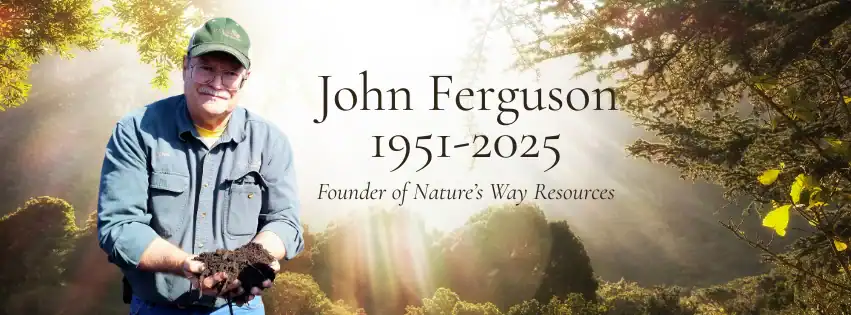
JOHN FERGUSON (1951-2025)
John was a native Houstonian with more than 35 years of business experience. He founded Nature’s Way Resources, a composting company known for producing high-quality compost, mulch, and soil mixes. He held an MS in Physics and Geology and was a licensed Soil Scientist in Texas.
Throughout his career, John received numerous awards in horticulture and environmental work. He represented the composting industry for many years on the Houston-Galveston Area Council for solid waste. His personal garden was featured in several horticultural books and in Better Homes and Gardens. His business was recognized by The Wall Street Journal for the quality and value of its products. He was a member of the Physics Honor Society and several professional organizations, and he co-authored Organic Management for the Professional.
John contributed articles regularly to this newsletter and oversaw its publication. We continue to share his past articles each week alongside The Lazy Gardener column to keep his passion, knowledge, and spirit alive for our readers.
SHELBY CASSANO is the communications and marketing lead for Nature’s Way Resources and the editor of The Lazy Gardener and Friends newsletter. Through her business, Leaf and Ledger, she exclusively partners with NWR to direct all marketing efforts, from campaign strategy and content planning to technical production of the newsletter. Shelby holds a B.S. in Agriculture with a concentration in Horticulture from Stephen F. Austin State University and previously managed the company’s nursery.

NATURE’S WAY RESOURCES
101 Sherbrook Cir.
Conroe, TX 77385
Hours of Operation
Monday – Friday: 8AM to 5PM
Saturday: 8AM to 2PM
Copyright © 2024 Nature’s Way Resources | All rights reserved.