

Nature’s Way Resources is proud to bring you this free weekly newsletter. Generous sponsors help support this project as a public service. Please consider showing your appreciation by supporting their businesses!
Microlife Biological Fertilizers
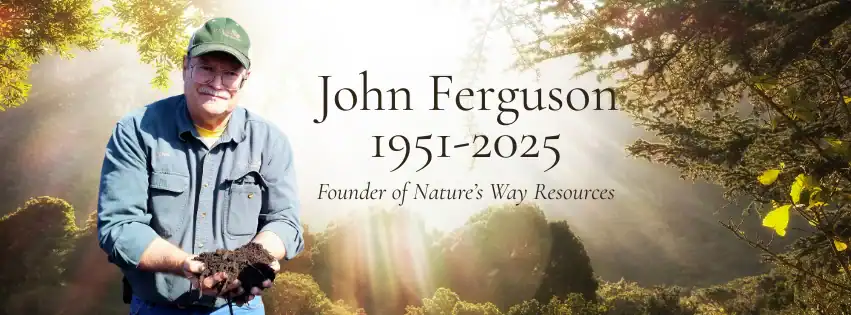
Nature’s Way Resources honors the contributions of our late founder, John Ferguson. “The Lazy Gardener” Brenda Beust Smith and Shelby Cassano welcome your feedback and remain grateful to the many horticulturists who share their expertise.
Published October 7, 2026
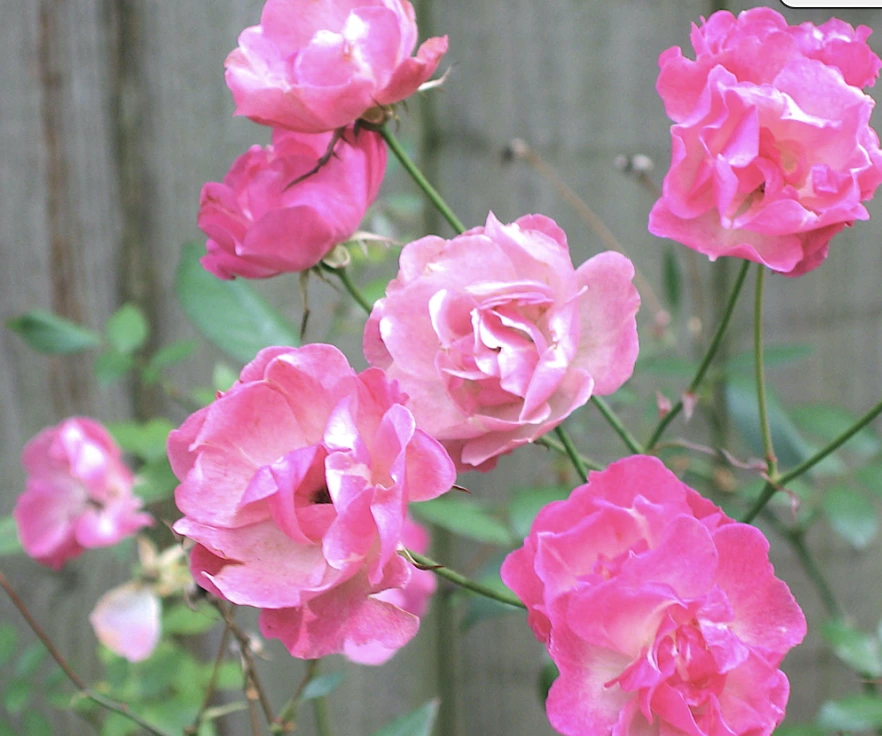
Bet SANDRA GEISER isn’t the only rose gardener who, these days, is asking: “Why do Knock Out roses look terrible now … ? Should she fertilize them? What about pruning? Sandra lives in Zone 8, but Greater Houston includes that area plus Zones 9a and Zone 9b. Baxter’s responses below cover all of us in the Greater Houston area!
* * *

IT’S FALL! YOUR ROSES EXPECT
YOU TO DO THE RIGHT THINGS!
BY BAXTER WILLIAMS
HOUSTON ROSE SOCIETY
Leaf loss is often normal in a time such as this . . .
As the fall season occurs, there are two or three things that bring about this action in the rose bush:
1. Lack of water. We have had so very little rain that the plants are in stress, if they are the least bit under-watered. Manually give them an abundance of water, and then dig down with a trowel to see just how much water has actually gotten into the root zone — you might be surprised to see that moisture under the mulch (The bushes are mulched, aren’t they?), is only a half-inch or so deep.
Put a garden hose near the base of the bush and just let it run for most of the day, and then check again with a trowel. A cheap moisture/pH meter would be a good purchase. The importance is to get water TO THE ROOTS!
(2) Less daylight. We have passed the point at which the sun is shining less than half a day (the Fall Equinox), so the bush doesn’t have the amount of energy for which it is designed.
(3) Important. You might have given the bush a good shot of fertilizer, when ALMOST NONE IS REQUIRED AFTER MID-SEPTEMBER! There should be one more attempt to grow blooms. If so, leave spent blooms ON THE BUSH, and don’t feed again until late January. The frosts and freezes in Houston will have passed by then, and therefore new growth will not be “burned”.
DON’T PRUNE ANY ROSE BUSHES DURING THE FALL. Wait until the ground begins to warm in late January, then feed existing bushes. Feed newly-planted AND CLIMBERS bushes after the first bloom in the Spring, and then at 6-7 weeks’ interval thereafter.
And read the Houston Rose Society’s “Rose-Ette” monthly newsletter. The first article every month is what to do this month so that your bushes look better than those of your neighbors’! www.houstonrose.org
Editor’s Note: Everyone who grows roses in this area needs the Houston Rose Society’s CALENDAR …. but especially new-to-roses-HERE folks. We are not like other areas, and wrong steps are easy to take. Check the calendar out at houstonrose.org/HRS27Cal.pdf.
* * *

ATTN:
— Nature’s Way Resources offers free guided tours of NWR’s extensive nursery/soil/mulch facilities for garden clubs, plant societies and other plant-oriented, organized groups. As usual, NWR’s now-expanded meeting site is free to above groups. Reservations a must for both. Great time to visit.
- GOOD NEWS FOR BUSY/LAZY GARDENERS: Curbside pickup is now available in the Nature’s Way Resources nursery, and we’re offering plant preorders for special requests. Call in your order, pick it up when it works for you, or let us try to source the plants you’re looking for on upcoming shipments. Find inventory sheet here.
Want to receive The Lazy Gardener & Friends weekly newsletter?
John’s Corner
NEWS FROM THE WONDERFUL WORLD OF SOIL AND PLANTS
This week we have a guest article from Rakshit Manga. Rakshit, founder of DOTDAY, is a landscape fabric subject matter expert who wrote the June 2026 Landscape Trends column in Turf Magazine. He writes about how fabric performs in gravel, gardens, landscapes and heavy-use ground.
He is happy to answer reader questions on gravel, drainage and standing water.

Keeping gravel paths and drains from sinking into Houston clay
By Rakshit Manga
Founder & Managing Director
Anyone who has laid a gravel path in Houston knows the sequel: a few months on, there’s a muddy dip and stones that seem to have vanished. Our gumbo clay swells when it’s wet and shrinks when it dries, and it slowly swallows whatever sits loose on top of it. Water is usually the real culprit, so a few habits go a long way.
1. Decide where the water goes first.
Before you lay a single stone, make sure the ground slopes gently away from your foundation and the path. Downspout extensions, a shallow grassy swale, or a rain garden in a low corner give rain somewhere to go besides under your path. For a soggy spot, a trench sloped toward a low area and filled with coarse gravel is the simple old-fashioned drain.
2. Dig out, then build a firm base.
Gravel set straight onto soft clay sinks. Remove the loose top soil, then add crushed rock a few inches at a time, tamping each layer firm before the next. Finish with decomposed granite or smaller gravel on top.
3. Edge with stone or wood.
A border of stone, or rot-resistant wood like cedar, keeps the path from spreading and helps hold its shape when the clay moves.
4. Time it, then check it.
Work when the soil is damp but crumbly, not soggy and not baked hard. After a heavy storm, walk your path and drain. Look for puddles, low spots, or washed-out edges, then rake and top up. For an informal garden path, shredded wood chips or oyster shell are easy on the eye and the budget. Just refresh them once a year.
Small fixes made early are far easier than rebuilding a path in July.
Rakshit Manga, Founder of DOTDAY, Houston, thedotday.com
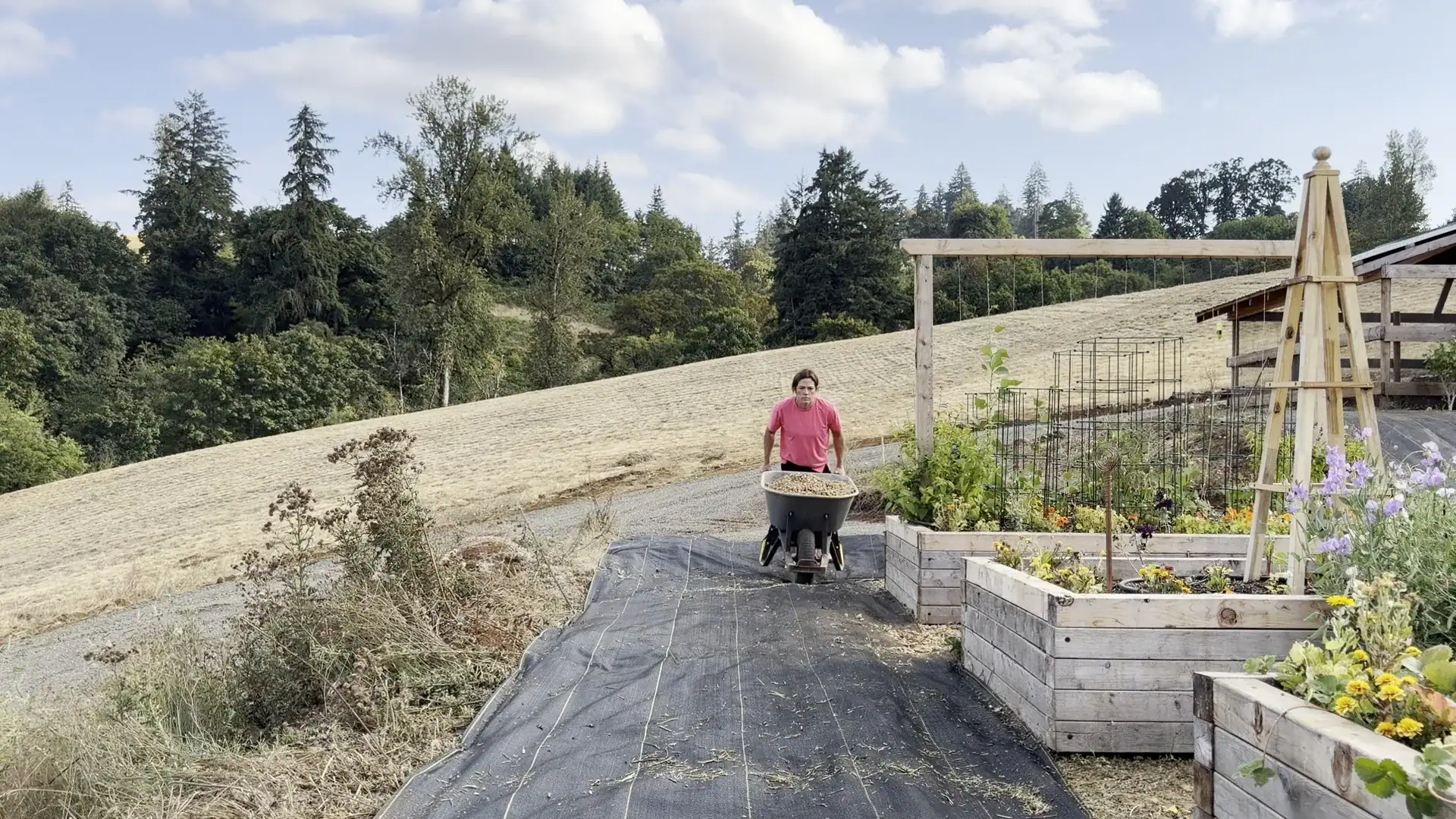
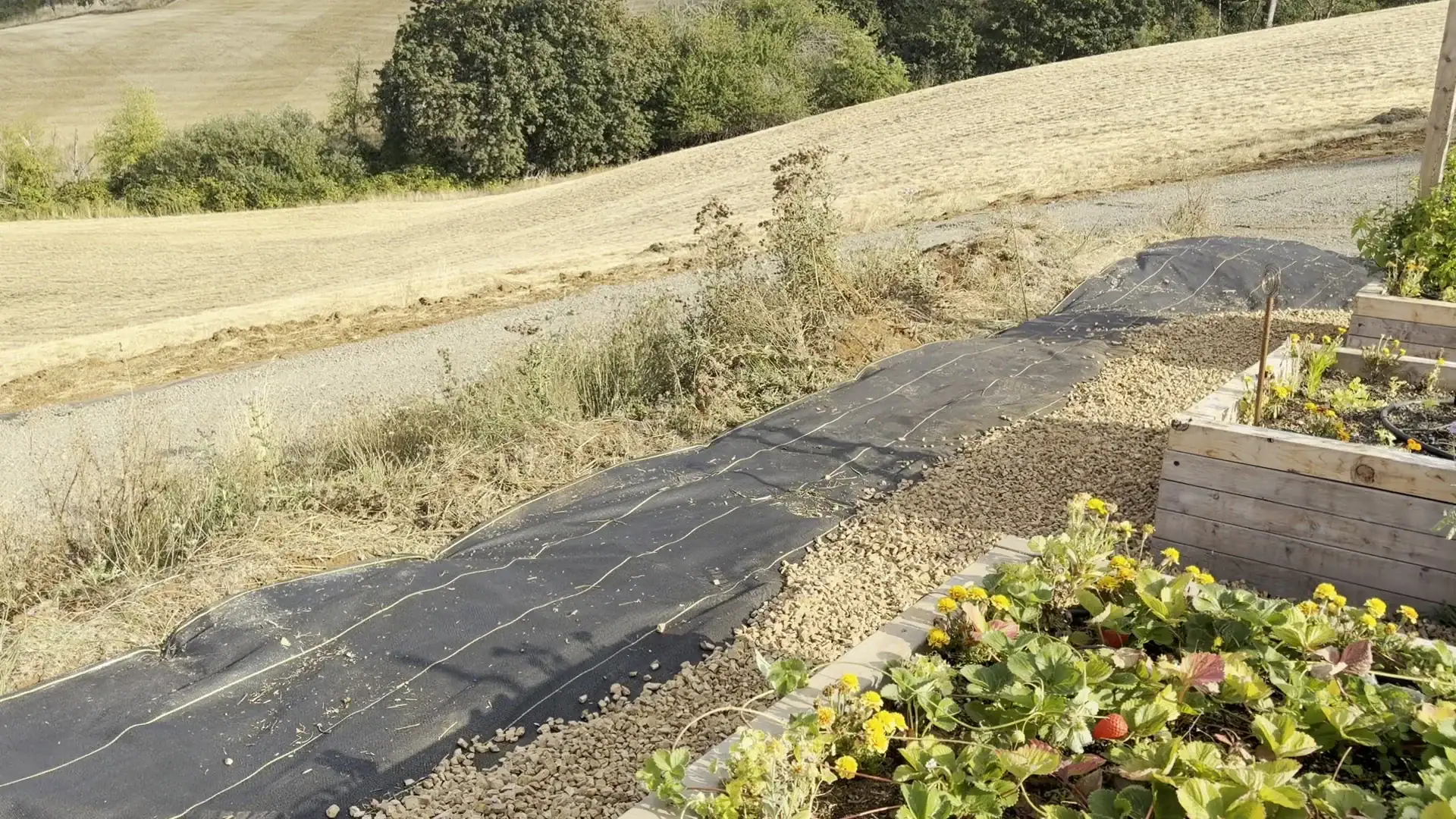
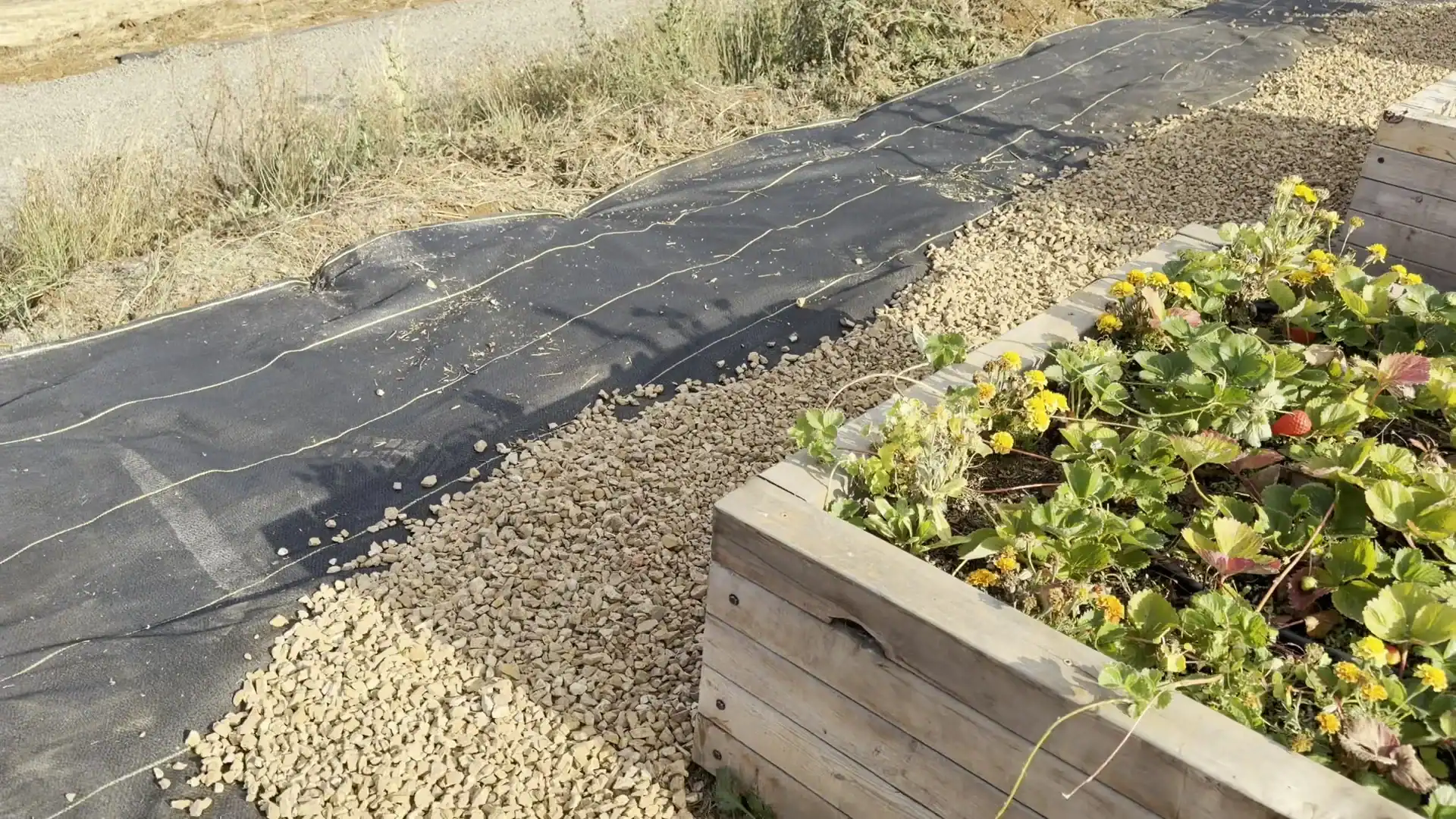
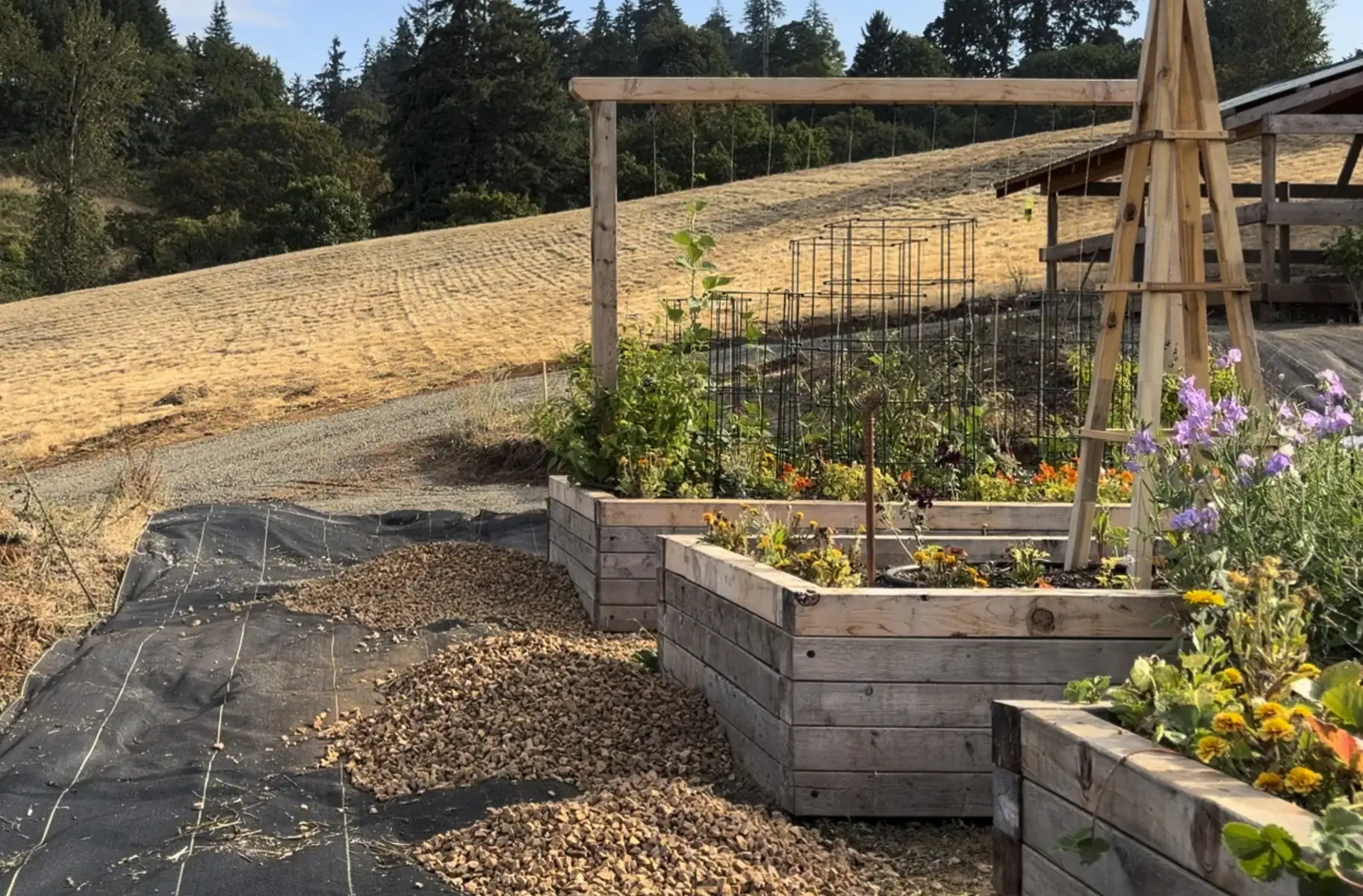
Photos: Built by Bri, courtesy of DOTDAY
Download the Original Newsletter Issue Below!
Sponsorship
If you are interested in becoming a sponsor, please contact us at 936-273-1200 or send an e-mail to: lazygardenerandfriends@gmail.com
About Us
BRENDA BEUST SMITH
WE KNOW HER BEST AS THE LAZY GARDENER . . .
but Brenda Beust Smith is also:
- a national award-winning writer & editor
- a nationally-published writer & photographer
- a national horticultural speaker
- a former Houston Chronicle reporter
When the Chronicle discontinued Brenda’s 45-year-old Lazy Gardener” print column — started in the early ’70s as a fun side-project to reporting, it then ranked as the longestrunning, continuously-published local newspaper column in the Greater Houston area. The name, she says, is not just fun, it’s true.
Brenda’s gradual sideways step from reporter into gardening writing led first to an 18-year series of when-to-do-what Lazy Gardener Calendars, then to her Lazy Gardener’s Guide book, which morphed into her Lazy Gardener’s Guide on CD, which she now emails free upon request.
Brenda became a Harris County Master Gardener and, over the years, served on the boards of many Greater Houston area horticulture organizations. She hosted local radio and TV shows, most notably Lazy Gardener specialty fundraisers on HoustonPBS (Ch. 8) and her call-in “EcoGardening” show on KPFT-FM.
For over three decades, Brenda served as Assistant Production Manager of the GARDEN CLUB OF AMERICA’S “BULLETIN” magazine. Although still an active broad-based freelance writer, Brenda’s main focus now is THE LAZY GARDENER & FRIENDS HOUSTON GARDEN NEWSLETTER with Shelby Cassano of Nature’s Way Resources.
A native of New Orleans and graduate of St. Agnes Academy and the University of Houston, Brenda lives in Humble, TX, and is married to the retired Aldine High School Coach Bill Smith. They had one son, Blake.
Regarding this newsletter, Brenda is the lead writer, originator of it, and the daily inspiration for it. We so appreciate the way she has made gardening such a fun way to celebrate life together for such a long time.
About her column, Brenda says: “I don’t consider myself a ‘garden writer.’ I started out 50+ years ago as a very lazy ‘gardening reporter’.” I still feel that way today. I hope my columns inspire/help newcomers, but I do not write to them. I write to very experienced gardeners who want to expand their horizons.
JOHN FERGUSON (1951-2025)
John was a native Houstonian with more than 35 years of business experience. He founded Nature’s Way Resources, a composting company known for producing high-quality compost, mulch, and soil mixes. He held an MS in Physics and Geology and was a licensed Soil Scientist in Texas.
Throughout his career, John received numerous awards in horticulture and environmental work. He represented the composting industry for many years on the Houston-Galveston Area Council for solid waste. His personal garden was featured in several horticultural books and in Better Homes and Gardens. His business was recognized by The Wall Street Journal for the quality and value of its products. He was a member of the Physics Honor Society and several professional organizations, and he co-authored Organic Management for the Professional.
John contributed articles regularly to this newsletter and oversaw its publication. We continue to share his past articles each week alongside The Lazy Gardener column to keep his passion, knowledge, and spirit alive for our readers.
SHELBY CASSANO is the communications and marketing lead for Nature’s Way Resources and the editor of The Lazy Gardener and Friends newsletter. Through her business, Leaf and Ledger, she exclusively partners with NWR to direct all marketing efforts, from campaign strategy and content planning to technical production of the newsletter. Shelby holds a B.S. in Agriculture with a concentration in Horticulture from Stephen F. Austin State University and previously managed the company’s nursery.

NATURE’S WAY RESOURCES
101 Sherbrook Cir.
Conroe, TX 77385
Hours of Operation
Monday – Friday: 8AM to 5PM
Saturday: 8AM to 2PM
Copyright © 2024 Nature’s Way Resources | All rights reserved.