Nature’s Way Resources is proud to bring you this free weekly newsletter. While we don’t run ads, generous sponsors help support this project as a public service. Their names are listed below, please consider showing your appreciation by supporting their businesses!
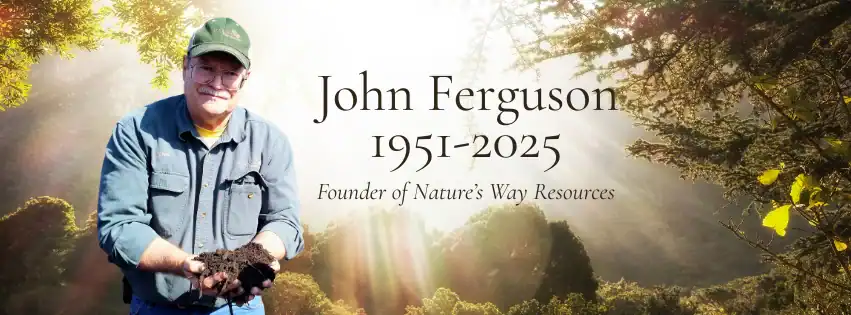
Nature’s Way Resources honors the contributions of our late owner, John Ferguson. “The Lazy Gardener” Brenda Beust Smith and Shelby Cassano welcome your feedback and remain grateful to the many horticulturists who share their expertise.
Published April 22, 2026

by Brenda Beust Smith | The Lazy Gardener
The best way to celebrate today, Earth Day (April 22), is to actually do something — at least one thing — to make our Earth a better planet on which to live.
For gardeners, it could be something as simple as planting colorful flowers in your front yard that will delight your neighbors, something to brighten their days. Or visiting a park or a public garden.
Don’t know where they are? Just Google “HOUSTON PUBLIC GARDENS” and you’ll find more than you ever realized are actually here! And these don’t even include suburban ones outside the central area. So be sure and also Google “near (your neighborhood).”
April triggers gardening hormones, so nurseries are packed with carefully pruned, USUALLY FORCED, blooming plants — in hope, of course, your eyes will be filled with visions of these beautiful specimens popping the eyes of your neighbors!
Just remember, usually those ‘forced’ flowers will die, and your (smarter-than-we-are) permanent plants will then turn their main energies, not toward producing new blooms, but rather toward establishing strong root systems.
You’ll probably still get pretty results from the already-established, but-yet-unopened buds. As any experienced gardener knows, it’s hard to pass by those flower-covered blooms. Difficult, but smarter, to use those colorful delights as guides to what you hope soon will draw oohs and ahhs from neighbors. ‘Tis the wise gardener who uses actual blooms on plants to pick varieties and colors. But then BUYS bud-covered plants for actual prolonged color in your yard! Even smarter, also look for the healthiest green growth!
Putting in a vegetable garden? Check your choices with local experts in YOUR AREA. Smart move: visit your local Master Gardener garden and make notes on which of the (always labeled) plants you’d like to try.
Here we should have some vegetables (broccoli, spinach) already. It gets so hot so quickly (as we’ve already seen). If you’ve waited this long to plant tomatoes, at least buy the most already mature plants you can find.
Planning to expand your gardens by giving roses some companion plantings? Think ahead about choices. Roses can be very picky about their close neighbors! Fortunately, one of this column’s best friends is Angela Chandler and her The Garden Academy.
A popular garden club speaker, Angela describes herself as “a lifelong hobby gardener who loves to play in the dirt”! Pretty much describes most of us, eh? And it’s our good fortune that, in our Spotlight Article below, Angela gladly shares tips on great companion plants for roses (not all are!!!).
If new roses are on your shopping list, or you’d like to try some new “companions” for your bushes, Angela’s sharing even more at her SAT., MAY 9: “Companion Plants for Roses” free presentation at Houston Rose Society gathering, 2 pm at Andrew’s Episcopal Church, 1819 Heights Blvd. No reservations needed.
* * *
PS. Just before I finished this column, someone sent me a note saying she heard it’s now ok to plant tomatoes by roses. She’d always heard NOT a good idea! Glad had expert handy. Loved Angela’s response!
“I would rate this as no big deal either way. There are some people who believe that tomatoes have a protective effect, which is not backed up by science. There are others that claim they are competitors, which is also not backed up.
“They are both heavy feeders, but that is more an issue of the gardener providing adequate nutrition, so I discount that concern. They can share powdery mildew, but that is not a huge concern either since many modern cultivars are resistant.”
Check out Angela’s Spotlight Article below for more on companion plantings for roses
* * *

Roses are called the Queen of the Garden, and since they have had their place in gardens around the world for so many generations, it would be hard not to give them that title.
However, queens are always surrounded by a court, so we should consider adding some dukes & duchesses, lords & ladies, earls & countesses to our gardens, and maybe a few country cousins as well, just to round things out.
Roses do love companion plants. They can help the roses to show off and keep them healthier as well. Diversity in a garden helps to build a healthier garden in several ways.
Different plants attract a variety of pollinators and beneficial insects. Different root types support different soil microbes. Some even have the ability to repel pathogens and pest species. But mostly, a variety of colors and textures just makes a garden look fuller, more colorful, and more interesting.
What makes a good companion for roses?
Choose plants that complement the color and height of the rose. Mid-height perennials are great at hiding the bare legs of taller shrub roses. Make sure they like the same conditions – soil, sunlight, water. Think about plants that can serve as a “living mulch”, such as low-growing, mounding perennials.
Here are a few suggestions:
- Herbs like Agastache, Catmint, Lavender, Marigolds, Rosemary & Yarrow.
- Perennials like Alyssum, Angelonia, Delphiniums, Monarda, & Phlox. Bulbs like Daylilies, Narcissus, and Iris.
- And think of winter color since roses often bloom year-round here; Ornamental Cabbages, Calendula, Larkspurs, Lisianthus & Poppies.
There are a few things to avoid. Make sure that the plants you choose are not prone to the same diseases or pests as your roses. This includes plants that harbor powdery mildew, downy mildew, or blackspot. Or choose resistant varieties of both roses and their companions.
* * *

ATTN:
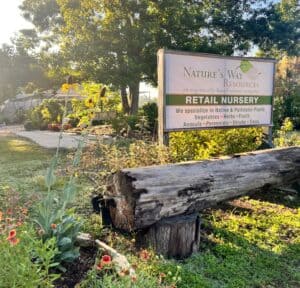
— Nature’s Way Resources offers free guided tours of NWR’s extensive nursery/soil/mulch facilities for garden clubs, plant societies and other plant-oriented, organized groups. As usual, NWR’s now-expanded meeting site is free to above groups. Reservations a must for both. Great time to visit.
- GOOD NEWS FOR BUSY/LAZY GARDENERS: Curbside pickup is now available in the Nature’s Way Resources nursery, and we’re offering plant preorders for special requests. Call in your order, pick it up when it works for you, or let us try to source the plants you’re looking for on upcoming shipments. Find inventory sheet here.
Want to receive The Lazy Gardener & Friends weekly newsletter?
John’s Corner
NEWS FROM THE WONDERFUL WORLD OF SOIL AND PLANTS
EDITORS’ NOTE: Last week, we dove into part 6 of What is a Healthy Soil? – Plant Choices. This week, we are sharing part 7 of John’s paper, What is a Healthy Soil? – Care for, and do not destroy the health of, the soil one has. Next week will be our last installation of “What is a Healthy Soil?”. Over the past month or so, we have gotten to enjoy what I would say is the foundation of John’s educational legacy, as we have learned from the bottom to the top the basics of soil, plant, and agricultural health. Keep in mind that John was an original pioneer of “organic gardening” in a widely conventional world back in the 90’s. Please read on to enjoy the teachings of our founder, John Ferguson.
What Is A Healthy Soil – Part 7
by John Ferguson,
Founder of Nature’s Way Resources
Continuing our discussion of what is a healthy soil, we are going to discuss item #6 below: Care for, and do not destroy the health of, the soil one has
- Organic matter from almost fresh to totally decomposed in the form of humus (humins, humic, fulvic acids)
- Minerals (nutrients, sand, silt, and clay)
- Soil life (microbes and macrobes)
- Air & water
- Plant choices
- Care for, and do not destroy the health of, the soil one has
- 6) Care for, and do not destroy the health of, the soil one has
How to quit destroying your soil (The “Do Not’s”) – When I was in college over 40 years ago, it was all about the chemistry and physics of the soil. Today we know the biology of the soil is 10-15X more important to plant growth and health than the chemistry and physics. This new knowledge has caused our understanding of a healthy soil to change.
DO NOT USE HIGH SALT PRODUCTS. THEY DESTROY SOIL AND WEAKEN PLANTS.
We now know that there is a good bacterium in the soil whose major function is to control soil diseases like the fungal disease called brown patch (Rhizoctonia solani). Ask yourself this question: “Why do we put salts into canned goods, ham, jerky, etc?” – TO KILL BACTERIA!
All synthetic fertilizers are chemical salts. They kill this good bacterium, and with no natural control, we get brown patch and many other fungal soil diseases.
Soils along the Gulf Coast are high in sodium from many sources, such as salt domes and salt swept inland from tropical storms. Salts stunt kill beneficial microbes, stunt plant growth, and prevent plants from absorbing water. Plants’ roots cannot tolerate salt.
This means if we want a beautiful garden along the Upper Texas Gulf Coast, we do not use high salt products. These include cow manure, poultry manure, spent mushroom substrate (sometimes called Mushroom compost), and artificial/synthetic fertilizers.
As we all know, salts dissolve in water, and gravity pulls the salts downward into the soil. As the soil dries, the salts are left behind, forming a layer a few inches down into our soil. The salt does two things: 1st – it prevents the roots from growing deep into the soil as they sense the presence of this salt layer and quit growing down, which results in a very shallow root zone.
As a result, roots cannot reach moisture deeper in the soil, and it dries out quickly. Hence, we have to water very frequently, and 2nd, the salts lock the soil particles together, forming a hardpan layer that prevents air and water from penetrating the soil. The low oxygen conditions favor the growth of many soil pathogens.
To give an example of how salt locks soil particles together, think of a pair of pliers left outside for a few weeks. The pliers rust and the pliers are frozen and will not open. Rust is chemically a salt composed of iron and oxygen. All artificial fertilizers are chemical salts.
DO NOT USE ARTIFICIAL FERTILIZERS.
We started learning as far back as 1999 that insects are attracted to plants fertilized with synthetic fertilizers (Journal of Environmental Horticulture, 17(2):95, June 1999). Due to osmotic pressure, plants will absorb nitrogen faster than they need or can use it.
To prevent nitrous, which could kill the plant, it causes fast growth made of weak tissue (the lignin of the cell walls becomes thinner) that actually attracts pest insects as they see in the ultraviolet portion of sunlight and can see the weakened tissue; hence, they know it is easy to eat into. This also decreases a plant’s resistance to disease as the thin cell walls are easy for pathogens to penetrate.
DO NOT USE PESTICIDES.
They work, but they kill beneficial insects, butterflies, and bees. One of the problems is that most pest insects breed 10 times faster than the beneficial insects, hence the pests come back worse than before the pesticide was applied. When it rains, or we turn on our sprinklers, it washes into the ground and kills earthworms, good nematodes, microanthropods, etc., that turn leaves into humus, just to name a few.
The same idea applies to herbicides and fungicides. Read the articles on Round-Up to get an understanding of the toxic and extremely dangerous nature of these products.
Toxic synthetic horticultural chemicals do not work. According to USDA data in 1900, crop loss due to insects was 3-4%. By the 1940’s, crop loss due to insects was 7%, and by the 1990’s, crop loss due to insects was 13%, despite a 33X increase in the volume of pesticides applied and at least a tenfold increase in toxicity. This is over a 330-fold increase in killing power, and yet the problems have gotten worse.
The bottom line is that these toxic chemicals are expensive and time-consuming to use, do not work very well, and this does not mention the side effects to one’s health and to the environment. This is why more and more soil scientists and horticulturalists are using modern methods based on soil biology that is often referred to as “organic methods”.
– Coming Next Week: What Is A Healthy Soil – Part 7 (continued)
Download the Original Newsletter Issue Below!
Sponsorship
If you are interested in becoming a sponsor, please contact us at 936-273-1200 or send an e-mail to: lazygardenerandfriends@gmail.com
About Us
BRENDA BEUST SMITH
WE KNOW HER BEST AS THE LAZY GARDENER . . .
but Brenda Beust Smith is also:
- a national award-winning writer & editor
- a nationally-published writer & photographer
- a national horticultural speaker
- a former Houston Chronicle reporter
When the Chronicle discontinued Brenda’s 45-year-old Lazy Gardener” print column — started in the early ’70s as a fun side-project to reporting, it then ranked as the longestrunning, continuously-published local newspaper column in the Greater Houston area. The name, she says, is not just fun, it’s true.
Brenda’s gradual sideways step from reporter into gardening writing led first to an 18-year series of when-to-do-what Lazy Gardener Calendars, then to her Lazy Gardener’s Guide book which morphed into her Lazy Gardener’s Guide on CD, which she now emails free upon request.
Brenda became a Harris County Master Gardener and, over the years, served on theboards of many Greater Houston area horticulture organizations. She hosted local radio and TV shows, most notably a 10+-year Lazy Gardener specialty shows on HoustonPBS (Ch. 8) and her call-in “EcoGardening” show on KPFT-FM.
For over three decades, Brenda served as Assistant Production Manager of the GARDEN CLUB OF AMERICA’S “BULLETIN” magazine. Although still an active broad-based freelance writer, Brenda’s main focus now is THE LAZY GARDENER & FRIENDS HOUSTON GARDEN NEWSLETTER with John Ferguson and Pablo Hernandez of Nature’s Way Resources.
A native of New Orleans and graduate of St. Agnes Academy and the University of Houston, Brenda lives in Humble, TX, and is married to the retired Aldine High School Coach Bill Smith. They have one son, Blake.
Regarding this newsletter, Brenda is the lead writer, originator of it and the daily inspiration for it. We so appreciate the way she has made gardening such a fun way to celebrate life together for such a long time.
About her column, Brenda says: “I don’t consider myself a ‘garden writer.” I started out 50+ years ago as a very lazy “gardening reporter.” I still feel that way today. I hope my columns inspire/help newcomers, but I do not write to them. I write to very experienced gardeners who want to expand their horizons.
JOHN FERGUSON (1951-2025)
John was a native Houstonian with more than 35 years of business experience. He founded Nature’s Way Resources, a composting company known for producing high-quality compost, mulch, and soil mixes. He held an MS in Physics and Geology and was a licensed Soil Scientist in Texas.
Throughout his career, John received numerous awards in horticulture and environmental work. He represented the composting industry for many years on the Houston-Galveston Area Council for solid waste. His personal garden was featured in several horticultural books and in Better Homes and Gardens. His business was recognized by The Wall Street Journal for the quality and value of its products. He was a member of the Physics Honor Society and several professional organizations, and he co-authored Organic Management for the Professional.
John contributed articles regularly to this newsletter and oversaw its publication. We continue to share his past articles each week alongside The Lazy Gardener column to keep his passion, knowledge, and spirit alive for our readers.
SHELBY CASSANO is the communications and marketing lead for Nature’s Way Resources and the editor of The Lazy Gardener and Friends newsletter. Through her business, Leaf and Ledger, she exclusively partners with NWR to direct all marketing efforts, from campaign strategy and content planning to technical production of the newsletter. Shelby holds a B.S. in Agriculture with a concentration in Horticulture from Stephen F. Austin State University and previously managed the company’s nursery.

NATURE’S WAY RESOURCES
101 Sherbrook Cir.
Conroe, TX 77385
Hours of Operation
Monday – Friday: 8AM to 5PM
Saturday: 8AM to 2PM
Copyright © 2024 Nature’s Way Resources | All rights reserved.