Nature’s Way Resources is proud to bring you this free weekly newsletter. While we don’t run ads, generous sponsors help support this project as a public service. Their names are listed below, please consider showing your appreciation by supporting their businesses!
Nature’s Way Resources honors the contributions of our late owner, John Ferguson. “The Lazy Gardener” Brenda Beust Smith and Shelby Cassano welcome your feedback and remain grateful to the many horticulturists who share their expertise.
Published March 25, 2026
by Brenda Beust Smith | The Lazy Gardener
We “oldies-but-goody gardeners” are smiling under raised eyebrows at this headline! We know the truth of “April is cruel” (according to T. S. Eliot, whose famous “The Waste Land”… leaves us hoping, wishing (!) spring is really here. But she almost never follows through, teasing us with a few nice days before . . . (But then “hope springs eternal” in gardeners, doesn’t it!)
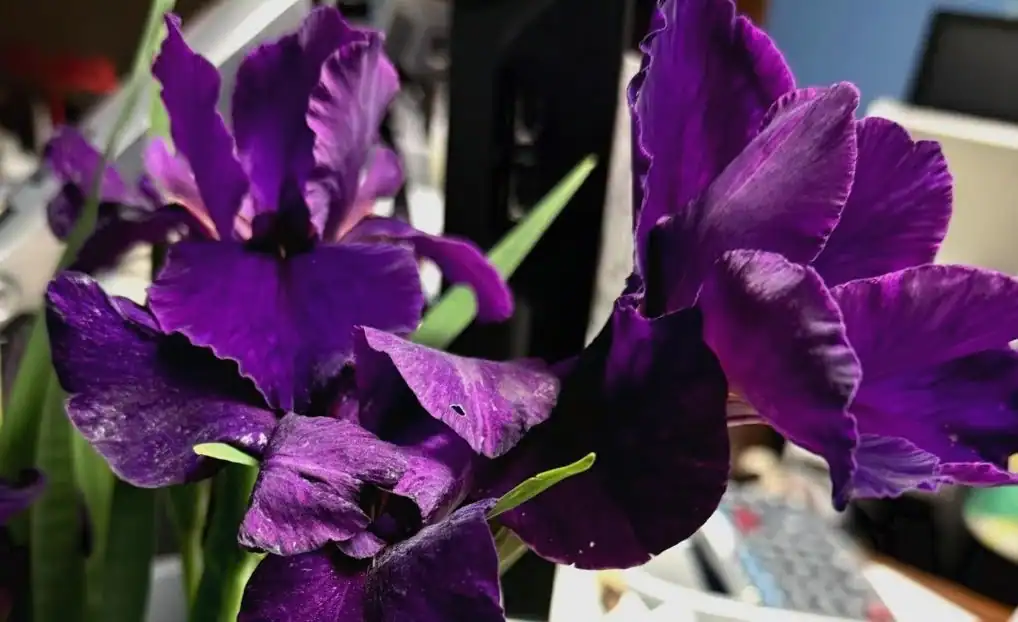
First, a major correction (apologize!): Last week, I misspelled the name of my new favorite Louisiana iris gardener, Frances Bland*. (“Bland” is correct. Sorry, Frances!). Close-up of Frances’ specific LA iris (top of column) that boggled my mind! Talk about rich color!!!!
* * *
As long as we are talking about outside challenges, predictions are deer may be a bigger problem than usual for gardeners in the outer-Greater-Houston area. Why?
Mainly because we are increasingly invading THEIR territories! Clear-cutting their homes and food supplies LONG before any human building takes place! Living away from city hustle & bustle may look wonderful to us, but how would we feel if deer suddenly began invading our inner city areas?
Also, high populations and our now often-drought conditions are also reducing natural food sources, driving deer and other wildlife to depend more heavily on residential gardens and landscaping, even eating plants previously considered resistant.
Word spreads fast among herds when favorite plants aren’t available. Decades ago, area gardeners (experienced with such challenges) helped me develop a “NO DEER” flyer (don’t take that title literally anymore!). I’m happy to share (hopefully in exchange for your reports on plants in your yard, the deer DON’T eat)!
Text your request to lazygardenerbrenda@gmail.com. No charge.
(Personal note about this flyer: The only person I ever heard say emphatically her deer solution worked perfectly was a wonderful 80± year-old woman who every night made her husband go “mark” the borders of her vegetable garden (a la coyotes). She said she never had a deer problem, even though all her neighbors did.
* * *
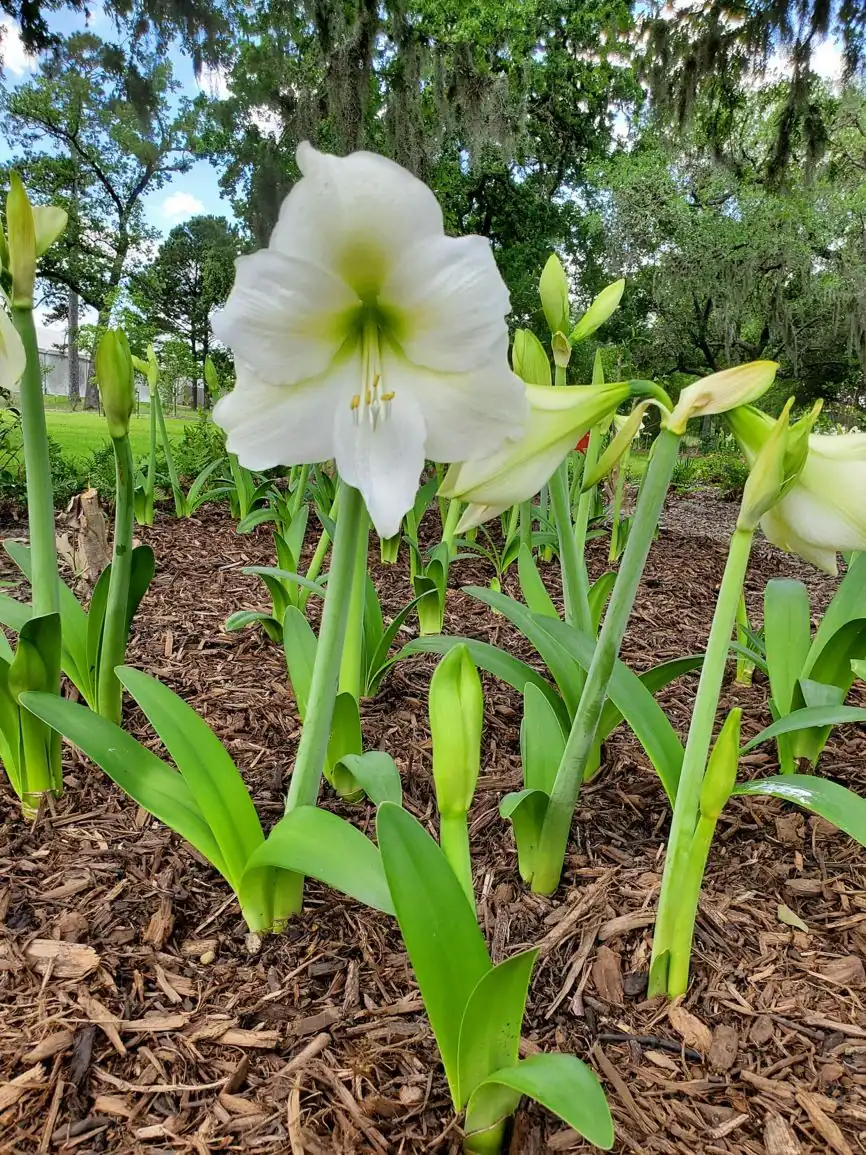
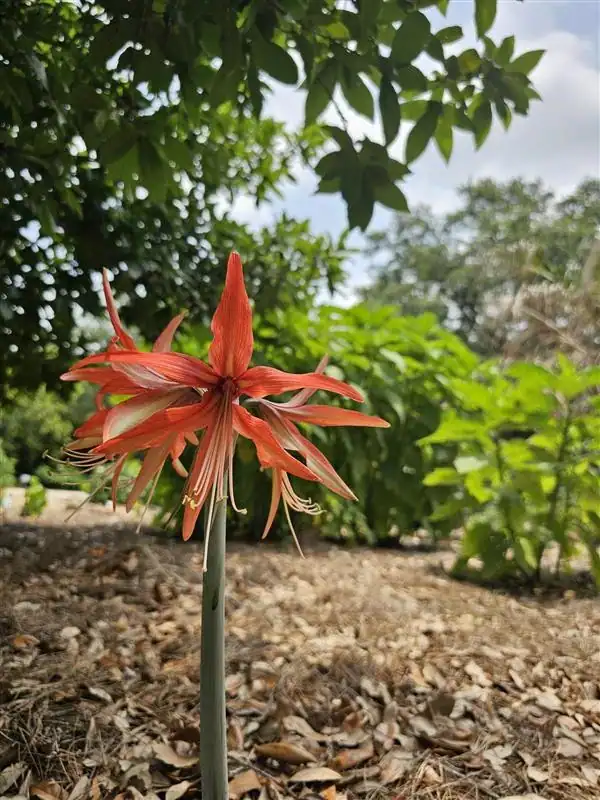
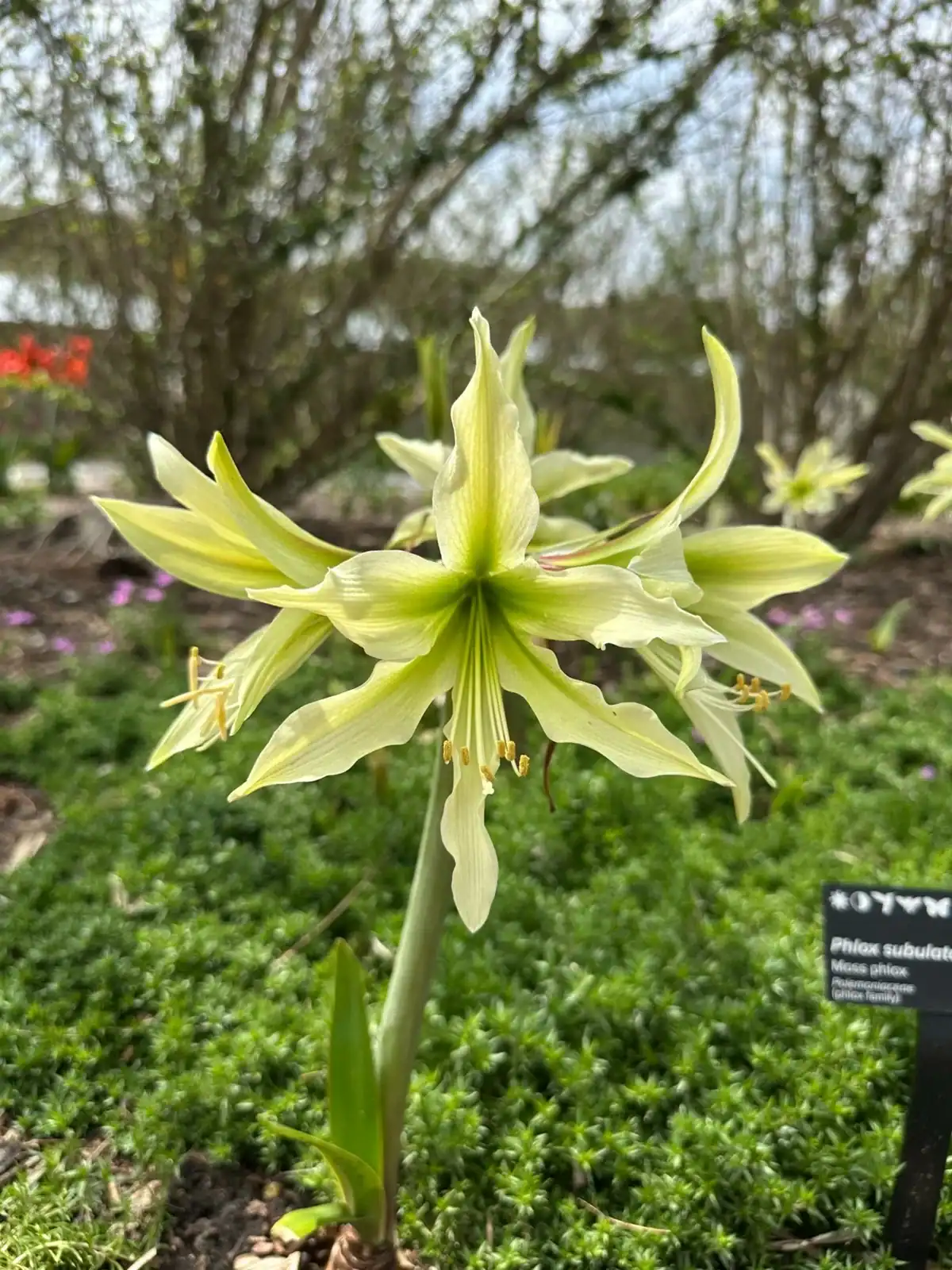
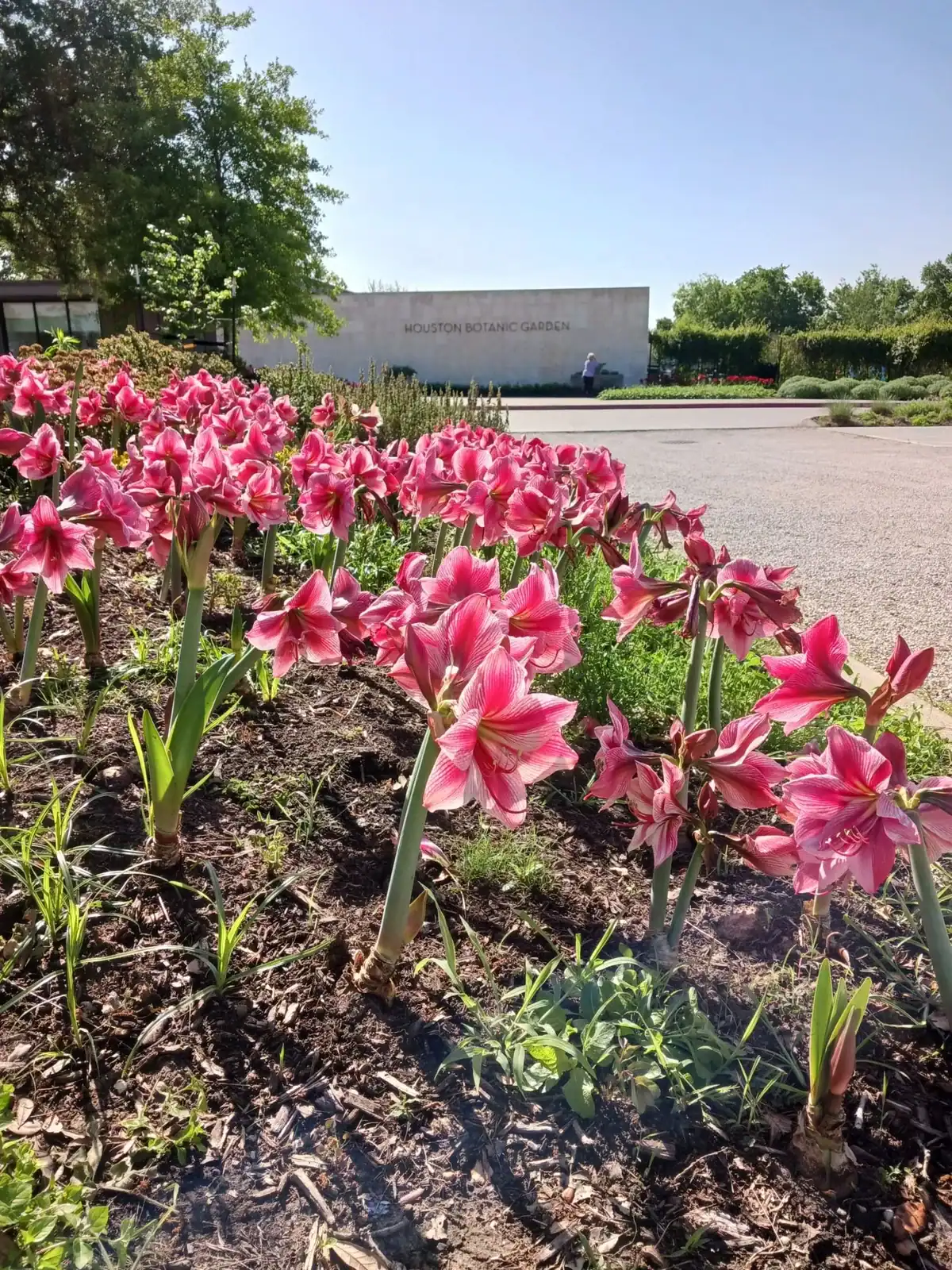
(Left to right)”Mont Blanc”, “La Paz”, “White Nile”, “Gervase”
by CORY SAUL
HOUSTON BOTANIC GARDEN’S HORTICULTURE COMMUNICATIONS SPECIALIST
Houston Botanic Garden returns this spring with Flower Power, its groovy festival of big blooms and hippies (Hippeastrum, that is). The large tropical bulb from Central and South America, Hippeastrum (often called Amaryllis) comes in countless cultivated varieties, of which the Garden has more than 50. Typically grown indoors for holiday displays, they’re instead displayed here as part of the Garden’s perennial displays, staying in the ground year-round. Hippeastrum‘s hand-sized blossoms peak in April, washing the entire Garden with broad brushstrokes of color.
To celebrate this big bloom moment, join Houston Botanic Garden on Sunday, April 12, 9am-4pm, for flower-forward family fun and an afternoon concert from Houston-based Beatles and 60s music tribute band The Fab 5.
Here are just a few of the many varieties that will be on view — some growing perennially in the Houston area for just the second year ever.
- Hippeastrum ‘White Nile’ in the Confetti Garden
- Hippeastrum ‘Cleopatra’ in the Confetti Garden
- Hippeastrum ‘Himalaya’ in the Tropical Heart
- Hippeastrum ‘Mont Blanc’ in Woodland Glade
- Hippeastrum ‘Apple Blossom’ in Cerrado
- Hippeastrum ‘Gervase’ in the Picnic Grove
- Hippeastrum ‘Nymph’ in the Mediterranean Garden
- Hippeastrum ‘La Paz’ in the Corner of Curiosity
- Hippeastrum ‘Picasso’ in the Susan Garver Family Discovery Garden
* * *
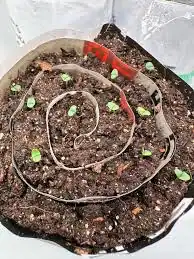
Snails come in all types, you know!
SNAILS WELCOME IN
A GARDEN? WELL . . .
by ANGELA CHANDLER
THE GARDEN ACADEMY
Snails are more than welcome in my garden. Wait……what?! Well, not the creepy, slimy kind that wants to browse my broccoli, but a new seed starting method that went viral because…………..it works! Seed snails are a spiral of soil captured in a non-porous wrapping. They have a couple of advantages over traditional seeding seed trays or small pots:
- They encourage deeper rooting than found in a common 4″ transplant pot.
- The transplants are easy to separate for potting up or planting out.
- It’s very easy to water and fertilize.
- They are very economical! This is a recycler’s dream project.
- They are a super space saver from start to finish.
- They reduce plastic garden waste.
- Pssst…..you can do cuttings in them, too!
You can start a whole season’s worth of plants in the space of a shoe box – veggies, herbs, flowers all happily growing together, waiting to take their place. Seed snails are a simple project that is a lot of fun and may encourage more of you to try starting your own transplants.
* * *

ATTN:
— Nature’s Way Resources offers free guided tours of NWR’s extensive nursery/soil/mulch facilities for garden clubs, plant societies and other plant-oriented, organized groups. As usual, NWR’s now-expanded meeting site is free to above groups. Reservations a must for both. Great time to visit.
- GOOD NEWS FOR BUSY/LAZY GARDENERS: Curbside pickup is now available in the Nature’s Way Resources nursery, and we’re offering plant preorders for special requests. Call in your order, pick it up when it works for you, or let us try to source the plants you’re looking for on upcoming shipments. Find inventory sheet here.
Want to receive The Lazy Gardener & Friends weekly newsletter?
John’s Corner
NEWS FROM THE WONDERFUL WORLD OF SOIL AND PLANTS
Subject: What Is A Healthy Soil?
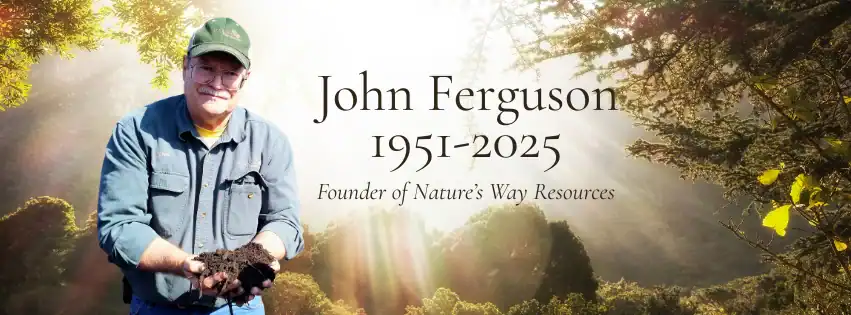
Continuing with last week’s theme, we will be exploring what healthy soil is, how to build and maintain it, and more. Please read on to enjoy the writings and teachings of our late founder, John Ferguson.
What Is A Healthy Soil – Part 3
by John Ferguson, Founder of Nature’s Way Resources
Continuing our discussion of what is a healthy soil we are going to discuss item #2 below: Minerals.
Organic matter from almost fresh to totally decomposed in the form of humus (humins, humic, fulmic acids)
Minerals (nutrients, sand, silt, and clay)
Soil life (microbes and macrobes)
Air & water
Plant choices
Care for and do not destroy the health of the soil one has
For ease of discussion, I am going to divide this topic into the elements or nutrients and the base materials that form all soils (sand, silt, and clay).
2) Minerals– The mineral requirement in a soil for healthy plant growth is a subject that is constantly being changed and expanded every year. First, it was assumed that plants only needed NPK (nitrogen (N), phosphorus (P), and potassium (K), which are known as the “macro-nutrients”.
Later on, it was discovered that calcium (Ca), magnesium (Mg), manganese (Mn), iron (Fe), copper (Cu), and sulphur (S) were required. Over the last 25 years, research has shown that zinc (Zn) and a little sodium (Na) were essential. Research over the last 10 years has shown that boron (B) is essential.
There are about 90 elements naturally found in the Earth’s crust and seawater, hence we still have dozens of elements to go.
What about aluminum (Al)? The synthetic fertilizer industry says it is not required by plants. However, when plant tissue is chemically analyzed, it is present in small amounts. Other tests have shown that some plants grown in soils without aluminum will die, while other tests have shown that plants without aluminum are disease-prone and are subject to higher rates of insect damage.
What about cobalt (Co)? Most agricultural scientists say it is not required by plants. However, the vitamin B-12 molecule, which regulates the immune system of mammals (including humans), and is essential for hemoglobin formation and for the prevention of nerve degeneration, is built around a cobalt atom.
For us as people who consume food to obtain minerals, the minerals must be in the food we eat. This means it has to be in the plants, which means it has to be present and available in the soil for microbes to build the B-12 molecule and for the plants to absorb.
NO cobalt in the soil means NO vitamin B-12 in our food. Recently, it has been discovered that Cobalt is needed in legumes for nodule formation and nitrogen conversion; seeds started without cobalt will not grow into viable plants. It has also been found in the bodies of microorganisms that live in the soil. Is it important?
How about Selenium (Se)? This element is not generally thought of as a plant nutrient. However, it is important in protecting humans against chronic degenerative diseases, as it is required in the production of powerful antioxidants such as vitamin E and glutathione peroxidase. Medical studies have found that America’s “Stroke Belt” runs right across America, where selenium content in soils is low. Is selenium important? – You bet it is.
– Coming Next Week: What Is A Healthy Soil – Part 3 (Continued)
Download the Original Newsletter Issue Below!
Sponsorship
If you are interested in becoming a sponsor, please contact us at 936-273-1200 or send an e-mail to: lazygardenerandfriends@gmail.com
About Us
BRENDA BEUST SMITH
WE KNOW HER BEST AS THE LAZY GARDENER . . .
but Brenda Beust Smith is also:
- a national award-winning writer & editor
- a nationally-published writer & photographer
- a national horticultural speaker
- a former Houston Chronicle reporter
When the Chronicle discontinued Brenda’s 45-year-old Lazy Gardener” print column — started in the early ’70s as a fun side-project to reporting, it then ranked as the longestrunning, continuously-published local newspaper column in the Greater Houston area. The name, she says, is not just fun, it’s true.
Brenda’s gradual sideways step from reporter into gardening writing led first to an 18-year series of when-to-do-what Lazy Gardener Calendars, then to her Lazy Gardener’s Guide book which morphed into her Lazy Gardener’s Guide on CD, which she now emails free upon request.
Brenda became a Harris County Master Gardener and, over the years, served on theboards of many Greater Houston area horticulture organizations. She hosted local radio and TV shows, most notably a 10+-year Lazy Gardener specialty shows on HoustonPBS (Ch. 8) and her call-in “EcoGardening” show on KPFT-FM.
For over three decades, Brenda served as Assistant Production Manager of the GARDEN CLUB OF AMERICA’S “BULLETIN” magazine. Although still an active broad-based freelance writer, Brenda’s main focus now is THE LAZY GARDENER & FRIENDS HOUSTON GARDEN NEWSLETTER with John Ferguson and Pablo Hernandez of Nature’s Way Resources.
A native of New Orleans and graduate of St. Agnes Academy and the University of Houston, Brenda lives in Humble, TX, and is married to the retired Aldine High School Coach Bill Smith. They have one son, Blake.
Regarding this newsletter, Brenda is the lead writer, originator of it and the daily inspiration for it. We so appreciate the way she has made gardening such a fun way to celebrate life together for such a long time.
About her column, Brenda says: “I don’t consider myself a ‘garden writer.” I started out 50+ years ago as a very lazy “gardening reporter.” I still feel that way today. I hope my columns inspire/help newcomers, but I do not write to them. I write to very experienced gardeners who want to expand their horizons.
JOHN FERGUSON (1951-2025)
John was a native Houstonian with more than 35 years of business experience. He founded Nature’s Way Resources, a composting company known for producing high-quality compost, mulch, and soil mixes. He held an MS in Physics and Geology and was a licensed Soil Scientist in Texas.
Throughout his career, John received numerous awards in horticulture and environmental work. He represented the composting industry for many years on the Houston-Galveston Area Council for solid waste. His personal garden was featured in several horticultural books and in Better Homes and Gardens. His business was recognized by The Wall Street Journal for the quality and value of its products. He was a member of the Physics Honor Society and several professional organizations, and he co-authored Organic Management for the Professional.
John contributed articles regularly to this newsletter and oversaw its publication. We continue to share his past articles each week alongside The Lazy Gardener column to keep his passion, knowledge, and spirit alive for our readers.
SHELBY CASSANO is the communications and marketing lead for Nature’s Way Resources and the editor of The Lazy Gardener and Friends newsletter. Through her business, Leaf and Ledger, she exclusively partners with NWR to direct all marketing efforts, from campaign strategy and content planning to technical production of the newsletter. Shelby holds a B.S. in Agriculture with a concentration in Horticulture from Stephen F. Austin State University and previously managed the company’s nursery.

NATURE’S WAY RESOURCES
101 Sherbrook Cir.
Conroe, TX 77385
Hours of Operation
Monday – Friday: 8AM to 5PM
Saturday: 8AM to 2PM
Copyright © 2024 Nature’s Way Resources | All rights reserved.