
Nature’s Way Resources is proud to bring you this free weekly newsletter. While we don’t run ads, generous sponsors help support this project as a public service. Their names are listed below, please consider showing your appreciation by supporting their businesses!
Nature’s Way Resources honors the contributions of our late owner, John Ferguson. “The Lazy Gardener” Brenda Beust Smith and Shelby Cassano welcome your feedback and remain grateful to the many horticulturists who share their expertise.
Published April 8, 2026
by Brenda Beust Smith | The Lazy Gardener
Considering what we’re all doing now (ordering seeds, hitting the nurseries, etc.), thought good time to give a little extra publicity to our upcoming plant sales. These (and the great special sales independent nurseries put on this time of year!) make April an ideal time to see what’s new, even if you don’t “intend” to buy! (Please note: I’ll deny any accusation I’m responsible for your — hopefully not TOO extravagant — purchases!
So, with further ado, here’s what I have so far. Use this EXACT format when submitting group notices. Not negotiable! Delay if I have to reformat an entry. Check calendar below, too. If yours is not in, either because rules at top of calendar not followed, or you’re outside the 12-county Greater Houston area (our limit). Keep checking calendar at end of column for added sales.
SAT., APR 11: LONE STAR DAYLILY SOCIETY PLANT SALE, 9am-4pm; Pearland Lumber & Ace Hardware, 2027 N Main St., Pearland. lonestardaylilysociety.org, 281-331-0162.
FRI.-SUN., APR. 17-19: 2026 KINGWOOD GARDEN CLUB GARDENSCAPES HOME & GARDEN TOUR & PLANT SALE. $30. KingwoodGardenClub.org
CHECK!!!!: Many more Great Gardening Events in calendar (below) may include sales not mentioned in submissions. Contact them. My main goal here is to help smaller & speciality groups get a little extra publicity. They may be your best advice source ever!
APRIL IS OUR MAIN ‘START PLANTING’ MONTH! But remember, some unique conditions here might not influence other areas, even within Texas borders. South Texas may be in the 90’s when it’s snowing in the Panhandle! As we just saw, severe thunderstorms may pass through northern (or southern) areas but just barely touch us. North and East (or South and West) parts of our area tend to separately get more heavy rains that more quickly pass through us. West Texas, as usual, is drier, with both very hot and very cold spells. All depends on our changing climate’s whim.
This affects our planting, however. To be safe (save money/backache), for individual plants, check local guides, such as the “2026 URBAN HARVEST PLANTING GUIDES or YOUR LOCAL MASTER GARDENER OFFICE.
The urge to garden gets really strong now! Best advice: take a really good look around your yard BEFORE hitting above (and/or at your area nurseries). Plants in commercial nurseries are carefully pruned to be eye catchers and may not look the same growing up in your garden. Spending a significant amount on a particular plant? Be sure to ask for care suggestions, anything particular about that plant you should know? Sun? Shade? Specific pruning? etc. Independent nurseries especially want (NEED!) your repeat successes so you’ll become a regular customer!
- EVER CHECKED OUT Houston Botanic Garden’s Facebook Page? It’s a wealth of gorgeous pictures!
- Predictions say we’re past our last frost. But as we “older” gardeners know too well, Mother Nature marches to her own drummer and loves to spring surprises on us. It’s been 9 years since our last April Freeze and the (really brave) weather predictors don’t expect one this year. That’s what I wanted to hear!
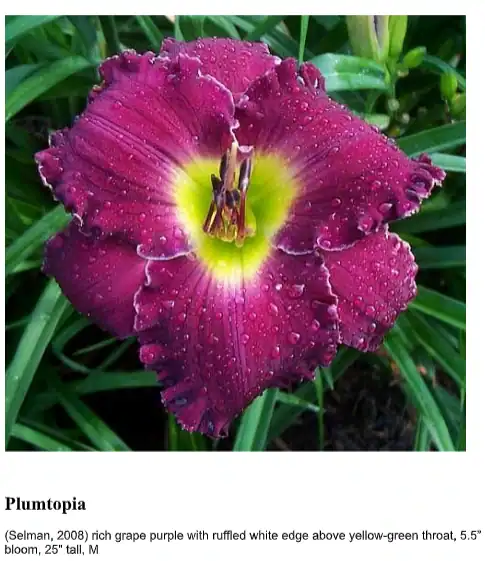
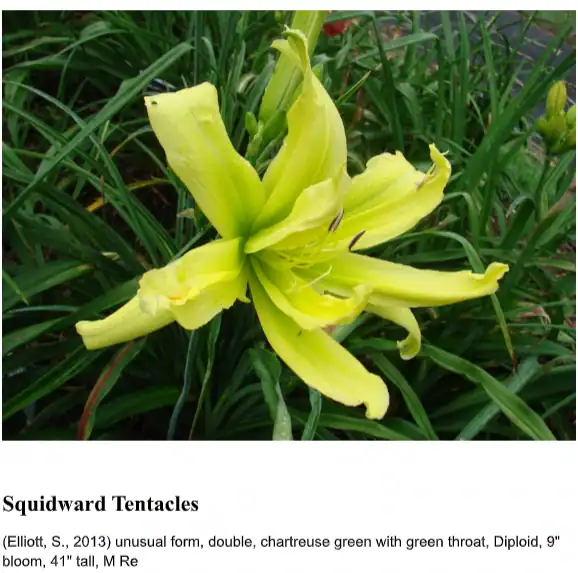
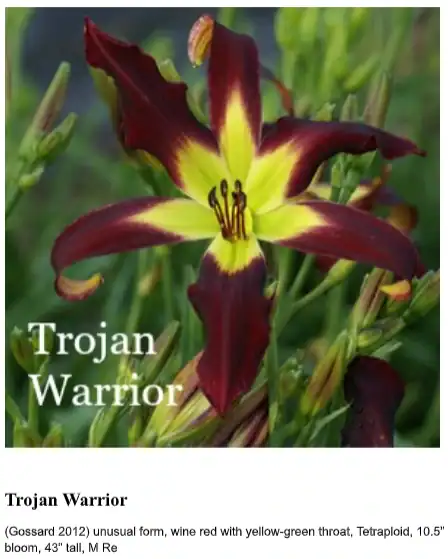
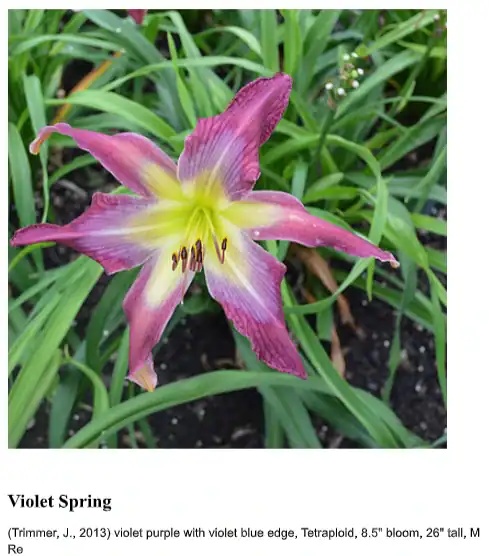
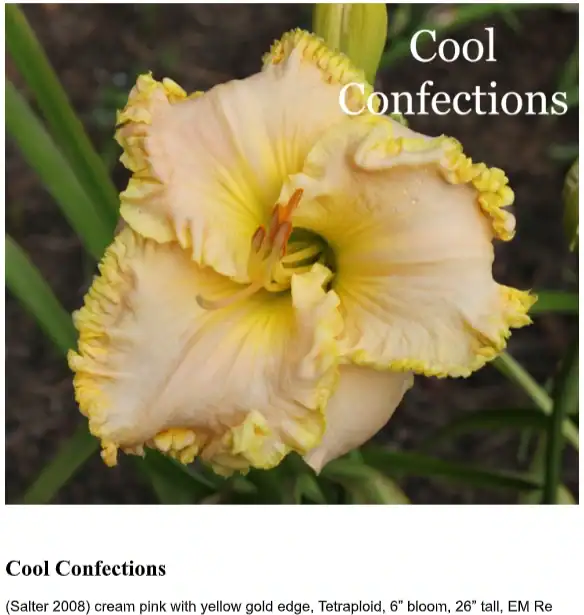
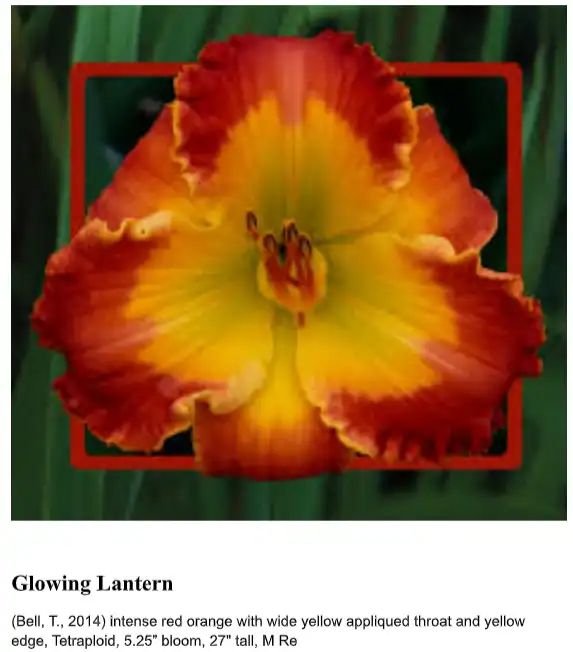
THINK YOU KNOW DAYLILIES? Recognize these that will be among the for-sale ones at the SAT., APR 11: LONE STAR DAYLILY SOCIETY PLANT SALE!
* * *
* * *

* * *
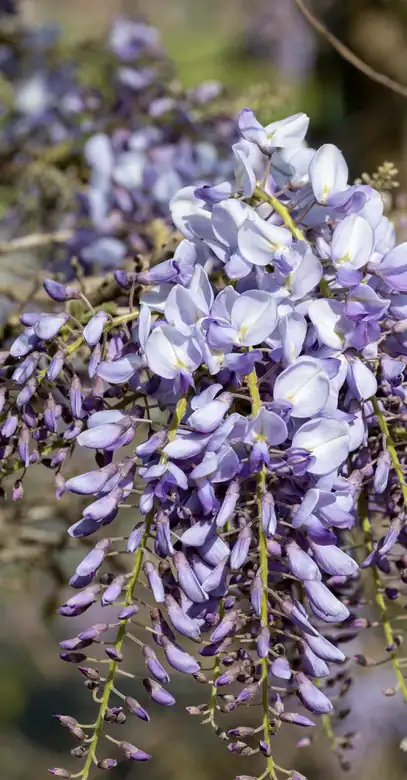
OLDER GARDENERS among you will understand this. It’s so sad to see plants we treasured, played under, and learned to love as children now labeled as invasive, with warnings not to plant them. I frequently have to drive by a huge wisteria. When in bloom, it’s gorgeous. I always give a sad sigh. We had one in our front yard, planted all by itself, so the long branches arched over, creating a wonderful “house” to play under. The scent was like perfume and flowers, gorgeous beyond words. Now, wisteria is a major villain in the South, smothering and killing other trees.
Ditto for Chinese tallows, although these are really nasty plants, despite their beautiful fall color. They scatter seeds fatal to other plants far out around them to protect their territory. If you’re successfully growing “NON-Chinese-tallow” plants that give you gorgeous fall color, do share! Now’s the best time to plant them, too.
EDITORS’ NOTE: Texas Wisteria (Wisteria frutescens) is not typically considered invasive. However, Chinese and Japanese Wisteria (Wisteria sinensis) (Wisteria floribunda) are. All three can be found in nurseries across the region, so it is important to know which species you’re buying and to avoid the latter two.
* * *

ATTN:
— Nature’s Way Resources offers free guided tours of NWR’s extensive nursery/soil/mulch facilities for garden clubs, plant societies and other plant-oriented, organized groups. As usual, NWR’s now-expanded meeting site is free to above groups. Reservations a must for both. Great time to visit.
- GOOD NEWS FOR BUSY/LAZY GARDENERS: Curbside pickup is now available in the Nature’s Way Resources nursery, and we’re offering plant preorders for special requests. Call in your order, pick it up when it works for you, or let us try to source the plants you’re looking for on upcoming shipments. Find inventory sheet here.
Want to receive The Lazy Gardener & Friends weekly newsletter?
John’s Corner
NEWS FROM THE WONDERFUL WORLD OF SOIL AND PLANTS
Subject: What Is A Healthy Soil?
Continuing with this month’s theme, we will be continuing to explore what healthy soil is, how to build and maintain it, and more. Please read on to enjoy the writings and teachings of our late founder, John Ferguson.
Subject: What Is A Healthy Soil – Part 5
by John Ferguson, Founder of Nature’s Way Resources
Continuing our discussion of what is a healthy soil we are going to discuss item #4 below: Air & water.
Organic matter from almost fresh to totally decomposed in the form of humus (humins, humic, fulvic acids)
Minerals (nutrients, sand, silt, and clay)
Soil life (microbes and macrobes)
Air & water
Plant choices
Care for and do not destroy the health of the soil one has
Air & water – this is the 4th components of a healthy soil. Plant roots and soil life forms require air (oxygen and nitrogen) and water. For the soil to breathe, which healthy soil does, there have to be pore spaces for the air and channels through which air can flow, sort of like air conditioning ducts in our house, a characteristic we call permeability.
Additionally, the carbon dioxide (CO2) produced by the respiration of microbes and other soil life and the breakdown of the carbon stored in the organic matter has to escape the soil and let oxygen back in, or the good life dies.
How do we get air into the soil? We have a few options:
Tilling – a temporary solution at best- destroys long-term soil structure, creates a hardpan layer, and kills soil animal life and the beneficial fungus that makes soil healthy. Accelerates the breakdown of organic matter, causing the soil to lose its ability to hold and store water and nutrients, greatly accelerating erosion.
The only time one should till is to mix ingredients together when forming a new bed.
Core Aeration – another temporary solution which can provide short-term benefits, especially if fine screened compost is applied to the area and allowed to fill into the holes created by the cores. The compost keeps the holes open and allows the exchange of air and water to enter the soil.
The microbes in the compost will break apart the clay particles over time, creating a more loamy soil. Best usage is on new sod grown in a clay soil. The coring breaks holes in the clay and helps water and air enter the soil.
Note: Healthy soil never needs core aeration as the microbes, earthworms, and other soil life do it for you.
Dead roots – most plants have some of their roots die every year as the soil around the root is depleted in nutrients, and new roots grow into fresh areas. As the old roots decompose, they leave tunnels that air and water can use (Note: they require oxygen to decompose). This is common in mature forest systems. Also, many of our annual weeds play a role in improving aeration in soils.
For example, Dandelions that have large, deep taproots provide this benefit. When they die, their roots decay, leaving a tunnel that air and water can use. Nature uses this plant to correct soil problems, as they grow best on tight, compacted soils.
Burrowing animals – the largest amount of aeration is caused by the insects, earthworms, and burrowing mammals. Earthworm tunnels are like the ductwork in our houses, and along with the microbes, they produce chemicals that glue soil particles together, forming a friable crumb structure, honeycombed with voids for air and water.
Water is stored in the soil in several ways.
First, it is bound chemically by the clay and humus in the soil, next it is stored as a film or coating on soil particles, and last it is stored in the void or interstitial spaces between grains of soil (too much and we call it a waterlogged soil as the air is displaced).
There is a 4th way that we are beginning to understand, and that is in the life forms in the soil. As these life forms eat each other, the water and nutrients stored in their bodies are released into the soil.
Our largest storage vessel for water is the soil. A soil with only 3% organic matter by weight will have a 60% porosity. If 35% of this pore space is air and 25% is water, then the soil will hold over 120,000 gallons of water per acre in the top 18 inches of soil.
A really healthy soil will have over 8% organic matter and go down several feet!
I remember as a boy growing up, my Grandmother would listen on the radio to our first gardening guy, Dewey Compton. Dewey had a saying that has stuck with me:
“It is far, far, far, far cheaper to put a one-dollar plant into a ten-dollar hole than a ten-dollar plant into a one-dollar hole.”
If one does not get the soil correct, it does not matter how much one spends on the plant material.
Even today, a colleague of mine, Randy Lemon of the Gardenline radio show, is still constantly stressing the importance of getting the soil healthy.
This issue is the single biggest mistake that gardeners make!
When one uses low-quality soils, mulch, fertilizers, etc., they will get insects, diseases, weeds, and eventually plant death.
Then they often say, “I have a Brown Thumb”.
– Coming Next Week: What Is A Healthy Soil – Part 5
Download the Original Newsletter Issue Below!
Sponsorship
If you are interested in becoming a sponsor, please contact us at 936-273-1200 or send an e-mail to: lazygardenerandfriends@gmail.com
About Us
BRENDA BEUST SMITH
WE KNOW HER BEST AS THE LAZY GARDENER . . .
but Brenda Beust Smith is also:
- a national award-winning writer & editor
- a nationally-published writer & photographer
- a national horticultural speaker
- a former Houston Chronicle reporter
When the Chronicle discontinued Brenda’s 45-year-old Lazy Gardener” print column — started in the early ’70s as a fun side-project to reporting, it then ranked as the longestrunning, continuously-published local newspaper column in the Greater Houston area. The name, she says, is not just fun, it’s true.
Brenda’s gradual sideways step from reporter into gardening writing led first to an 18-year series of when-to-do-what Lazy Gardener Calendars, then to her Lazy Gardener’s Guide book which morphed into her Lazy Gardener’s Guide on CD, which she now emails free upon request.
Brenda became a Harris County Master Gardener and, over the years, served on theboards of many Greater Houston area horticulture organizations. She hosted local radio and TV shows, most notably a 10+-year Lazy Gardener specialty shows on HoustonPBS (Ch. 8) and her call-in “EcoGardening” show on KPFT-FM.
For over three decades, Brenda served as Assistant Production Manager of the GARDEN CLUB OF AMERICA’S “BULLETIN” magazine. Although still an active broad-based freelance writer, Brenda’s main focus now is THE LAZY GARDENER & FRIENDS HOUSTON GARDEN NEWSLETTER with John Ferguson and Pablo Hernandez of Nature’s Way Resources.
A native of New Orleans and graduate of St. Agnes Academy and the University of Houston, Brenda lives in Humble, TX, and is married to the retired Aldine High School Coach Bill Smith. They have one son, Blake.
Regarding this newsletter, Brenda is the lead writer, originator of it and the daily inspiration for it. We so appreciate the way she has made gardening such a fun way to celebrate life together for such a long time.
About her column, Brenda says: “I don’t consider myself a ‘garden writer.” I started out 50+ years ago as a very lazy “gardening reporter.” I still feel that way today. I hope my columns inspire/help newcomers, but I do not write to them. I write to very experienced gardeners who want to expand their horizons.
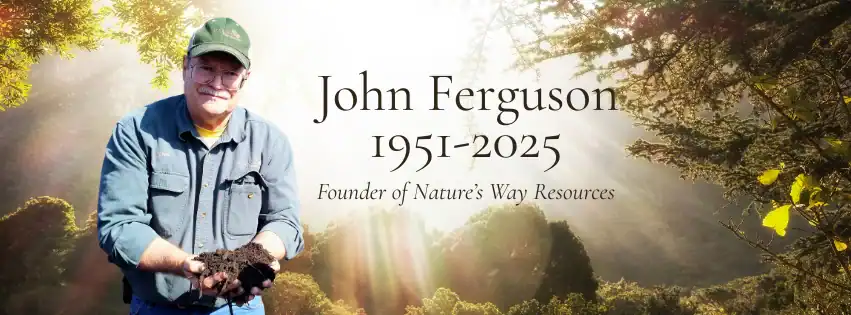
JOHN FERGUSON (1951-2025)
John was a native Houstonian with more than 35 years of business experience. He founded Nature’s Way Resources, a composting company known for producing high-quality compost, mulch, and soil mixes. He held an MS in Physics and Geology and was a licensed Soil Scientist in Texas.
Throughout his career, John received numerous awards in horticulture and environmental work. He represented the composting industry for many years on the Houston-Galveston Area Council for solid waste. His personal garden was featured in several horticultural books and in Better Homes and Gardens. His business was recognized by The Wall Street Journal for the quality and value of its products. He was a member of the Physics Honor Society and several professional organizations, and he co-authored Organic Management for the Professional.
John contributed articles regularly to this newsletter and oversaw its publication. We continue to share his past articles each week alongside The Lazy Gardener column to keep his passion, knowledge, and spirit alive for our readers.
SHELBY CASSANO is the communications and marketing lead for Nature’s Way Resources and the editor of The Lazy Gardener and Friends newsletter. Through her business, Leaf and Ledger, she exclusively partners with NWR to direct all marketing efforts, from campaign strategy and content planning to technical production of the newsletter. Shelby holds a B.S. in Agriculture with a concentration in Horticulture from Stephen F. Austin State University and previously managed the company’s nursery.

NATURE’S WAY RESOURCES
101 Sherbrook Cir.
Conroe, TX 77385
Hours of Operation
Monday – Friday: 8AM to 5PM
Saturday: 8AM to 2PM
Copyright © 2024 Nature’s Way Resources | All rights reserved.