

Nature’s Way Resources is proud to bring you this free weekly newsletter. While we don’t run ads, generous sponsors help support this project as a public service. Their names are listed below, please consider showing your appreciation by supporting their businesses!
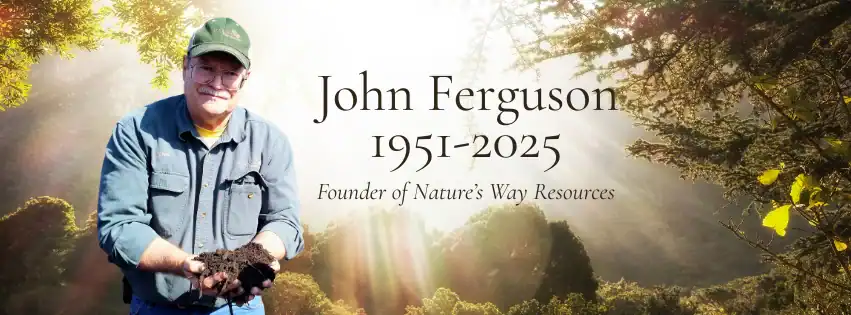
Nature’s Way Resources honors the contributions of our late owner, John Ferguson. “The Lazy Gardener” Brenda Beust Smith and Shelby Cassano welcome your feedback and remain grateful to the many horticulturists who share their expertise.
Published April 1, 2026
by Brenda Beust Smith | The Lazy Gardener
Ever wonder who started the idea of playing jokes on folks in honor of April Fool’s Day? Or why? A quick search actually indicates that apparently no one knows! Maybe Mother Nature’s laughing since tonight and tomorrow night’s (hopefully) “Pink Moon” are sort of a joke. Not pink at all. This moon is named for a wildflower, not a color: Phlox subulata (“creeping phlox” or “moss pink”), wildflowers named by (again, not sure) Native Americans, Colonial Americans, or Europeans!
Even so, before you head to bed Wednesday, you may want to look up. According to the Old Farmer’s Almanac, the Pink Full Moon is set to peak in the night sky, offering a celestial show from 9pm on for Southeast Texas. The good news? No rain is expected to ruin your view. But, folks,. . . this news below is no joke! Or an April Fool’s Day prank.
* * *
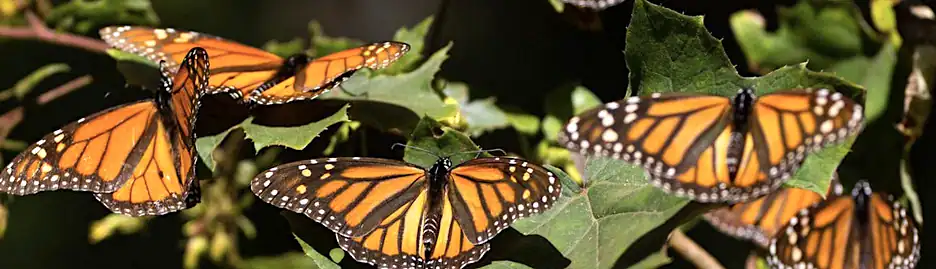
Garden’s for Life.com‘s “Trisha from Garden for Wildlife” report is just one of many coming from Mexico now confirming the eastern migratory monarch butterfly population has seen an at-least 64% increase this year! YEY!!!
Reports coming in verify colonies occupied 7.24+/- acres of forest this winter, compared to 4.42 acres last year — thanks to increasing forest protection, decreasing illegal logging, and (hopefully) growing conservation efforts.
We humans (and changing weather) have destroyed so much of their stopping spots, they must find more on their longer journey paths northward now and southward in fall. They need our help, and reports prove it’s working!
As they migrate northward (then southward in fall), adult butterflies need “fuel stations” of more native, nectar-rich, local varieties like penstemon, coneflower, goldenrod (and others recommended by your local groups to grow in gardens, on balconies, and in community spaces.
Houston offers so many butterfly-awareness resources and special programs at the Cockrell Butterfly Center (Museum of Natural Science), Houston Botanic Garden, and Mercer Arboretum & Nature Center (not to mention all those in outlying areas). If you’ve never been to the Cockrell Butterfly Center at the Museum of Natural Science in Hermann Park, you’ve missed one of Houston’s greatest treasures.
(If you’d like to help promote other open-to-the-public, Greater Houston Area (only) butterfly-learning opportunities you know are coming up, be glad to list them. They’re certainly a vital aspect of gardening.
Saved the best for last: You do know, right? The NATIONAL BUTTERFLY CENTER is located in Texas. Straight down south from Houston. Do yourself a favor, check them out and join!! 956-583-5400 or e-mail: nbc@naba.org.
* * *
The rains they are a’comin’ — thank goodness! It’s been close to a month since we heard the pittey-pat on our plants. Have plants to put in and to make the most of this welcome watering? Dig the holes. Set the plants outside nearby where they can enjoy the natural watering. Dig the holes. Then . . . stop!
Why stop? Because in our area, we want roots to grow downward. The more we move into summer, the hotter soil becomes and the more packed solid. Most hand watering (or even sprinkler water) soaks only the top soil layers.
The more water you can get down deep, the healthier those lower levels will be, filled with life to make it more beneficial to plant roots when you get around to actually planting. Be sure you know where your underground lines are laid!
Want to try something different this year? Not a bad technique if you have lots of fallen limbs.
Hugelkultur is a type of gardening that advocates digging trenches and filling them with compost layered with wood, branches, and compost. The decaying natural elements will retain moisture, adding lots of valuable nutrients to the soil. Good photos: https://www.facebook.com/HoustonHugelkultur/
Of course, neighbors will probably think you’re strange, but then, most obsessive gardeners probably are!
SPEAKING OF ‘STRANGE’ — In honor of the Artemis II launch, Garden for Wildlife released Intergalactic Habitat Collection (including shipping service to lunar surface and Red Plant (Mars). (Note: since the amazing growth of “native gardening for wildlife,” it’s often difficult to tell for-profit nature/flower businesses from volunteer groups. Research. But know many, if not most, are working hand-in-hand on shared concerns.)
Sharing this April Fool’s Day promotion may be just to make you smile today. But gotta give them a nod for stressing the importance of “ensuring that the Martian ecosystem remains as pristine as the day the rovers arrived.”
* * *

ATTN:
— Nature’s Way Resources offers free guided tours of NWR’s extensive nursery/soil/mulch facilities for garden clubs, plant societies and other plant-oriented, organized groups. As usual, NWR’s now-expanded meeting site is free to above groups. Reservations a must for both. Great time to visit.
- GOOD NEWS FOR BUSY/LAZY GARDENERS: Curbside pickup is now available in the Nature’s Way Resources nursery, and we’re offering plant preorders for special requests. Call in your order, pick it up when it works for you, or let us try to source the plants you’re looking for on upcoming shipments. Find inventory sheet here.
Want to receive The Lazy Gardener & Friends weekly newsletter?
John’s Corner
NEWS FROM THE WONDERFUL WORLD OF SOIL AND PLANTS
Subject: What Is A Healthy Soil?
Continuing with this month’s theme, we will be continuing to explore what healthy soil is, how to build and maintain it, and more. Please read on to enjoy the writings and teachings of our late founder, John Ferguson.
Subject: What Is A Healthy Soil – Part 3 (continued), Part 4
by John Ferguson, Founder of Nature’s Way Resources
How important are these other minerals?
Studies have shown that people who live in igneous areas with highly mineralized soil and water, the Hunzas, the Vilcabambas, etc., have life spans averaging 127 years old, without the aid of medical technology.
Current theory, confirmed by animal tests, indicates the presence of all the trace minerals in the water and soil where they live, which allows the human body to work more efficiently to repair itself, prevent disease, and slow down the aging process.
The message I want to leave with you is:
“We as scientists do not really know for sure what is important and what’s not”.
As a result, modern soil scientists researching organic and biological methods take the position of having all the possible minerals present in the soil and then let the plants and microbes take what they want and need.
Sort of like when we go to the cafeteria to eat, we have dozens of items to choose from, but we only take a few, and different people take different things based on what they need (what they are hungry for).
What Is A Healthy Soil – Part 4
Continuing our discussion of what a healthy soil is, we are going to discuss item #3 below: Soil life.
Organic matter from almost fresh to totally decomposed in the form of humus (humins, humic, fulvic acids)
Minerals (nutrients, sand, silt, and clay)
Soil life (microbes and macrobes)
Air & water
Plant choices
Care for and do not destroy the health of the soil one has
3) Soil life – This is the 3rd major portion of a healthy soil and the most frequently neglected and most easily destroyed. One pound of healthy soil, barely a double handful, will contain over 9 billion microbes. Not a million but a billion, and some studies are now suggesting trillions of microbes in a pound of real healthy soil! As these microbes live and grow, they break down silicate minerals, releasing the nutrients. Many of these have the ability to obtain nitrogen from the air, which is assimilated into their bodies in the form of proteins, enzymes, amino acids, vitamins, etc., all beneficial to plants, wildlife, and ultimately humans.
The microbes consist of bacteria, fungi, protozoa, nematodes, microanthropods, and many others. Microbes turn dirt into soil. They give body and texture as well as the feel and smell of healthy soil. Microorganisms break down detritus into useful soil products like humus. Microorganisms help hold soil aggregates together, creating channels through which plant roots grow, soil animals move, and water percolates.
Microbes protect roots from pathogens; mycorrhizal fungi have been shown to benefit plants by enhanced nutrient absorption, increased drought tolerance, improved transplant survival, and reduced susceptibility to root diseases. Mycorrhizal fungi increase the length and mass of root systems, enabling the plant to absorb nutrients better. They also convert nutrients into a form easier for plants to use and absorb. As the root mass and size increase, moisture can be absorbed from a much larger area, giving plants greater drought resistance. Several species of fungus trap, attack, and destroy parasitic nematodes.
Over 1,400 species of nematodes have been identified, and only 20 are bad for plants. Most species of nematodes are beneficial; some species attack and feed on pest larvae in the soil, such as grub worms, fleas, ticks, and even fire ants, while others help cycle nutrients.
Researchers have discovered a group of fungi that protects lawn grasses from pests. The fungus is called an endophyte and lives in a symbiotic relationship that benefits both the plant and the fungus. The fungi produce toxins that are harmless to the grass (and humans) but repel chinch bugs, sod webworms, and other surface-feeding insects. Research at Rutgers University indicates that grass plants inoculated with endophytes are more vigorous and better able to withstand drought and weed invasions.
In addition to the army of microbial workers, macrobes (earthworms, beetles, centipedes, ants, arthropods, burrowing frogs, etc.) churn and till soil, increasing porosity and tilth. This burrowing action stimulates root growth in most plants. Of this group, earthworms are the most valuable, a gardener’s best friend.
– Coming Next Week: What Is A Healthy Soil – Part 5
Download the Original Newsletter Issue Below!
Sponsorship
If you are interested in becoming a sponsor, please contact us at 936-273-1200 or send an e-mail to: lazygardenerandfriends@gmail.com
About Us
BRENDA BEUST SMITH
WE KNOW HER BEST AS THE LAZY GARDENER . . .
but Brenda Beust Smith is also:
- a national award-winning writer & editor
- a nationally-published writer & photographer
- a national horticultural speaker
- a former Houston Chronicle reporter
When the Chronicle discontinued Brenda’s 45-year-old Lazy Gardener” print column — started in the early ’70s as a fun side-project to reporting, it then ranked as the longestrunning, continuously-published local newspaper column in the Greater Houston area. The name, she says, is not just fun, it’s true.
Brenda’s gradual sideways step from reporter into gardening writing led first to an 18-year series of when-to-do-what Lazy Gardener Calendars, then to her Lazy Gardener’s Guide book which morphed into her Lazy Gardener’s Guide on CD, which she now emails free upon request.
Brenda became a Harris County Master Gardener and, over the years, served on theboards of many Greater Houston area horticulture organizations. She hosted local radio and TV shows, most notably a 10+-year Lazy Gardener specialty shows on HoustonPBS (Ch. 8) and her call-in “EcoGardening” show on KPFT-FM.
For over three decades, Brenda served as Assistant Production Manager of the GARDEN CLUB OF AMERICA’S “BULLETIN” magazine. Although still an active broad-based freelance writer, Brenda’s main focus now is THE LAZY GARDENER & FRIENDS HOUSTON GARDEN NEWSLETTER with John Ferguson and Pablo Hernandez of Nature’s Way Resources.
A native of New Orleans and graduate of St. Agnes Academy and the University of Houston, Brenda lives in Humble, TX, and is married to the retired Aldine High School Coach Bill Smith. They have one son, Blake.
Regarding this newsletter, Brenda is the lead writer, originator of it and the daily inspiration for it. We so appreciate the way she has made gardening such a fun way to celebrate life together for such a long time.
About her column, Brenda says: “I don’t consider myself a ‘garden writer.” I started out 50+ years ago as a very lazy “gardening reporter.” I still feel that way today. I hope my columns inspire/help newcomers, but I do not write to them. I write to very experienced gardeners who want to expand their horizons.
JOHN FERGUSON (1951-2025)
John was a native Houstonian with more than 35 years of business experience. He founded Nature’s Way Resources, a composting company known for producing high-quality compost, mulch, and soil mixes. He held an MS in Physics and Geology and was a licensed Soil Scientist in Texas.
Throughout his career, John received numerous awards in horticulture and environmental work. He represented the composting industry for many years on the Houston-Galveston Area Council for solid waste. His personal garden was featured in several horticultural books and in Better Homes and Gardens. His business was recognized by The Wall Street Journal for the quality and value of its products. He was a member of the Physics Honor Society and several professional organizations, and he co-authored Organic Management for the Professional.
John contributed articles regularly to this newsletter and oversaw its publication. We continue to share his past articles each week alongside The Lazy Gardener column to keep his passion, knowledge, and spirit alive for our readers.
SHELBY CASSANO is the communications and marketing lead for Nature’s Way Resources and the editor of The Lazy Gardener and Friends newsletter. Through her business, Leaf and Ledger, she exclusively partners with NWR to direct all marketing efforts, from campaign strategy and content planning to technical production of the newsletter. Shelby holds a B.S. in Agriculture with a concentration in Horticulture from Stephen F. Austin State University and previously managed the company’s nursery.

NATURE’S WAY RESOURCES
101 Sherbrook Cir.
Conroe, TX 77385
Hours of Operation
Monday – Friday: 8AM to 5PM
Saturday: 8AM to 2PM
Copyright © 2024 Nature’s Way Resources | All rights reserved.